

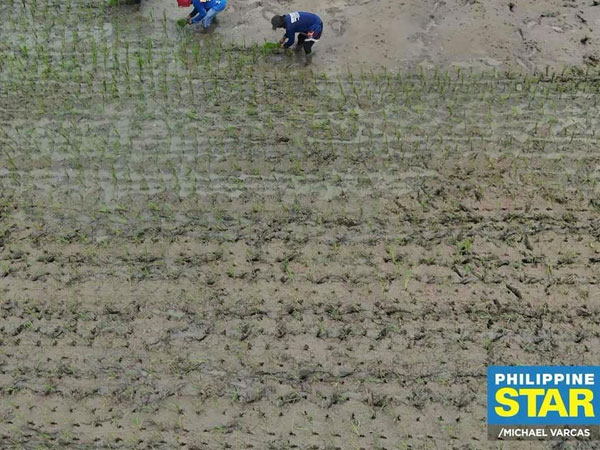
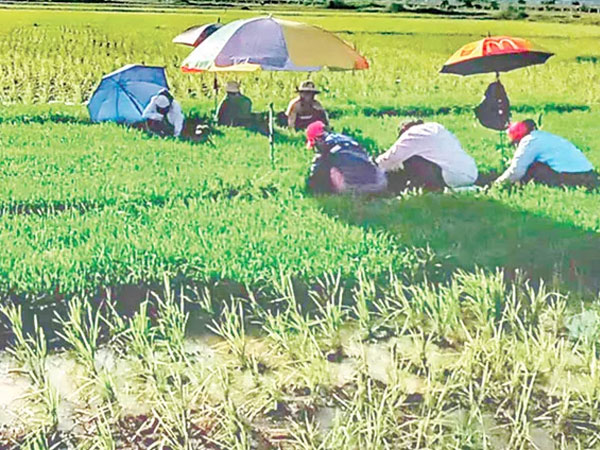
 Bangladesh has prepared to introduce water-saving technologies, such as alternate wetting and drying, in rice cultivation across 30-50 per cent of rice fields by 2035, said Saimum Parvez, Prime Minister's (PM) special assistant on environment, forests and climate change.
It will reduce use of irrigation water and methane emissions while protecting farmers' income, he said, adding that such transitions require finance, technology, and capacity support.
The PM's special assistant made these remarks while speaking at the 64th session of the UNFCCC subsidiary bodies on global goal on adaptation (GGA) in Bonn, Germany on Tuesday.
This session focused on various climate-related issues, including adaptation, climate finance, and fossil fuel transition, as key priorities ahead of the COP31 in Antalya, Turkey.
"Bangladesh is preparing to graduate from the least developed country (LDC) category, but our rivers do not know this. Our cyclones will not slow at the border of our new classification," Mr Parvez said.
"We call on this body to ensure that the GGA framework explicitly protects the adaptation finance access of the graduating LDC countries that have earned their development, but have not yet earned immunity from the climate crisis they did not cause."
The government has committed to large-scale environmental restoration, including the plantation of 250 million trees over the next five years, with the aim of creating green employment, expanding nursery-based entrepreneurship, and strengthening community participation, especially among women, youth, and rural populations.
These are not only conservation measures, but are adaptation investments in livelihoods, ecosystems, and local resilience, the special assistant to the PM noted.
Along canals and riverbanks, a 'green canal bank model' will promote tree plantation, biodiversity conservation, and eco-tourism, while specialised drone technology will support rapid greening of newly-formed islands, river chars, canals, and the Meghna estuary. These actions directly connect adaptation indicators with the realities of deltaic geography.
Mr Parvez added that Bangladesh is aligning its national development agenda with practical adaptation action on the ground.
"We stand ready to engage constructively in the development of indicator metadata and methodologies. We bring to this table not complaint, but competence, the competence of a nation that has spent decades turning adversity into adaptation architecture. We ask only that the world match our ambition with its resources."
For Bangladesh, that means safer riverbanks, resilient agriculture, restored forests and wetlands, protected coastal communities, and adaptation finance that reaches the people who need it most.
"Bangladesh is watching, and so is the rest of the vulnerable world," he added.








© Copyright 2025 The SSResource Media.
All rights reserved.