

 The International Rice Research Institute’s warning is not exaggerated rhetoric—it’s a blueprint for disaster that has been brushed aside.
When IRRI scientist Dr. Jauhar Ali warns, “There may come a time when nobody can share a single bowl of rice,” he’s not indulging in alarmism. He’s laying out a basic calculation. And for the Philippines—home to 114 million people and one where rice makes up nearly 35 percent of the national diet—that message should be met with the urgency of a five-alarm fire.
The global rice trade is a house of cards. According to IRRI data, while the world produces 563 million tons of rice annually, only 60 million tons ever reach the open market. The rest stays in its country of origin. Even more precarious: India alone controls 25 million tons of that traded supply—nearly 42 percent. Meanwhile, global buffer stocks of 220 million tons are effectively locked inside China and India. As Dr. Ali bluntly warned, “They are not going to open their gates when a severe crisis comes.”
For the Philippines, which projects rice imports of up to four million tons this year while nursing a fragile self-sufficiency ratio of just 71.3 percent, this is not an abstract risk. It is a ticking clock.
Yet the real scandal is not the country’s dependence on foreign rice —it is the broken domestic system that perpetuates it. Farm-gate prices languish at P23.18 per kilogram while consumers pay P58. Wholesalers pocket the difference. Small farmers, tilling less than a hectare each, bear the brunt. This is not a production problem alone; it is a market structure that actively discourages investment and innovation.
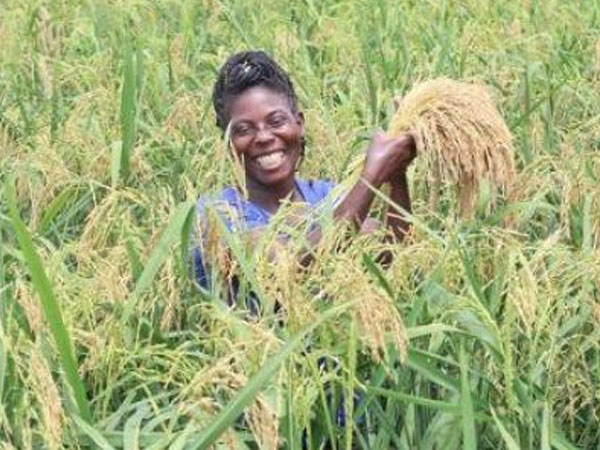
The solution, as Dr. Ali and Tao Corporation’s Julio Sy Jr. argue, lies in hybrid rice technology. Modern hybrids deliver 25 to 30 percent higher yields than traditional inbred varieties. Green Super Rice, developed with Chinese partners, can withstand drought, heat, and catastrophic flooding simultaneously. These are not laboratory fantasies—they are proven tools.
But technology alone will not save the Filipino farmer. The country currently imports 90 percent of its hybrid rice seeds. That is not self-sufficiency; that is swapping one dependency for another.
Tao Corporation’s “Rise to Rice” program offers a credible path forward: domestic hybrid seed production, integrated rice milling, and corporate oversight that guarantees quality control. It transforms rice farming from a subsistence struggle into a viable business. But one corporate initiative is not enough. The entire agricultural sector—government, private enterprise, and farmers’ cooperatives—must treat this as a national security imperative.
The geopolitical vulnerabilities are already established. The critical issue now is whether the Philippines will proactively modernize its rice sector or remain reactive until a global crisis necessitates such action. History favors the prepared. And a nation that cannot secure its own staple food has no claim to genuine sovereignty.



© Copyright 2025 The SSResource Media.
All rights reserved.