

 ‘THERE may come a time when nobody can share a single bowl of rice.”
This was one of the grim global warnings from a leading International Rice Research Institute (IRRI) scientist regarding food security beyond 2050—unless the Philippines, a major rice-importing country, seriously addresses its food staple by adopting modern technologies, especially hybrid rice.
While some might view this narrative as self-serving for the institute, Dr. Jauhar Ali emphasized that hybridization is already paving the way for high-yielding rice varieties—ranging from climate-resilient to “green super” hybrid rice varieties.
This was also the focus of a corporate forum for agricultural stakeholders recently hosted by the Tao Corporation, which presented this outlook as a direct challenge to other agriculture industry stakeholders to begin transforming rice farming into a viable, modern business for the future.
The geopolitical trap
The IRRI scientist identifed structural traps binding local food security, citing recent global data mapping out an intensely volatile and consolidated global rice trade.
While the world’s gross rice production registers at a seemingly massive 563 million tons, Dr. Ali pointed out that a meager fraction—only about 60 million tons—is actually traded on the open global market. The vast majority is reportedly consumed domestically by countries that cultivate it, leaving a thin margin for importing countries like the Philippines to bid on.
Even more precarious was the direct monopoly over this traded supply. Out of the 60 million tons circulating globally, a staggering 25 million tons originates from a single country: India.
Furthermore, while global agricultural safety nets note a cumulative “buffer stock” of 220 million tons, Dr. Ali revealed that this inventory has become almost entirely locked behind the borders of just two nations: China and India.
“They are not going to open their gates when a severe crisis comes,” Dr. Ali cautioned. “The actual trading margin left for the rest of the world is incredibly thin. Any sudden domestic policy shifts, conflict, or catastrophic climate failure in those territories will paralyze the global market instantly.”
While current international price indices hover at an apparently stable 102.1 points—closely mirroring the comfortable baselines of 2021—the underlying reality is an absolute bottleneck.
Dr. Ali said unless the Philippines—historically one of the world’s top rice importers—aggressively overhauls its staple food supply through modern agricultural technologies, its vulnerability will transition from “a chronic economic headache to an absolute catastrophe.”
Citing official data, he said the Philippines is on track to produce 19.7 million tons of rice, yet it remains anchored to foreign supply chains, with imports projected to reach up to 4 million tons. This leaves the country’s self-sufficiency ratio hovering at a fragile 71.3 percent.
With a population of 114 million consuming an annual average of 136 kilograms per person, rice also commands an absolute dominance over the Filipino plate, accounting for nearly 35 percent of the national dietary intake.
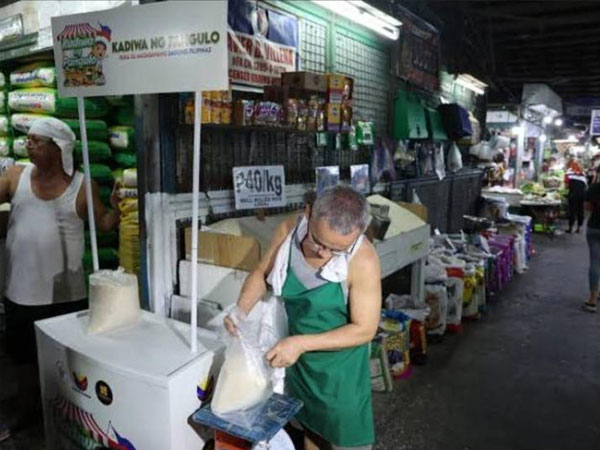
Yet, as first-quarter production numbers point to a steady decline, the economic divide on the ground deepens. While consumers face retail prices of P58 per kilogram and wholesale rates sit around P52, farm-gate prices languish at just P23.18.
This massive gap between what a farmer earns and what a wholesaler commands underscores a broken market structure that leaves local growers highly vulnerable.
Currently, the Philippines also relies almost exclusively on narrow, single-source importation channels, heavily dependent on Vietnam and India. Should a macro-environmental or political shock hit these neighbors, the local supply chain will collapse.
“You simply cannot depend on a single, narrow source for nation-level importation,” Dr. Ali emphasized.
Weapon for self-sufficiency
To dismantle the country’s foreign reliance, Dr. Ali presented a multipronged, highly scientific strategy. His focus was not on discovering nonexistent new arable lands or over-straining the country’s depleted water tables, but on maximizing the productivity of every square meter of existing soil using less water and fewer chemical inputs.
He advocated for an immediate transition away from standard, inbred seeds toward 2-line and 3-line heterotic hybrid rice systems. By engineering parental lines that exploit the biological phenomenon of heterosis (hybrid vigor), these crops generate an immediate 25- percent to 30-percent yield increase over traditional variants.
Because of their hyper-efficient growth cycles, they also reportedly produce significantly less methane and greenhouse gas emissions per ton of rice harvested.
Coordinating with the Chinese Academy of Agricultural Sciences (CAAS), Dr. Ali’s team developed Green Super Rice by subjecting millions of backcrossed breeding lines to deliberate, punishing environmental pressures to weed out genetic frailty.
The resulting GSR hybrids were specifically engineered to survive overlapping, simultaneous abiotic challenges—meaning a single crop can withstand prolonged drought, extreme tropical heatwaves, and sudden, severe submergence from catastrophic typhoons.
Dr. Ali said it can provide a “biological insurance policy” for Filipino farmers dealing with increasingly erratic monsoons.
Corporate call to action
In response to Dr. Ali’s call to re-engineer crop resilience against a looming 2050, Julio Sy Jr., who heads Tao Corp., has been into domestic commercial hybrid rice seed production and is now venturing into rice milling, in an effort to help transform domestic farming from a charity-dependent sector into a highly profitable future enterprise.
The conglomerate is leveraging its “Rise to Rice” program to establish a scalable blueprint aimed at motivating other corporate stakeholders to invest in the domestic food supply chain. Central to this strategy is dismantling the country’s extreme vulnerability to foreign imports. The Philippines currently relies on external sources for 90 percent of its hybrid rice seeds.
Local rice production is reportedly dominated by small farmers who till less than a hectare for rice dominated by small farmers, but Sy said that by expanding into modern rice milling infrastructure, like what they are now doing, they can provide full corporate oversight to guarantee rigid quality control.
Unlike unpredictable foreign shipments, domestic seed farms allow the Department of Agriculture and private sector partners to inspect actual fields and enforce strict growth protocols. This meticulous verification will ensure premium crop performance, providing robust, high-yielding planting materials to farming communities.
By bridging the gap between advanced agricultural science and commercial execution, Sy said the industry stakeholders will boost farmer productivity, significantly increase seasonal crop yields, and offer a sustainable path toward complete self-sufficiency.





© Copyright 2025 The SSResource Media.
All rights reserved.