

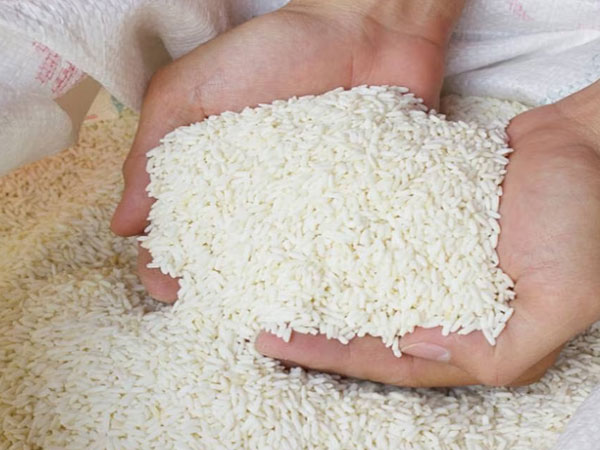
 India’s rice exports fell 6% year-on-year to $1.01 billion in April 2026 as conflicts in the Middle East severely disrupted key shipping lanes.
India’s rice exports, its largest agri-product shipment, continue to be hit by the West Asia war with shipment value falling by 6% in April.
In April 2026, India, the world’s biggest rice exporter, shipped grain valued at $1.01 billion, a 6% year-on-year decline, as the conflict in the Middle East disrupted exports of aromatic long-grain Basmati rice to Gulf countries including Iran and Saudi Arabia.
“India’s rice export sector is currently facing serious challenges as global market conditions continue to weaken. In April 2026, rice exports recorded a noticeable decline,” Ranjit Singh Jossan, Managing Director of Jossan Grains in Punjab, a major basmati rice exporter, told FE.
Tenfold Freight Surge
The conflict has impacted shipping lanes in the Red Sea and the Strait of Hormuz leading to freight escalation and insurance premiums, potentially inflating export costs. Exporters say ocean freight for rice exports to the Gulf region, which was only $500/a 25-tonne container, has increased to $ 5000 a container since March, 2026, making shipment unremunerative.
Ongoing conflicts in key Middle Eastern regions—critical transit routes and destination markets that account for approximately 70% of India’s basmati rice exports—have significantly disrupted shipping operations, exporters said. While non-Basmati rice exports, mostly sent to Africa, the USA, and Europe have not been impacted so far.
“Shipment of non-Basmati has not been hit although price realisation has been lower because of oversupply,” said B.V. Krishna Rao, president of the Rice Exporters Association.
The value of rice exports including Basmati and non-Basmati varieties, fell by 7.5% year-on-year to $11.53 billion in FY26.
Sharp Drop in Gulf Shipments
According to the Agricultural and Processed Food Products Exports Development Authority (APEDA), rice exports to Middle Eastern countries—Saudi Arabia, Iran, Iraq, the United Arab Emirates, Kuwait and Oman – witnessed a sharp 49% fall in FY26 compared to the previous year.
India has been the world’s biggest rice exporter (Basmati and non-Basmati) in the last decade, holding a market share of around 45% in rice trade.
India exports both aromatic and long-grain Basmati and non-Basmati varieties to over 140 countries, across Asia, the Middle East, Europe, and the U S. In several countries it faces competition from rice exporting countries including Pakistan and Thailand.
India to remain largest rice exporter: USDA
The United States Department of Agriculture (USDA) is projected an increase of 1.8 million tonne (MT) in global rice exports in 2027 calendar year at a record 63.1 MT, “Rice exports will continue to be led by India with 25 MT or 40 percent of global trade given its ample exportable supplies and competitively priced exports,” USDA stated in the rice outlook in May, 2026.
The report stated that global rice production in 2026/27 is forecast at 537.8 MT, down 5 MT from the prior year after 10 consecutive years of growth. India is expected to decline from last year’s record as producers plant fewer acres to rice based on return to normal rainfall patterns. “India is projected to remain the world’s largest producer—surpassing China for the third consecutive year,” USDA stated.




© Copyright 2025 The SSResource Media.
All rights reserved.