

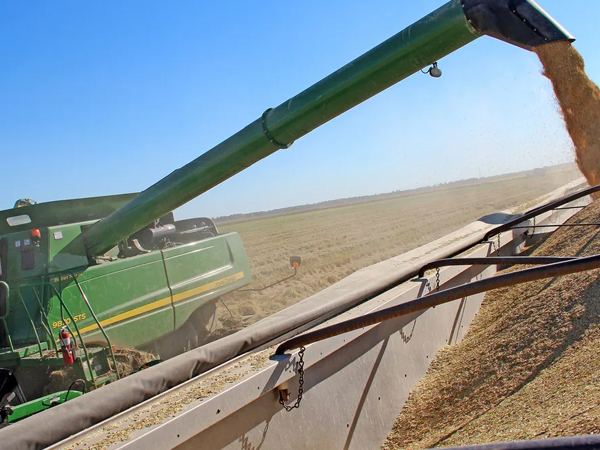
 Rice producers face export challenges due to poor milling yields
It’s difficult for Southern rice farmers to consider changing horses in midstream, especially when their favorite horse has been producing high yields and winning applause from most all bettors until now.
But there comes a time when you may need to step back and look at whether the race for higher grain yields is the best objective or if producing more rice that some of your traditional customers no longer want is working.
“Milling yields have become a big issue in Central America,” said Maclane Peters, a trader with TRC Group, which buys and sells rice and other grains throughout North and South America, Asia and Africa. “The value of brokens was so low rice that a sub-55 milling yield was worth significantly less to the mills in Central America.
“Getting at least a 55 to 70 on the milling yield was important to them because the value of broken kernels was so low,” he noted. “The Central American market was flooded with brokens, and they had no real outlet for them.”
Low yields
Peters said milling yields for rice, particularly rice grown along the Mississippi River, have been low for the past three years. “I think it got to a breaking point, and a lot of buyers in Central America have been buying exclusively from South America where it’s common to see high milling yields of 57 plus or 58 to 70.”
Recently in a Panama tender, which was for U.S.-origin rice, buyers asked for a mid-55 milling yield as a minimum. Previously, the minimum had been a milling yield of 53.
“That was some of the only business the U.S. had recently,” Peters said. “It was only 18,000 tons, which is very marginal compared to what the U.S. usually would export every month on a rough rice basis.”
ADM was scheduled to ship 88,000 metric tons of milled rice to Iraq in January under the memorandum of understanding between the USA Rice Federation and Al-Awees, the grain buying entity for the Iraqi government. That shipment and another expected in March have become critical to the U.S. rice industry.
“The paddy business has definitely slowed down,” Peters said. “I think part of it has been because of the quality, and the other part is that South American rice is a lot cheaper and better quality in the eyes of the millers in Central and South America.”
WASDE report
The decline was reflected in USDA’s January World Agricultural Supply and Demand Estimates report, which reduced its export projection for rice by 3 million cwt to 59 million.
“U.S. rice export activity continues to navigate a challenging global landscape, characterized by intense competition, price pressures and shifting trade opportunities,” said Michael Deliberto, ag economist at the Louisiana State University Ag Center. “Ongoing deliveries to Haiti and recent Iraq purchases provide additional pillars of demand, yet questions remain about sustainability and competitive positioning as we move through 2026.”
Deliberto, Peters and other analysts are wondering if the recent leadership changes in Venezuela could provide “emerging opportunities in nontraditional destinations,” as Deliberto said, writing in the AgCenter’s January Market Update.
“Maybe Venezuela will become a market for U.S. rice,” Peters said. “That’s a very fluid situation, so who really knows what’s going to happen there.”
Quality issues
Whether the rice is shipped to Venezuela or another Latin American country, rice millers in the region still face the same problems with rice coming from up and down the Mississippi River.
“The demand is just not there because a lot of that rice that comes down the river is blended,” said Dennis DeLaughter, a former rice farmer who is now a market analyst with VantageRM LLC. “So the buyer doesn’t have a steady supply of the same variety, and the milling process becomes more expensive.
“People are growing a number of different rice varieties, and I’ll just say it this way: The co-ops end up shipping a lot of rice down the river to get rid of it, but they’re not identity-preserving it, and the buyer is not getting what they want,” DeLaughter said.
In 2022, he noted, the U.S. exported about 50 million cwt of rice. “That was the year the grades were so bad in Arkansas and across the Mississippi River, we exported 50 million cwt and still had a carryover number at the end of that year of 21 million cwt. That’s what I call a comfortable number for buyers and sellers.”
DeLaughter said the last number from USDA’s WASDE report was a drop in exports from 62 million to 59 million cwt. “If we hold on to the current level, that number could drop to 52 [million] or 53 million. But the carryover number will be closer to 38 [million] to 39 million cwt unless they find some other use for it.”
Demand destruction
Saying he hates to use the term “demand destruction,” DeLaughter said, “But I think we’re seeing the end of the Central American countries looking at the United States as their first choice for rice, and that’s what has me more concerned. We’re not selling them what they want. They are getting that out of South America.”
Farmers associated with the South Louisiana Rail Facility in Lake Charles have been shipping higher-milling-yield rice to Honduras and other Central America countries since fall. Some is Avant, which was released as a higher-quality variety by the LSU AgCenter. Texas rice farmers are also contributing to those sales with varieties like Chenier and Presidio.
“Millers in Central and parts of South America would rather buy U.S. rice,” said Dwight Roberts, former CEO of the U.S. Rice Producers Association. Roberts lived in South America for a number of years and maintains contacts with rice industry members throughout the region.
“2026 could be very painful for U.S. rice farmers,” he said in early January. “The South American harvest is about to start, and we will see how large their crop is. Meanwhile, farmers tell me there are almost no bids being offered on rice along the Mississippi River. There’s a lot of 2024 crop rice still in storage.”





© Copyright 2025 The SSResource Media.
All rights reserved.