

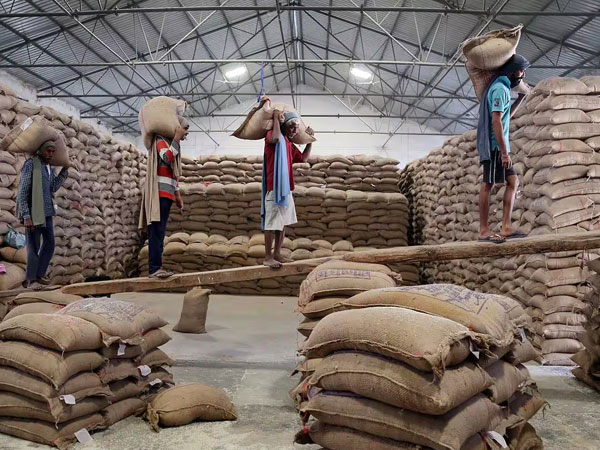
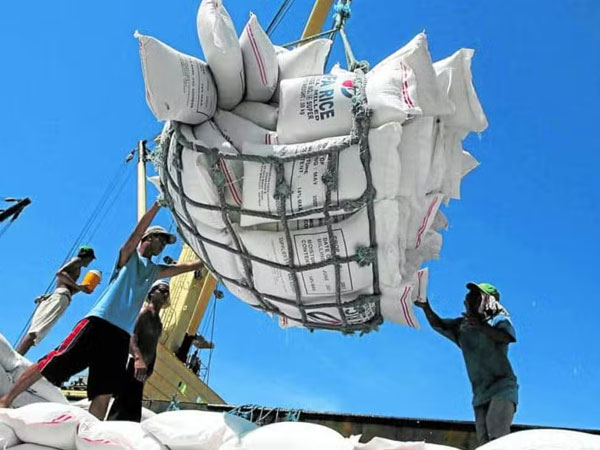
 The Department of Agriculture (DA) has defended its decision to block a 12,480-metric-ton shipment of Vietnamese rice, saying its delayed arrival could have put additional pressure on local palay prices ahead of the wet-season harvest.
Agriculture Secretary Francisco Tiu Laurel Jr. said Wednesday that the agency ordered the cancellation of the import permit for rice aboard MV Tay Son 2 before the vessel reached Philippine shores, disputing allegations of irregularities surrounding the shipment.
“Critics of the DA are painting a false picture of this incident, suggesting malice and corruption through insinuations that border on libel,” Tiu Laurel said.
“The records will show otherwise. It was the DA, through my office, that stopped the shipment by ordering the Bureau of Plant Industry (BPI) to cancel its sanitary and phytosanitary import clearance, even though the vessel was already on its way to the Philippines,” he added.
Tiu Laurel explained that the cancellation was requested by importer Planters Product Inc. (PPI) after it learned that the shipment contained 5-percent broken rice instead of the contracted 25-percent broken rice.
PPI also informed the DA that its importation contract had expired, as the shipment was originally scheduled for delivery in July, when domestic rice supplies are typically tighter.
However, the vessel arrived at the Port of Davao on 14 September, just as the wet-season harvest was approaching, raising concerns that the additional supply could further depress farmgate palay prices.
The shipment was equivalent to roughly one-third of the country’s daily rice requirement of 37,000 metric tons.
The DA stressed that the rice could not legally be unloaded without a valid sanitary and phytosanitary import clearance (SPIC).
According to the department, the vessel’s captain refused to submit the cargo for inspection by the BPI upon arrival in Davao.
On 17 September, while the Bureau of Customs (BOC) was determining how to handle the shipment, the vessel departed the port.
Tiu Laurel subsequently directed the DA’s Inspectorate and Enforcement Office to issue a hold order preventing the rice from being unloaded elsewhere in the country.
The Philippine Navy later intercepted the vessel off Sarangani and escorted it to the Port of General Santos City, where the captain again resisted inspection efforts.
The vessel was eventually ordered back to Davao, where it remains pending a decision by the BOC.
Tiu Laurel said the BPI had recommended returning the shipment to its country of origin, although customs authorities may instead seize the cargo and impose penalties depending on their findings.
Under existing regulations, agricultural shipments without valid import permits may be seized, destroyed, returned to their country of origin, or shipped to a third country.
The DA maintained that its decision to cancel the permit before the vessel’s arrival demonstrated its intention to enforce import regulations while protecting local farmers and consumers.
The department also emphasized that the shipment had not been allowed to enter the domestic rice market despite the controversy surrounding its arrival and subsequent attempted departure.





© Copyright 2025 The SSResource Media.
All rights reserved.