

- China imported 1.4 million tonnes of broken rice in the first seven months of 2026, while India’s domestic ethanol policy could reduce export availability from the world’s largest rice exporter.
- The Philippines now requires importers to favor rice containing at least 25% broken grains, potentially increasing Asian competition for cheaper grades that several West African countries rely on for human consumption.
- Senegal’s broken rice imports fell 35% in the first half of 2026 from a year earlier, while tighter supplies and stronger Asian demand could narrow the traditional price discount for heavily broken rice.
 The global broken rice market is tightening as Asian demand increases, and the shift could affect major consumers along the West African coast. The U.S. Department of Agriculture (USDA) highlighted the trend in its latest grain market report.
India, China and the Philippines Reshape the Market
China imported 1.4 million tonnes of broken rice during the first seven months of 2026, according to the USDA. That volume represented nearly one-third of the country’s total expected purchases for the year.
China’s animal-feed industry drives much of that demand. Feed producers increasingly use broken rice, which contains high levels of starch and crude protein, as a substitute for corn in livestock rations when prices make it more competitive.
China’s purchases remain below the record 3.5 million tonnes that the country imported in 2022, when disruptions to global grain supply chains followed the outbreak of the Russia-Ukraine war. Nevertheless, China has resumed purchases at a particularly sensitive time for the global market.
India added another source of pressure on July 16. The world’s largest rice exporter raised the administered price of broken rice sold to distilleries for ethanol production.
The measure makes domestic sales more attractive for some Indian supplies than exports. As a result, the policy could reduce the amount of Indian broken rice available on international markets.
India introduced the measure only days after the Philippines changed its import policy. On July 2, the Philippines, the world’s largest rice importer, suspended the issuance of sanitary and phytosanitary permits for imports of white rice containing 5% broken grains.
The Philippine government wants to curb imports of higher-quality rice and support domestic producers. Therefore, the government now requires importers to prioritize grades containing 25% broken grains or more.
West African Markets Face Greater Pressure
These changes could have significant consequences for West Africa. Unlike China, where buyers largely use broken rice for animal feed, households in several West African countries consume the milling by-product as a staple food. Consumers in Senegal, Mali, Guinea-Bissau and Gambia rely particularly heavily on these grades.
In Senegal, broken rice accounts for more than 65% of rice purchases from India. In Mali, grades containing between 25% and 30% broken grains account for an estimated 70% of consumption, according to the USDA.
These markets remain highly sensitive to prices. Consequently, any decline in available supplies or increase in competition for cheaper rice grades could directly raise procurement costs and retail prices.
Meanwhile, the Philippines will likely remain a major force in the international market. The USDA expects the country to import a record 5.6 million tonnes of rice during the 2026/2027 marketing year.
Vietnam, the Philippines’ largest supplier, could therefore adjust the composition of its shipments to include more heavily broken rice. Myanmar, Thailand and Pakistan, which also supply the Philippine market, could adopt a similar strategy.
China could add further pressure. India overtook Myanmar in early 2026 to become China’s largest rice supplier, and Indian exporters will likely continue to prioritize Chinese demand.
Taken together, these adjustments could reshape the global pricing hierarchy. Rice grades containing 25%, 30% or 100% broken grains usually trade at substantial discounts to 5% broken rice. However, stronger Asian competition could narrow those discounts.
The USDA said Senegal already shows early signs of the shift. The country’s broken rice imports fell 35% in the first half of 2026 from the same period a year earlier.
“African buyers continue to source Thai broken rice, but at lower volumes than the previous year. Thai prices are currently the least competitive among major origins and should remain elevated amid El Niño-related uncertainty,” the USDA report said.
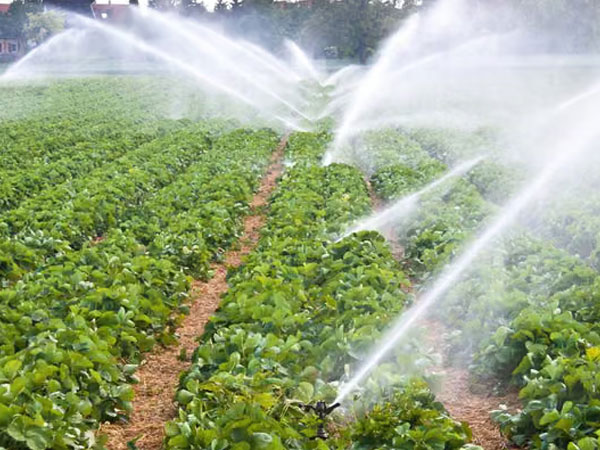
Price movements in Thailand have reinforced those concerns. Platts assessed Thai 5% broken white rice at $475 per tonne FOB on Sept. 3, its highest level in two months, partly because traders worried about water availability for irrigation.
The Sept. 3 price remained slightly below the $479 per tonne recorded on June 29. However, the price exceeded the Feb. 18 assessment of $374 per tonne by more than $100.





© Copyright 2025 The SSResource Media.
All rights reserved.