

From the fields of Punjab to supermarkets and kitchens across the world, Pakistan’s rice industry is increasingly becoming a vital source of foreign exchange, but coordinated efforts are imperative to protect the sector’s competitiveness, expand international markets and ensure that farmers and exporters both benefit from the crop’s growing economic importance.
Pakistan’s rice industry is confronting a new test of competitiveness as its falling export volumes, aggressive international competition and the return of major suppliers to global markets threaten to erode the gains made during the country’s recent rice-export boom.
The stakeholders at a Faisalabad Chamber of Commerce and Industry (FCCI) forum have called for sustained policy support, stronger research, market diversification and closer coordination between farmers, exporters and government institutions to keep rice among Pakistan’s major sources of foreign exchange.
Talking to APP, rice dealer Akram Ali said that Rice has emerged as one of Pakistan’s most important non-textile export earners, but official data show that the sector’s recent trajectory has become less certain.
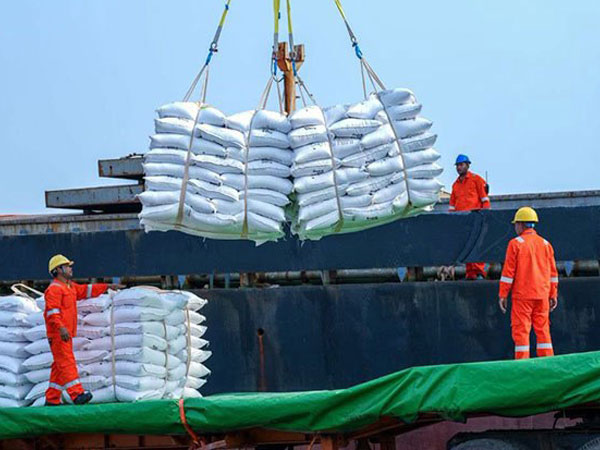
He said that according to the State Bank of Pakistan (SBP) report, rice exports reached a record $3.9 billion in FY2023-24, accounting for 12.8 percent of Pakistan’s total exports and 53.3 percent of food exports that year. The exceptional performance was helped by strong production and temporary restrictions on Indian rice exports, which opened additional space for Pakistani suppliers
However, the opportunity has not proved easy to sustain because Pakistan’s rice exports fell to about $2.29 billion in FY 2025-26, according to data based on the Pakistan Bureau of Statistics (PBS), with shipments declining to roughly 4.29 million tonnes, compared with around 5.82 million tonnes in the preceding fiscal year. The decline has coincided with the return of India to the international rice market and increasing price competition. Pakistan’s rice exports came under pressure as global supplies normalized and Indian competition intensified while lower international prices affected both export values and volumes, he added.
A rice exporter Anwar Hussain said that scale of the industry is evident from recent export data. According to REAP’ s export record, Pakistan exported 5.82 million tonnes of rice worth $3.35 billion during fiscal year 2024-25, compared with 6.01 million tonnes valued at $3.93 billion in 2023-24. The latest figures show that non-basmati varieties accounted for more than five million tonnes of the 2024-25 export volume, while basmati exports stood at about 809,000 tonnes.
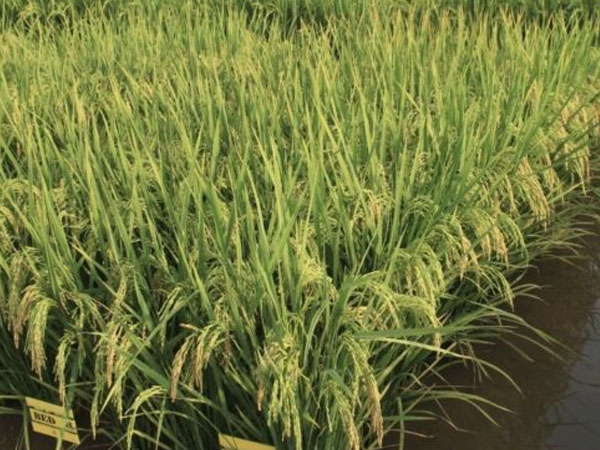
He said that the Pakistan Bureau of Statistics has also recorded the strong contribution of rice to the country’s external trade. Its annual analytical report for FY 2023-24 put rice exports at $3.916 billion, up 79 percent from $2.187 billion a year earlier. Overall Pakistani exports in FY2023-24 were recorded at $30.675 billion, underscoring the significance of rice in the country’s foreign-exchange earnings. The production side also presents substantial potential. The Pakistan Economic Survey 2025-26 reported that rice production increased by 2.8 percent during 2025-26 to 9.99 million tonnes from 9.72 million tonnes in 2024-25, despite a 3.6 percent reduction in cultivated area.
Yield improved by 6.6 percent to 2,660 kilograms per hectare. Rice contributed 0.5 percent to GDP and 2.2 percent to agricultural value addition during the year.





© Copyright 2025 The SSResource Media.
All rights reserved.