

 India is one of the largest producers of rice, but it also faces persistent challenges related to groundwater extraction, lower productivity, crop diversification, and nutrition. What are the key steps taken by the government to address such concerns? See infographics for quick key insights.
In 2024-2025, India surpassed China to become the world’s largest rice producer, accounting for 28 per cent of global rice production and 40 per cent of global trade. But despite being one of the largest producers of rice, India faces persistent challenges related to groundwater extraction, crop diversification, and nutrition.
As rice is a water-intensive crop, producing 1 kg of rice requires about 3000-4000 litres of water, which has caused the over-exploitation of ground water in many rice-growing regions of the country.
Therefore, it becomes important to examine the trajectory of rice production and key government interventions – from the formation of a committee under noted economist S S Johl in 1986 to the enactment of the National Food Security Act (NFSA), 2013, and efforts towards crop diversification.
Rice production in India
Archaeological evidence of the domestication of rice in the Indian subcontinent has been found as early as the Indus Valley civilisation. Contrary to earlier beliefs that rice cultivation originated in China, research suggests that it may have been domesticated in parallel in different regions.
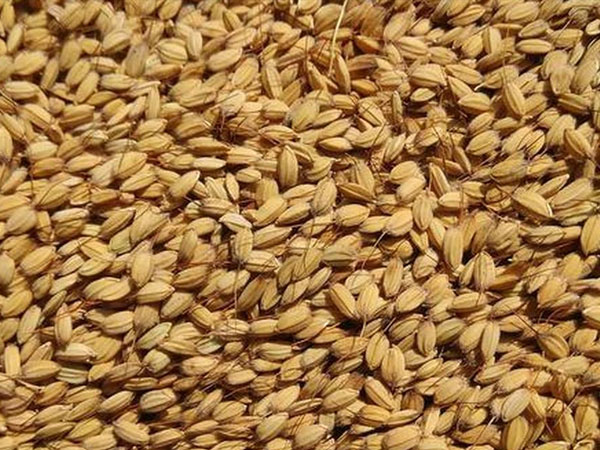
While rice was a winter crop in China, rice in the Indus Valley was produced both in summer and winter seasons, which led to the development of a local rice variety, Oryza sativa indica. Today, out of 1,23,000 varieties of rice available globally, around 60,000 are discovered in India.
Rice is the staple food of about half of the global population and is produced mostly by Asian countries like India and China. In India, about 65 per cent of its population depends on rice as a staple food.
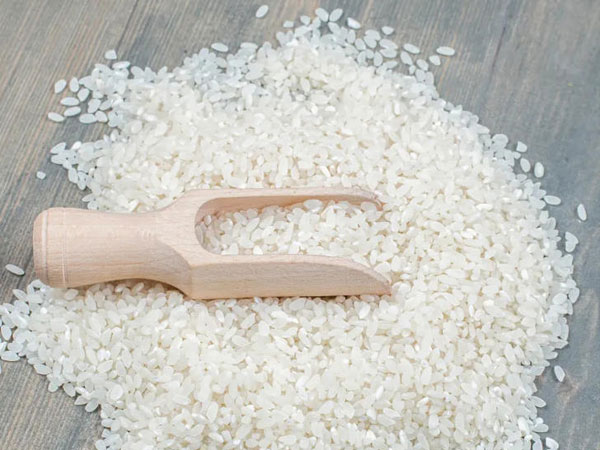
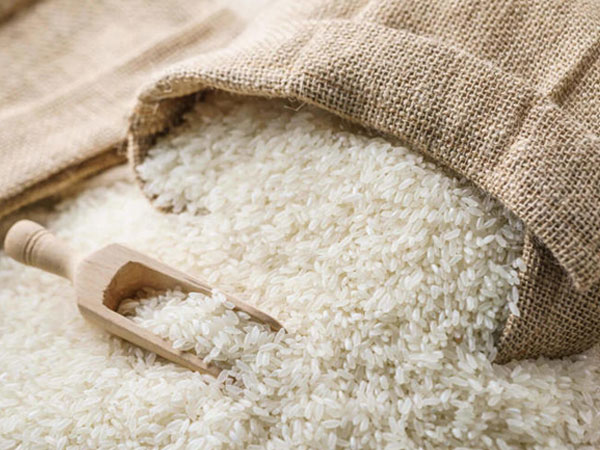
Indian rice can be broadly classified into four categories: basmati rice (Premium, aromatic), non-basmati parboiled rice, non-basmati white rice and broken rice. In 2024-25, non-basmati rice accounted for 70 per cent of total rice export volume, though it contributed only about 48 per cent of export value due to its lower unit price in comparison to premium basmati rice.
The geography of India’s rice export also varies by type. African countries, like Benin, Côte d’Ivoire, Guinea, Cameroon and Kenya, import more than 50 per cent of parboiled rice, non-basmati white rice. Neighbouring countries, like Nepal, Bangladesh, and Sri Lanka, also import these non-basmati rice.
Premium quality Basmati rice is imported by the countries of the Middle East (such as Saudi Arabia, Iraq, Iran, the UAE), European countries and the US. India exports broken rice to China, which is used there for animal feed and ethanol production.
Geographical distribution of rice production
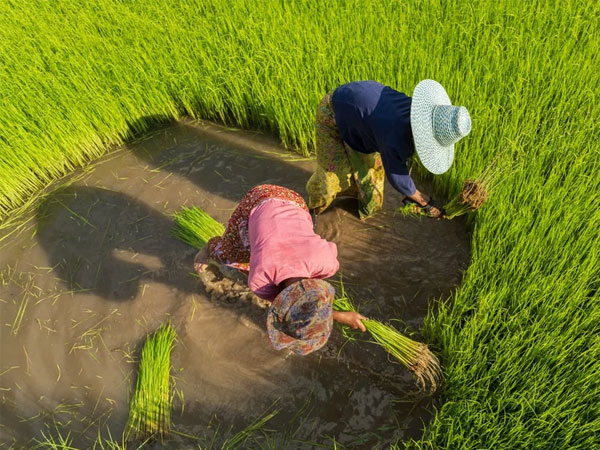
Rice crop requires hot and humid conditions, abundant water availability, and alluvial soil (soil formed by the deposition of silt brought by rivers). River flood plains are among the most rice productive regions. In India, rice cultivation is dispersed across different regions.
In the north-eastern region, the Brahmaputra basin records the highest rice cultivation. In the eastern region, the basins of the Ganga and Mahanadi rivers have the highest intensity of rice cultivation, particularly in states like Bihar, Chhattisgarh, Jharkhand, Madhya Pradesh, Odisha, Uttar Pradesh and West Bengal.
In the southern part, the delta regions of Godavari, Krishna and Cauvery rivers constitute the main areas of rice production, covering Telangana (the Highest among states), Andhra Pradesh, Tamil Nadu, and Kerala. Northern rice-producing regions include Haryana, Punjab, while in Himachal Pradesh and Jammu & Kashmir, low winter temperatures restrict rice cultivation to a period from May-July to September-December.
Environmental and climatic concerns
In 2019, the Food and Agriculture Organisation (FAO) noted that only nine plant species contribute to 66 per cent of global crop production, and cautioned against such over-reliance on monoculture. Notably, paddy and wheat benefited more than the other crops during the Green Revolution, paving the way for production gains but also significant ecological and environmental concerns.
In 2009, Punjab and Haryana passed the Preservation of Subsoil Water Act. It prohibits sowing of paddy seeds before 10 May and transplantation before 10 June in order to shift the burden of irrigation from groundwater to monsoon rainfall.
However, this mandatory delay in rice cultivation leaves a very narrow time gap for planting the next crop, and often prompts farmers to resort to burning crop residue to clear fields. As a result, stubble burning has become one of the major seasonal causes of degrading air quality in parts of northern India.
Implications for food security
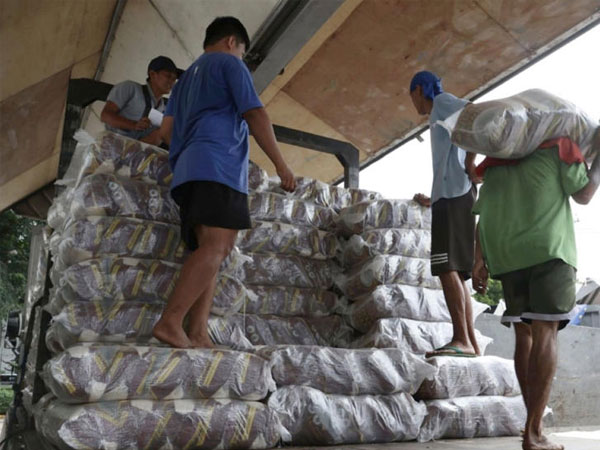
The enactment of the NFSA made it legally binding for the government to provide highly subsidized foodgrains to about two-thirds of the population (at present 81.35 crore persons) through the Targeted Public Distribution System. This includes 75 per cent of the rural and 50 per cent of the urban population.
According to the Department of Food and Public Distribution, rice – at around 40.6 million tonnes – accounts for more than 65 per cent of total foodgrains allocated under various government schemes in 2025-26. To address anaemia and other nutritional deficiencies, the government initiated rice fortification with iron, folic acid, and vitamin B12 as pilot projects in 2019. It was later approved by the Union Cabinet in 2022.
As of January 1, 2026, the rice stock (including unmilled paddy in terms of rice) in the central pool stood at 63.06 million metric tonnes. This is much higher than the buffer stock and public distribution requirements under the NSFA.
As per the Foodgrains Stocking Norms for Central Pool, which came into effect from January 2015, the rice stock in the central pool should be 7.61 million metric tonnes on the first day of January. In addition to this, about 37.2 million tonnes of rice are required to meet the annual requirement under the NFSA and other welfare programmes.
How to address ecological stress
As noted earlier, despite being one of the largest producers of rice, India faces persistent challenges related to groundwater extraction, lower productivity, crop diversification, and nutrition. India’s average rice yield is around 2,929 kg/hectare – significantly lower than China’s yield of nearly 7,100 kg/hectare. About 90 per cent of land belongs to marginal, small and medium farmers, where large-scale mechanisation is not cost-effective, further constraining the productivity gains.
At the same time, rice cultivation is incentivised by subsidies on electricity, water, fertiliser, and minimum support prices that offer guaranteed return. Some states, like Chhattisgarh, even offer bonuses over and above the MSP rate.
In view of the ecological stress caused by the paddy-wheat cycle, a committee under economist S S Johl in 1986 recommended that at least 20 per cent of the cropping area of Punjab should be diversified to alternative profitable crops. In 2002, it was further recommended that one-million-hectare farmlands should shift towards less water-intensive crops.
More recently, in 2025, the Punjab government provided 17,500/hectare financial assistance for paddy-to-maize diversification on a pilot basis to farmers of six districts covering a total of 12,000 hectares.
Need for sustainable rice production
It may not be ruled out that climate change and unpredictable weather patterns in South and South-East Asia can pose risks to the stability of global rice markets. It may be recalled here that in 2023, India restricted export of white and broken non-basmati rice due to weak monsoon and domestic demand, which led to significant increase in global rice prices.
To maintain its competitiveness and ensure sustainability, India needs to invest in improved cropping techniques with less water consumption and enhanced productivity. Despite various efforts, crop diversification is still a work in progress as alternative crops, like maize and ragi, often yield lower output on a per-hectare basis compared to rice.
Therefore, experts suggest that the government needs to incentivise climate-resilient cropping techniques like Direct Seeded Rice (DSR), encourage crop diversification and the adoption of sustainable and nutrient-rich crops, including pulses, millets, etc.





© Copyright 2025 The SSResource Media.
All rights reserved.