

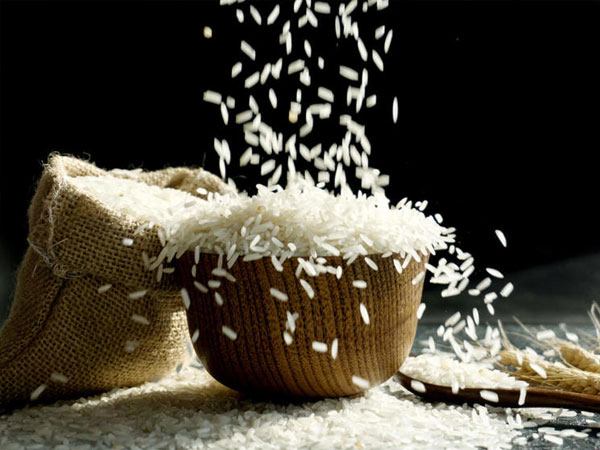
 Rice is one of the most widely consumed staple foods in the world and forms the foundation of daily meals for millions of people in India. Yet nutritionally, polished white rice has a significant limitation: it is largely composed of starch and contains relatively little protein or dietary fibre.
This carbohydrate-heavy profile is also why rice is often associated with rapid spikes in blood sugar, making it a concern in countries like India that are grappling with rising rates of diabetes.
At the same time, many people who consume enough calories through rice-based diets still suffer from protein and micronutrient deficiencies, a condition often referred to as "hidden hunger."
Now, scientists at the Council of Scientific and Industrial Research's CSIRNational Institute for Interdisciplinary Science and Technology (CSIR-NIIST) in Thiruvananthapuram have developed a new solution that could address both problems at once.
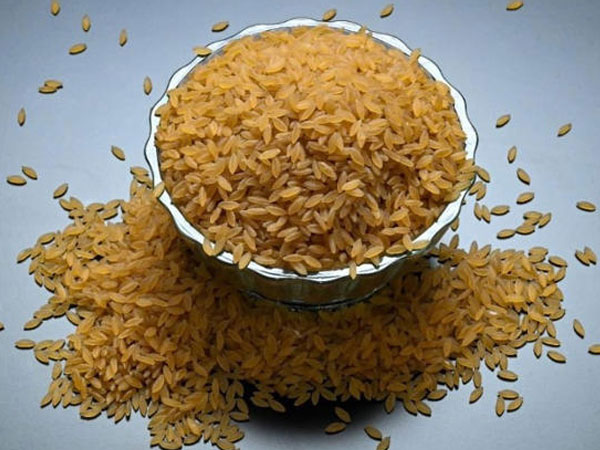
The research team has created a new variety of rice called "designer rice", which contains significantly higher protein levels and has a lower glycaemic index compared to conventional rice.
According to the scientists, this innovation could transform the nutritional value of one of India's most widely consumed foods.
"If this high-protein rice performs as claimed, it could represent a significant breakthrough for countries like India where rice is a staple. Improving the protein content of a widely consumed grain has the potential to address both hidden hunger and blood sugar concerns simultaneously," says Nidhi Rastogi, a clinical nutritionist from Delhi.
REBUILDING RICE FROM THE INSIDE
The project is being led by C Anandharamakrishnan, Director of CSIR-NIIST, who describes the innovation as a form of "food architecture." To create the new rice, researchers first break down traditional rice grains into their key components—starch, protein, and fibre. They then reassemble these elements in a way that improves the grain's nutritional profile.
In simple terms, scientists reduce a portion of the starch in the rice and replace it with additional protein and essential micronutrients.
"It is like rebuilding a house," Dr Anandharamakrishnan explained. "If regular rice is mostly made of starch, we remove some of that and strengthen the structure with protein."
Importantly, the process does not involve genetic modification. Instead, it uses food-processing technology to reshape the nutritional composition of the grain.
TURNING BROKEN RICE INTO A NUTRITIONAL POWERHOUSE
One of the most interesting aspects of this innovation is the use of broken rice, small fragments that are produced during the milling process.
Broken rice is usually sold at lower prices and is often considered a lower-value byproduct. In this new method, scientists grind these fragments into flour and mix them with protein and micronutrients such as iron, folic acid, and vitamin B12.
The mixture is then processed and reshaped into grains that look and cook like normal rice.
Despite the changes in composition, researchers say the final product still has the familiar taste, texture, and cooking properties that people expect from rice.
ADDRESSING INDIA'S DOUBLE NUTRITION CHALLENGE
India currently faces a unique health challenge. On one hand, the country has one of the highest numbers of people living with diabetes in the world. On the other hand, millions suffer from nutrient deficiencies even though they consume enough calories.
The new designer rice aims to address both problems simultaneously.
Key benefits include:
- LOW GLYCAEMIC INDEX:
The rice has a GI value below 55, meaning it releases energy slowly and helps prevent sudden spikes in blood sugar levels.
- HIGHER PROTEIN CONTENT:
While regular rice typically contains around 6–8 per cent protein, the new version contains over 20 per cent protein.
- MICRONUTRIENT FORTIFICATION:
The grains are enriched with nutrients such as iron, folic acid, and vitamin B12, which can help reduce deficiencies like anaemia.
Researchers believe this combination could make rice a healthier option for people managing diabetes while also improving nutrition among populations at risk of malnutrition.
FROM LABORATORY TO THE MARKET
Scientific breakthroughs often face a major hurdle: moving from the laboratory to real-world use. To ensure the technology reaches consumers, CSIR-NIIST has partnered with industry.
The technology has already been transferred to Tata Consumer Products for further development and commercial production.
This partnership could help scale up manufacturing and bring the rice to markets across India in the future.
According to the scientists involved in the project, the biggest advantage of the innovation is that it does not require people to drastically change their diets.
"You don't have to switch to exotic grains like quinoa," Dr. Anandharamakrishnan said. "People can simply continue eating rice—but now it will be much more nutritious."
SUPPORTING SUSTAINABLE FOOD SYSTEMS
Beyond its health benefits, the innovation also supports the idea of a circular economy in agriculture.
By using broken rice, an underutilised byproduct of milling, the technology adds value to a resource that would otherwise be sold cheaply. This could potentially benefit rice producers and farmers while reducing food waste.
Experts say that as India looks for ways to improve nutrition and food sustainability, innovations like designer rice could play an important role.
What began as a laboratory experiment in Kerala could soon become a new staple in Indian kitchens—one that not only fills plates but also strengthens public health.





© Copyright 2025 The SSResource Media.
All rights reserved.