

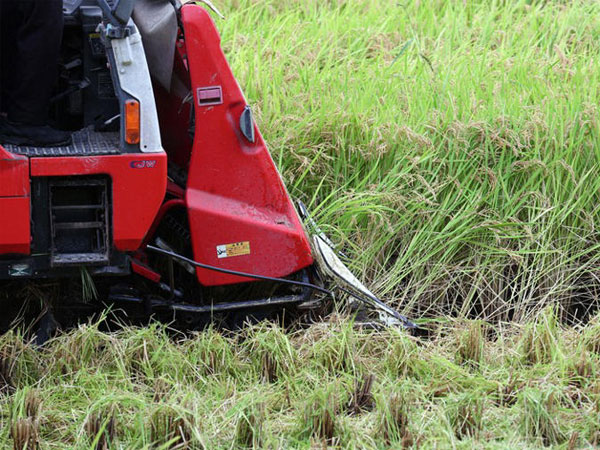
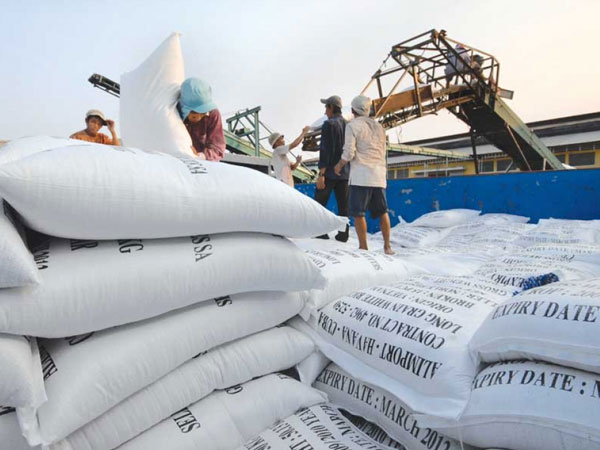
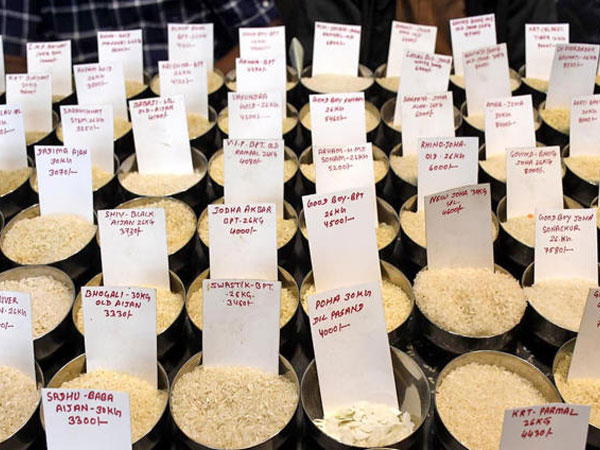
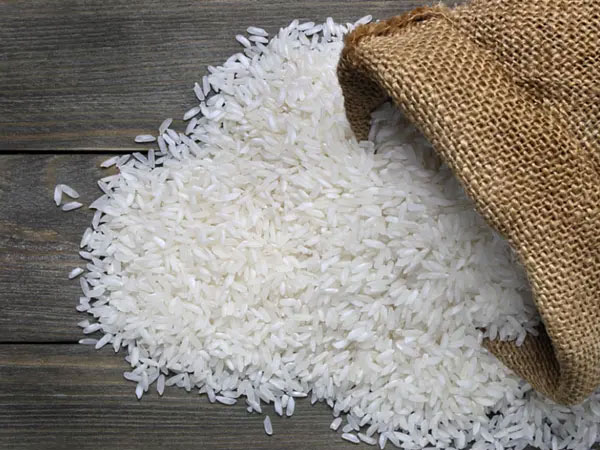
 TOKYO -- An organization supporting a stable rice supply in Japan that includes stakeholders such as the National Federation of Agricultural Cooperative Associations (JA Zen-Noh) announced a new indicator on April 7 to reflect rice production and distribution costs. As of April 2026, the cost for 5 kilograms of polished rice, including tax, is calculated at 2,816 yen (about $18), serving as a benchmark for the 2026 rice crop.
Following the "rice panic of the Reiwa era" in the summer of 2024, rice prices have remained high. By highlighting the soaring costs of materials, the public interest incorporated foundation, commonly known as Beikoku Kiko, aims to foster consumer understanding.
The provisional figure presented by Beikoku Kiko in March was 2,811 yen, but it was adjusted after the foundation received government recognition as the organization responsible for presenting the new indicator on April 1. The cost as of April 2025 was 2,736 yen (around $17) per 5 kilograms.
The indicator was calculated based on statistical data, using a model case of rice farmers with cultivation areas of 1 to less than 3 hectares, covering the average of 2.27 hectares. The amount factors in production costs such as machinery and fertilizer expenses, as well as management, transportation and labor costs during the collection, wholesale and retail stages, excluding profit.
The indicator is generally revised every March. However, it is believed that the impact of the energy price surge following the U.S. and Israeli attacks on Iran at the end of February has not been fully reflected. Beikoku Kiko states, "If significant cost changes occur or if deemed necessary, the indicator will be revised as needed.
At a press conference following the Cabinet meeting on April 7, agriculture minister Norikazu Suzuki expressed his expectations, stating, "I hope that rice can be sustainably supplied at a price level that enables producers to sustain reproduction and reinvestment, while also gaining consumers' understanding."
However, concerns have been raised that consumers may mistakenly perceive the new indicator as the "minimum price" for rice. Professor Kunio Nishikawa of Nihon University, who chairs the committee established by Beikoku Kiko for formulating the indicator, emphasized that "the indicator does not bind transaction prices." He stated that the appropriate price for rice should be "determined by supply and demand."




© Copyright 2025 The SSResource Media.
All rights reserved.