

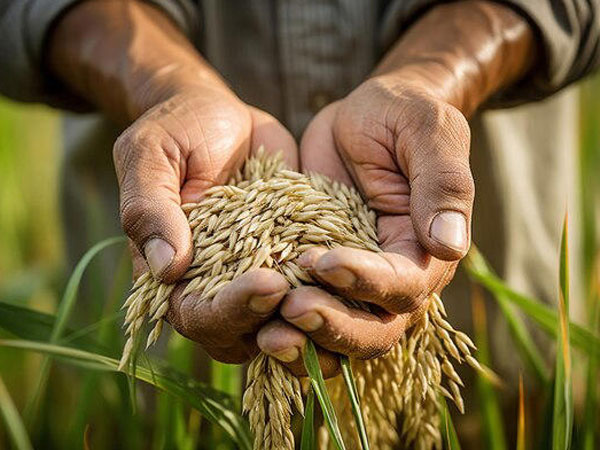
WHILE I have frequently analyzed the low productivity plaguing our agricultural sector, rice output in particular, readers often ask for a dedicated column on how to address this problem.
The points below, several of which I have advocated for in past columns, outlines the essential paths forward, backed by empirical data and decades of being a student, professor and practitioner of rural and agricultural development.
First, farm clustering and consolidation is imperative. The protracted implementation of agrarian reform has resulted in minuscule farm sizes wherein economies of scale can never be enjoyed. Application of modern farm machinery and technologies is severely constrained as small farmers owning a hectare of land or less are unable to afford them. Farm consolidation does not necessarily mean consolidation of land properties, but the aggregation of land for better production scheduling and management of farm operations.
Second, it is a cardinal principle in Agronomy 101 “to plant the right crop at the right time and at the right place.” This means that agricultural planning and project implementation must be conducted locally (regionally or at the provincial level). Vietnam did this by assigning specific areas for rice, coffee or cacao cultivation based on regional comparative advantage. Unfortunately, our agricultural planning process is the reverse. Plans emanate from the DA (Department of Agriculture) and percolate downward. This leads to mismatches where areas not suited best for planting rice are cultivated because of the existence of an array of subsidies that are not readily available for other crops.
Third, and related to the second item, is that our subsidy program is overtly biased to the provision of production support services (free seeds, fertilizers, fuel, etc.) whose consumption by farmers only lasts during the cropping season. This means endless and ever-increasing subsidies if we are to maintain the same or higher levels of productivity, surely a drain on the government coffers. This approach fits nicely to our patronage system wherein politicians extend an array of “ayudas” to purportedly show their concern for farmers, but more importantly gain their votes during election time. The downside is the ever-increasing budgetary support mainly benefits the farmer rather than the community.
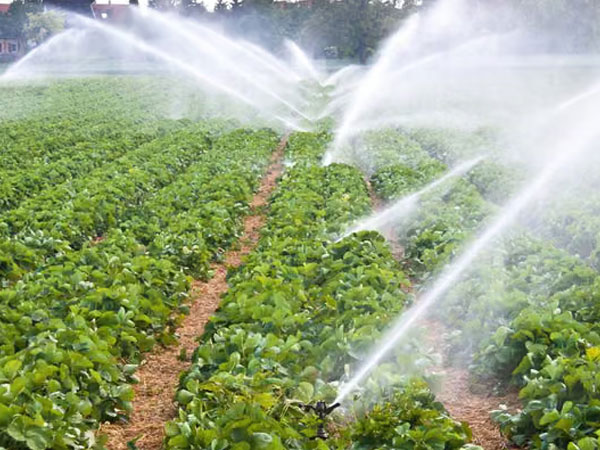
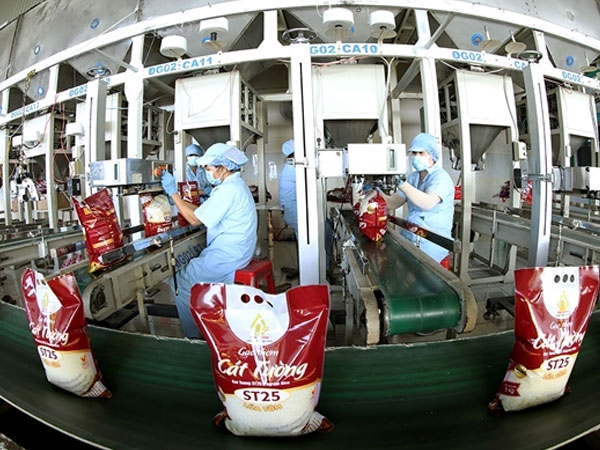
As an alternative, it is best to allocate more government resources to the provision of public goods (farm to market roads, irrigation, post-harvest facilities, research and development, logistics, etc.) that last longer and benefit the entire community. Countries like China and Vietnam effected this shift and the result is higher productivity and lower logistics costs for their agricultural products.
Fourth, investments in research and development (R&D) should be significantly increased. While the global benchmark dictates that one percent of agricultural gross value (GVA) should be devoted to R&D, we barely allocate 0.2 percent. Studies have shown that the highest return in agricultural investments is in R&D, but sadly, our policymakers and politicians do not adhere to science-based analysis but rather cater to populist ideas to win popular approval or votes.
Fifth, R&D results will not yield maximum benefit if there is no effective extension delivery system. The devolution of extension workers to local government units (LGUs) seriously weakened the system as local officials prioritized the appointment of individuals loyal to them rather than opting for recruitment based on technical merits. Sans technical competence, these recruits do not have the ability to fully understand the technical requirements of agricultural production. They have nothing to offer to upgrade the level of understanding and expertise of the small farmer and his family.
Sixth, it is indispensable that institutional changes are undertaken in the DA — the main agency tasked with implementing agricultural development projects. This requires a three-pronged approach.
For one, reputable agricultural scientists and economists must be appointed to senior leadership roles — a standard practice in agriculturally advanced nations like Malaysia, Thailand, Vietnam and China. This ensures that policy decisions are driven by hard data rather than mere gut-feel or populist stances. Having technically competent officials also guarantees that they possess the knowledge on latest scientific findings and global trends in agriculture trade.
There must also be leadership continuity in the DA as the average tenure of the department's chief is just two and half years. Agriculture development efforts take time to bear fruit. Crops and other agricultural commodities follow a natural cycle of growth and development. Thus, leadership continuity armed with the right vision, policy, plan and programs is indispensable in attaining sustained productivity and growth.
In addition, the DA’s rigid, commodity-based orientation must give way to a more functional approach to planning and implementation. The former has resulted in too much overlap in functions and waste of scarce government scarce resources. It promotes inefficiency because it does not afford flexibility in project implementation due to the commodity orientation of the budget process.
Seventh, there has to be officially agreed productivity targets. For instance, more than P100 billion is devoted to improving rice productivity but the goal is far from being attained. Our rice self-sufficiency ratio has been declining over the years despite a significant increase in the rice budget for the last two decades.
Given this huge amount of public funds devoted to agriculture, officials should be held accountable to achieving targets for priority commodities. That accountability can be strengthened if there is a robust and independent monitoring and evaluation system established to track progress made. At present, there is none.
Lastly, digital agriculture should be seriously pursued, including digitalization of the farmers and fishery registry, the use of satellite imaging to monitor actual cultivation, tracking of the availability of logistics services, etc. Digital agriculture will inevitably lead to the right-sizing of the DA bureaucracy given that technology will make a significant number of its personnel, particularly those hired under the contract of service basis, redundant.
Undeniably, these measures to promote greater agriculture and rice productivity will require a significant amount of political capital to execute. Sadly, the sagging popularity of the current administration will make it extra difficult to implement the much-needed reforms.









© Copyright 2025 The SSResource Media.
All rights reserved.