

 LAMPSAR, Senegal — Half smiling through crinkled eyes, Moussa Ndiaye, in his long tunic and skull cap, watched a combine harvest his northern Senegal rice paddy, where he expects a good haul, but not just of grain.
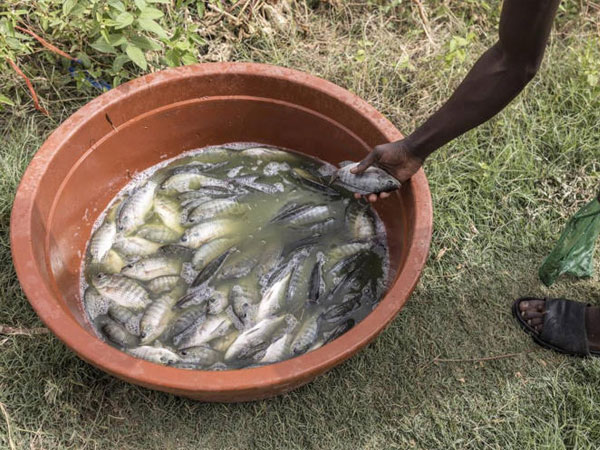
His field is part of a study which aims to fight one of the world's major parasitic diseases and increase rice yield by adding fish into paddies, which can then be caught and sold for profit: a rare win-win-win for local farmers.
In Senegal, rice and fish are ubiquitous dietary staples and practically a matter of national pride, so growing the two side-by-side is logical, those involved say.
Such nature-based solutions are part of a growing trend in science, and so far, the results have been promising: In the pioneering study, fish eat snails that cause the parasitic disease schistosomiasis, while also fertilising the rice with their poop.
Ndiaye's village, Lampsar, is in the lower Senegal River valley, near the border with Mauritania, where people have long lived off the waterway's fish.
But they are not traditionally kept in rice paddies.
"Since our youngest age, since our grandparents, we have fished. We're Waalo-Waalo," said the 80-year-old, referring to an ancient kingdom by which people in the region still identify.
In addition to fish, the area is known for schistosomiasis caused by parasites released by freshwater snails, which are common in the paddies.
Ndiaye has had the disease three times and his sons who worked in his fields also contracted it.
It can cause symptoms ranging from itchy skin to organ damage or even death and can be treated with medicine.
But that doesn't prevent reinfection or mitigate the time and money lost from missed school or work.
While deaths are difficult to calculate, the World Health Organization estimates that 254 million people require preventative treatment and that 94 percent of those needing treatment live in Africa.
Transmission of the disease has been reported in 79 countries, it says.








© Copyright 2025 The SSResource Media.
All rights reserved.