

- Dangote Rice Limited has taken delivery of a rice processing plant in Jigawa State, eight years after construction began in March 2018. The facility can process 16 tonnes of paddy per hour.
- The project forms part of Dangote's broader rice investment strategy, which includes a $1 billion commitment announced in 2014 and partnerships to expand local paddy production.
- Nigeria's rice imports are projected to rise 11% to 3.1 million tonnes in 2026/27, while local processors face high production costs, smuggling and increased competition from imported rice.
 Swiss food processing equipment manufacturer Bühler announced on November 11, 2026, that it had completed and handed over a rice processing facility in Hadin, Jigawa State, to Dangote Rice Limited. The handover marks the completion of a project that Nigerian billionaire Aliko Dangote launched with a groundbreaking ceremony in March 2018.
According to Bühler, the facility can process 16 tonnes of paddy rice per hour. It combines several processing stages, including pre-cleaning, drying, storage, parboiling, milling and packaging.
Neither Dangote Group nor Bühler disclosed the plant's investment cost. However, the InvestJigawa state investment agency's project register, updated in September 2026, values the Dangote Rice Mill project in Hadin at $150 million. The figure covers both the processing facility and an associated commercial farming program in Jigawa State.
Part of a Broader Investment Strategy
The Jigawa rice mill forms part of a strategy that Dangote Industries launched in 2014 through an agreement with Nigeria's federal government. Under the agreement, the group committed to investing $1 billion in domestic rice production and processing. The initial program included plans to acquire 150,000 hectares of farmland across five states: Edo, Jigawa, Kebbi, Kwara and Niger. Dangote also planned to construct two rice mills with a combined processing capacity of 240,000 tonnes of paddy.
The group subsequently expanded its industrial ambitions. During the Jigawa plant's groundbreaking ceremony in March 2018, Aliko Dangote described the facility as the first of six planned rice mills. At the time, the group targeted combined annual production capacity of 700,000 tonnes of parboiled rice once all six facilities became operational. However, available information does not confirm whether Dangote has completed all the planned projects.
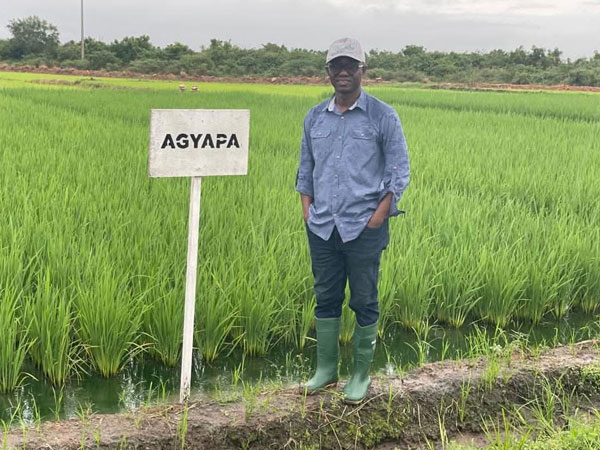
Alongside its processing investments, the group has developed a network of partner farmers to secure paddy supplies. In February 2016, Dangote launched a farming support program covering 8,000 hectares in Hadejia, Jigawa State. Under the initiative, Dangote Rice Limited supplied farmers with seeds, agricultural inputs and technical assistance. The company also committed to purchasing their harvests at agreed prices.
The group expanded this sourcing strategy in July 2025 through a 10-year partnership with Niger Foods, a state-owned company in Niger State. The agreement covers the development of 25,000 hectares of commercial rice farms and support for 50,000 local farmers. In May 2026, Dangote said it had committed to purchasing one million tonnes of paddy from Niger Foods over the duration of the agreement.
These investments come as Nigeria continues to rely heavily on imported rice. According to forecasts from the US Department of Agriculture (USDA), Nigeria's rice imports will increase by 11% to 3.1 million tonnes in the 2026/27 marketing year. The USDA estimates domestic rice consumption at 9.1 million tonnes over the same period.
A Challenging Environment for Local Processors
Dangote's new rice mill enters operation as Nigeria's domestic processors struggle with profitability. In March 2026, Andy Ekwelem, Managing Director of the Rice Processors Association of Nigeria (RIPAN), said approximately 90 of the country's 150 rice mills had suspended operations. According to the industry association, the remaining operational facilities were running at between 30% and 70% of their installed capacity.
Processors mainly blame competition from illegally imported rice, which traders sell at lower prices than locally produced alternatives, as well as rising production costs and inadequate infrastructure. These pressures also affect rice farmers. According to BusinessDay, the price of a tonne of paddy fell to approximately 350,800 naira ($261) in April 2026, compared with 720,000 naira during the same period in 2025. The decline represents a drop of nearly 51%. Lower selling prices and high production costs prompted some farmers to reduce their planned cultivation areas for the 2026 growing season.
Meanwhile, changes to Nigeria's import duties could intensify competition for domestic processors. As part of its efforts to curb food inflation, the government reduced the import tariff on bulk rice and rice packaged in quantities exceeding 5 kilograms from 70% to 47.5% in 2026. The measure aims to improve market supplies and contain consumer prices. However, local processors fear that lower import duties could increase competition from foreign rice.
For Dangote, the challenge will therefore extend beyond increasing processing capacity. The group must also secure reliable paddy supplies and produce rice at competitive prices to establish a stronger position in Nigeria's domestic market.




© Copyright 2025 The SSResource Media.
All rights reserved.