

 The government has been called upon to implement deliberate policy interventions to increase local rice consumption in the country.
The Managing Director, Franco Food Processing and Farms, Franco Obuor, who made the call, said the influx of foreign rice into the Ghanaian market and its associated patronage by Ghanaians continue to threaten the survival of the local rice industry.
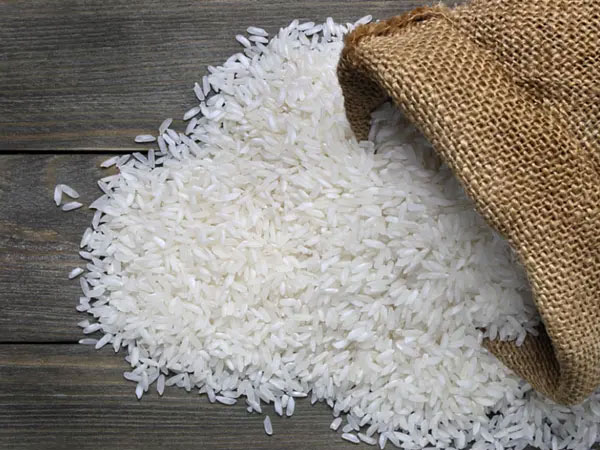
“The problem we have is that the foreign rice in the market is cheaper than the local rice, resulting in the low patronage of locally produced rice and its attendant consequences on the players in the industry”, he said.
Visit
Mr Obour made the remarks while interacting with a section of the media during a field visit to his outfit at Ampabame in the Ejisu Municipality in the Ashanti Region.
The visit formed part of the implementation of a World Food Programme (WFP) led project aimed at tackling micronutrient deficiencies among school-aged children who rely heavily on rice as a staple food.
The team also toured the Ejisu Senior High Technical School, one of the beneficiary schools, to interact with the management and students.
The project is being carried out in collaboration with the Ghana School Feeding Programme (GSFP) under the Ministry of Gender, Children and Social Protection, the Ghana Education Service (GES), and the Ghana Health Service (GHS), targeting both public and low-fee private schools across six regions.
The pilot project, with funding support from the United Kingdom’s Foreign, Commonwealth & Development Office (FCDO), has been rolled out in the Upper East, Upper West, Northern, Ashanti, Oti and Greater Accra regions.
Beneficiaries
In total, 157,510 students, comprising 111,247 basic school pupils and 46,263 senior high school students, are being targeted under the fortified rice intervention.
More importantly, as part of the project, the WFP invested in local rice fortification capacity by delivering rice fortification equipment valued at over $80,000 to selected millers.
With the support, BBN Cooperative in the Upper East Region and Franco Farms in the Ashanti Region supplied 170 tonnes of fortified rice and 61.7 tonnes of parboiled unpolished rice in 2025 to nine selected senior high schools in the Upper East, Northern and Ashanti regions.
Total ban
Responding to a question on whether there should be a total ban on rice importation, he called for either a total ban for a period or a reduced rice percentage importation to protect local rice farmers.
“The quantities of local rice produced within Ejisu and Ampabame can feed all the senior high schools within the area, but because of the competition from the foreign rice, there is always a glut”, he said.
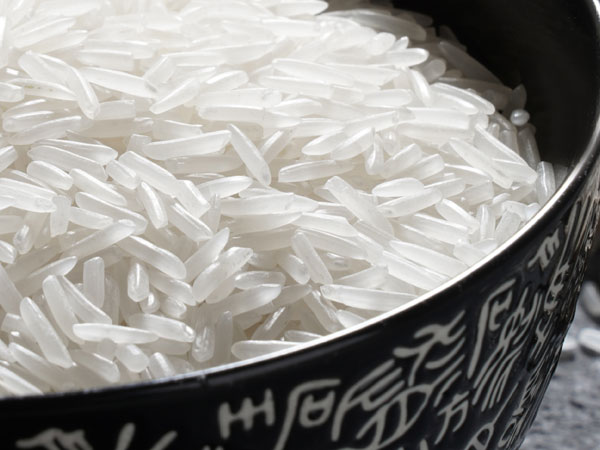
Touching on rice fortification, he acknowledged that consumers were not used to fortified rice as they preferred the white rice, saying, “It is going to take a while for people to get used to it”.
Other speakers
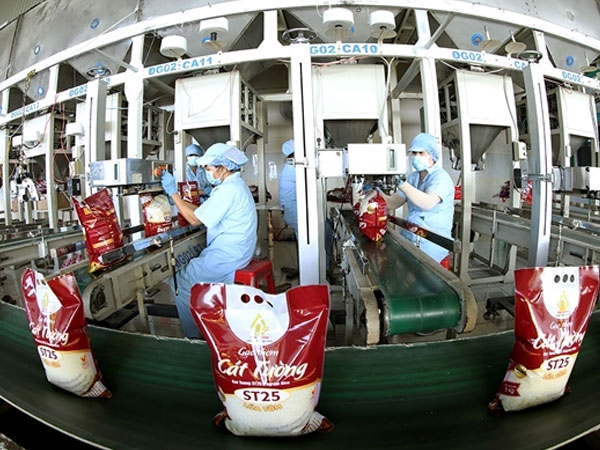
In a remark, the Production Manager/Process Manager at Franco Food Processing and Farms, Solomon Osei Sarfo, said that, due to complaints about stones in local rice, they used a destoner to remove all foreign materials, including stones, from the rice processing.
He said, “It may come at a cost, but then the quality of the rice is the most important thing if you want to break into the market”.
One of the rice farmers, Jacob Asamare, expressed worry about the lack of market for their rice products, stressing, “It is very disheartening that we continue to struggle to sell our rice to get income to better our lives”.
For her part, the Headmistress of the Ejisu SHTS, Grace Asamani, commended the WFP for the intervention as it had helped to improve the nutrition of the students in the school.



© Copyright 2025 The SSResource Media.
All rights reserved.