

With more and more farmers preferring paddy, the Union government has been focusing on crop diversification. It is not only looking at farm income and nutritional security, but also conservation of water resources.
Last week, Union Agriculture Minister Shivraj Singh Chouhan said that India had surpassed China to become the world’s largest rice producer in 2024-25.
India produced around 150 million metric tonnes while China produced 145.28 million tonnes in that year. India currently accounts for around 28% of global rice production.
A decade ago, however, India’s rice production was 104.4 million metric tonnes while China’s was 148.5 million metric tonnes — pointing to a steady growth in India output and a stagnation in China’s.
While Chouhan described India’s pole position as an “extraordinary achievement”, this is not all good news. The advantages offered by paddy has led to its cultivation even in water-scarce areas. Its yield is uneven across different states. And the dominance of paddy raises questions over crop diversification and nutritional security. The Indian Express examines the challenges behind the impressive production numbers.
Steady rise in production
|
ear |
Area for all seasons (in million hectares) |
Production (in million tonnes) |
|
1969-70 |
37.67 |
40.43 |
|
1979-80 |
39.42 |
42.33 |
|
1989-90 |
42.16 |
73.57 |
|
1999-00 |
45.16 |
89.68 |
|
2009-10 |
41.92 |
89.1 |
|
2019-20 |
43.66 |
118.87 |
|
2024-25 |
51.42 |
150 |
India’s rice production has increased steadily over the years. Between 1969-70 and 2024-25, the area (for all seasons) under paddy cultivation increased by more than 36%, yield tripled and production almost quadrupled.
A significant jump in area and production came in just the last five years. In 2019-20, the area under paddy was 43.66 million hectares and rice production was 118.87 million metric tonnes. In 2024-25, these figures increased to 51.42 million hectares and 150 million metric tonnes.
Consequently, India’s share in the global output also increased from 21.95% in 2011 to 28% in 2024.
While India and China are nearly neck and neck at the top two places, other countries are far behind them. Bangladesh (36.6 million metric tonnes) and Indonesia (34.1 million metric tonnes) are at a distant third and fourth place, respectively.
India’s rice stocks far exceed its needs
With rising production and increasing procurement, the rice stock in the central pool has been consistently rising over the years.
As on January 1, 2026, the rice stock (including unmilled paddy in terms of rice) in the central pool stood at 63.06 million metric tonnes. This is much higher than the buffer stock and public distribution requirements under the National Food Security Act, 2013 (NSFA).
As per the Foodgrains Stocking Norms for Central Pool, which came into effect from January 2015, the rice stock in the central pool should be 7.61 million metric tonnes on the first day of January. In addition to this, about 37.2 million tonnes of rice is required to meet the annual requirement under the NFSA and other welfare programs.
In recent years, the government has tried to offload rice in the open market. It has also provided rice for making ethanol. Despite these measures, however, the stock has remained high.
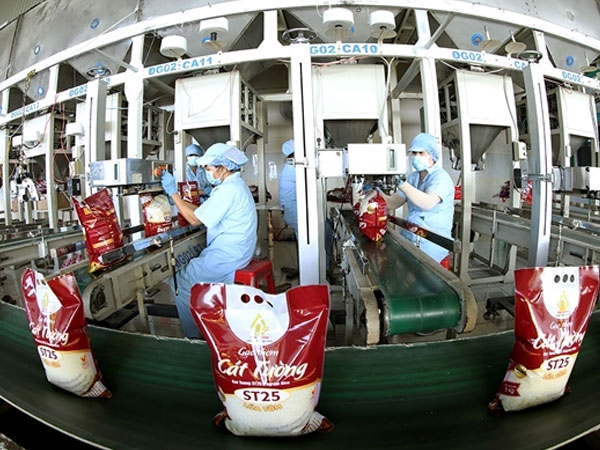
During the 2023–24 kharif marketing season, the Food Corporation of India procured 525.48 lakh metric tonnes of rice, which accounts for 38.13% of the total rice production in the country, according to Agriculture Ministry officials. Nearly 56.10% of the total rice procurement is from Punjab, Haryana, Chhattisgarh and Odisha, the officials said.
Why paddy is so attractive
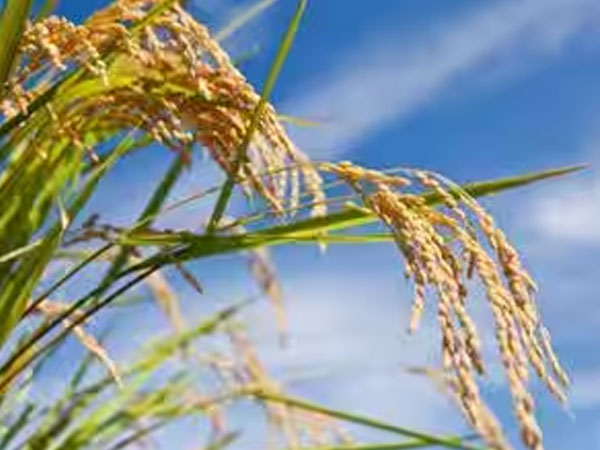
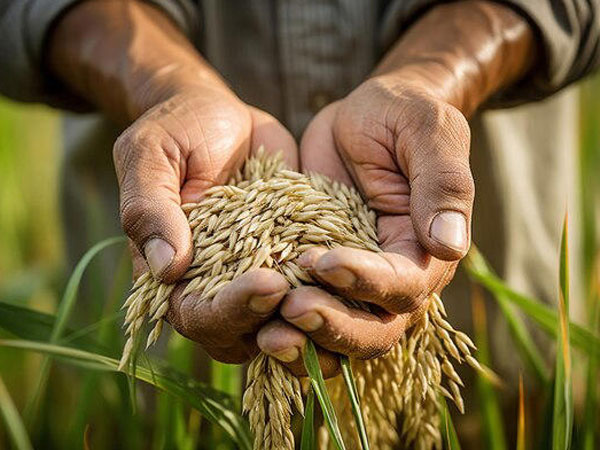
Paddy is India’s most widely grown crop. It is grown in 614 of India’s approximately 800 districts and covers an area of 514.23 lakh hectares (as of 2024-25). For context, the second most widely grown crop in India, wheat, covered an area of 328 lakh hectares.
It’s not difficult to understand why. Paddy provides higher returns to farmers than other crops and its procurement is assured on the basis of a minimum support price (MSP).
At the 2021-22 MSP rate, the net return on paddy cultivation was Rs 56,226 per hectare. For maize and moong, it was just Rs 17,856 and Rs 45,665, respectively, according to Agriculture Ministry officials.
Another key factor is the stagnant or declining yield of other crops. For instance, the cotton yield declined from more than 500 kg per hectare in 2013-14 to 440 kg per hectare in 2024-25 — far lower than the global average of 886 kg per hectare.
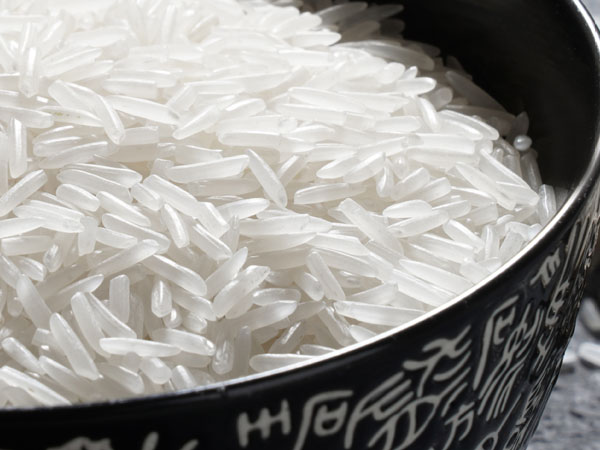
India is also the world’s leading rice exporter. The country exported six million tonnes of basmati and 14.13 million tonnes of non-basmati rice during 2024-25, earning $5.9 billion and $6.5 billion respectively. India exported basmati to Saudi Arabia, Iraq, Iran, Yemen, the UAE, the US, the UK, Kuwait, Oman, Qatar, Jordan and Israel during 2024-25.
The issues with paddy cultivation
The paddy crop is highly water intensive — it takes about 1-3 tonnes of water to produce a single kilogram of rice.
The fact that it is grown so widely means that it has led to a depletion in groundwater levels in several parts of the country. For instance, the excessive withdrawal of groundwater in Punjab has caused several health and environmental challenges. It has also been grown in states that have already been experiencing a decline in groundwater levels.
The rice yield also diverges widely across states due to factors such as agro-climatic conditions. In 2024-25, the yield per hectare was 4,428 kg in Punjab, 3,928 kg in Andhra Pradesh, 2,561 kg in Bihar and 2,824 kg in Uttar Pradesh. The national average was 2,929 kg per hectare.
Moving away from paddy
With more and more farmers preferring paddy, the Union government has been focusing on crop diversification. It is not only looking at farm income and nutritional security, but also conservation of water resources.
The Agriculture Ministry recently came up with an idea to incentivise farmers who stop paddy cultivation and start sowing alternative crops. The ministry, late last year, said this incentive could be funded using the savings from the economic cost of rice — which is pegged at Rs 1.36 lakh per hectare.
This figure factors in costs incurred by the FCI on MSP-based procurement, milling, transport and storage.
“Rice stored in the godowns of FCI costs approximately Rs 33 per kg including procurement costs, milling, transport, storage, etc. Accordingly, assuming yield of rice 41.25 quintals per hectare, the government spends about Rs 1,36,000 per hectare. This does not include subsidies given for power, fertilisers and seed,” said one Agriculture Ministry official.
So, if one hectare area of rice is left fallow or a crop that is not procured is grown, the government has a “resource saving of Rs 1,36,000 per hectare”, said this official.
The districts with a lower paddy yield than the national average (2,929 kg per hectare) and lower area coverage can be the focus areas for crop diversification, said officials.
Another official said the idea is to promote oilseeds and crops such as pulses in place of rice so that dependence on imports can be curtailed, said a source. India is heavily dependent on imports to meet its domestic edible oil demand.
Oilseeds and pulses may be promoted in a phased manner in accordance with their agro-climatic suitability and soil conditions, officials said.



© Copyright 2025 The SSResource Media.
All rights reserved.