

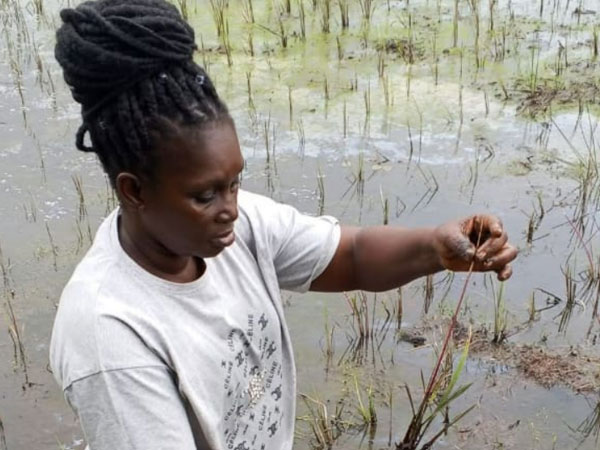
 SUAKOKO – The Central Agricultural Research Institute has recommended that lowland rice farmers across Liberia plant three to four seedlings per hill as a proven way to significantly improve rice yields, following the conclusion of a recent scientific study conducted under controlled field conditions.
The findings of the research were disclosed by Madam Zipporah Page, Regional Agriculture Coordinator for Bong, Lofa, and Nimba Counties and a Research Officer at CARI, who said the study was undertaken to address long-standing uncertainties surrounding optimal planting practices among local rice farmers.
She explained that many farmers traditionally transplant one or two seedlings per hill based on habit rather than scientific guidance, a practice that often limits productivity.
According to Madam Page, the research was designed to identify the most effective number of seedlings per hill for lowland rice cultivation. The study tested four separate treatments involving the planting of one, two, three, and four seedlings per hill, all grown under the same environmental and management conditions to ensure accurate comparison of growth and yield performance.
She said the results of the study clearly demonstrated that rice planted with three and four seedlings per hill outperformed those planted with one or two seedlings. The plots with higher seedling numbers showed stronger plant vigor, better stand establishment, and improved overall performance throughout the growing cycle.
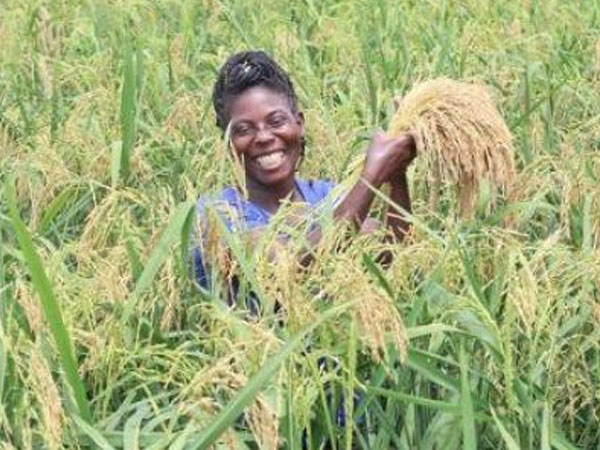
Madam Page noted that the research dispelled the common belief that planting fewer seedlings automatically leads to better yields. Instead, she said the findings showed that an optimal increase in seedling density allows the plants to better utilize available nutrients, sunlight, and space, resulting in higher grain output at harvest.
She further explained that the success seen in major rice-producing countries is largely due to the consistent application of research-based farming techniques rather than any extraordinary natural advantage.
According to her, simple agronomic practices, such as the correct number of seedlings per hill, play a critical role in improving productivity when properly applied.
“The high yields achieved in advanced rice-producing countries are not accidental,” Madam Page said. “They are the result of deliberate use of scientific research and modern farming practices, many of which can be adapted to our local conditions.”
Based on the outcome of the study, CARI is now officially recommending that lowland rice farmers adopt the practice of transplanting three to four seedlings per hill.
The institute believes that widespread adoption of this method could lead to substantial improvements in rice yields, increased household food security, and reduced dependence on imported rice.
Madam Page also encouraged farmers to be more open to research-driven agricultural innovations, stressing that science remains a vital tool in addressing Liberia’s food production challenges.
She emphasized that collaboration between farmers, researchers, and extension workers is essential to translating research findings into practical results on the farm.
She added that CARI remains committed to conducting applied agricultural research and sharing findings with farmers through outreach and extension programs aimed at strengthening the country’s agricultural sector.
The recommendation comes at a time when Liberia continues to prioritize rice production as a key component of its food security strategy, with stakeholders calling for improved yields through affordable and sustainable farming practices.







© Copyright 2025 The SSResource Media.
All rights reserved.