

 The Indian authority sought word mark registration; trade analysts and GI expert find gap in the government approach to getting GI for the fragrant rice
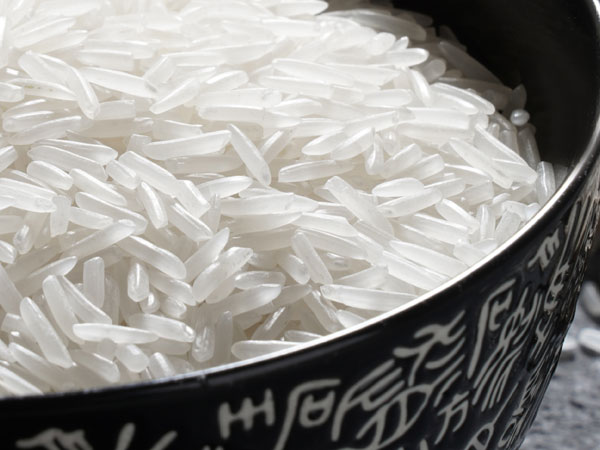
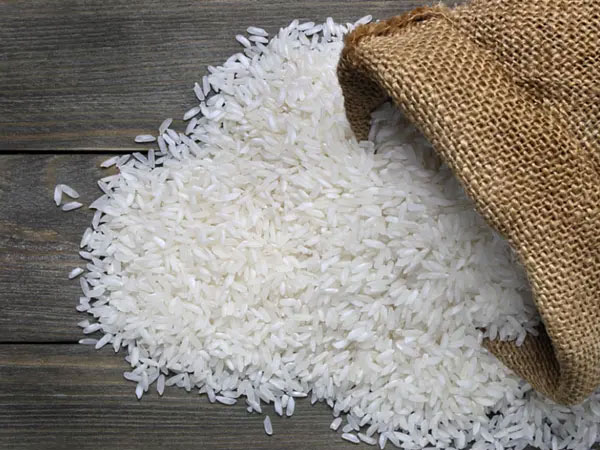
The Federal Court of Australia has dismissed an appeal by the Agricultural and Processed Food Products Export Development Authority (APEDA) seeking registration of the single-word mark “Basmati rice,” akin to Champagne.
The Federal Court ruled that the word mark is not capable of distinguishing APEDA-certified goods from non-certified goods under Section 177(2) of Australia’s Trade Marks Act 1995.
Section 177 provides an additional ground for rejecting an application or opposing the registration of a certification trade mark when it is not capable of distinguishing certified goods or services.
Section 177 (2) specifies that the registrar must take into account the extent to which the certification trade mark is inherently adapted so to distinguish those goods or services. It stipulates that the registrar much decide the extent to which the certification trade mark, because of its use or of any other circumstances, has become adapted so to distinguish those goods or services.
Only for wines
Trade analysts and a GI expert found a gap in the Indian government’s approach to GI. In general, India should seek GI status for Basmati. “The New World countries (Australia, New Zealand, Canada and Australia) have GIs merely for wines. They do not have legislation to address the need of India’s GI requirements. Hence, it is having to seek word mark certification,” said S Chandrasekaran, author of “Basmati Rice: Natural History Geographical Indication”.
India should move the World Trade Organisation to seek full implementation of Section 3 of the Trade-Related Intellectual Property Rights (TRIPS) Agreement in such member countries to get recognition for basmati and other unique products such as Darjeeling tea. “Probably, India should demand that unique agricultural products be given GI status,” he said.
Trade analysts said when India was facing problems getting a GI tag for its unique agricultural products, it should have got them included in its free trade agreements with various countries, including Australia.
Prosecco example
India has been unsuccessful in getting Basmati word mark registration in Australia, New Zealand and Kenya. In all these countries, its approach has been almost the same, they said. In the EU, India’s application has been pending since July 2018.
“If the EU can get GI status for its Prosecco wine, why can’t we get similar status for Basmati and other products? Pakistan agriculture was created through hydraulic colonies just before 1947. India should have contested its case based on the historic reputation of Basmati origin,” said Chandrsekaran.
APEDA, the statutory body responsible for protecting and regulating Geographical Indication (GI) products, had appealed to the Federal Court against the Registrar of the Australian Trade Mark Office ruling for protection. The Indian authority sought protection for the term “Basmati” as a Geographical Indication.
‘Not only in India’
Justice Dowling J dismissed APEDA’s appeal with costs (it has to pay costs incurred by the Australian Registrar of Trademarks), saying he was not satisfied that a Basmati trade mark “is capable of distinguishing goods certified by APEDA from goods not certified” by it.
The Indian authority had appealed against the Australian Trademark Office ruling made in January 2023 in the Federal Court. The Trademark Office refused APEDA’s application for a certification trade mark, saying Basmati rice is “not grown only in India”.
Neighbouring Pakistan has heaved a sigh of relief over the ruling, with its Ministry of Commerce welcoming the dismissal of APEDA’s appeal. The Indian authority sought a “de novo” (from the beginning) hearing, but the court said it didn’t need to find error in the trade mark office’s ruling.
TRIPS obligation
Conceding Australia’s obligations under the TRIPS agreement to recognise GI, Dowling said they, however, do not provide a principled basis to expand the scope of Canberra’s trade mark registrations.
“... international agreements like TRIPS do not expand Australian certification trade mark law to automatically protect external geographical indications without meeting domestic distinctiveness standards,” said Dowling.
The Trade Marks Office said its registrar relied on the National Library of Australia’s evidence that a search for basmati and rice returned publications in Australia referring to Pakistan as the place of origin of Basmati rice.
Analysts pointed out how earlier this year, the EU signed a free trade agreement with Australia. The EU won a major concession that requires Canberra to introduce a GI protection system for spirits and agricultural goods.
APEDA argument
Per the deal, Australia will have to protect 231 spirit GIs and 165 agricultural goods GIs, primarily dairy and small goods. However, Australia has got concessions allowing it to use names for certain products such as Prosecco from the EU until they are phased out over a period of 10 years.
APEDA, which filed an application for the word mark on February 26, 2019, argued that between 1988 and August 2018, the volume of Indian basmati sold in retail outlets was over 3,06,095 tonnes, valued at $380 million. In contrast, Pakistan’s sales were $44.12 million.
The judge said he would not consider sales data as the “most probative” evidence or factual proof. Technically, APEDA can challenge the findings in the High Court of Australia, the final court of appeal.










© Copyright 2025 The SSResource Media.
All rights reserved.