

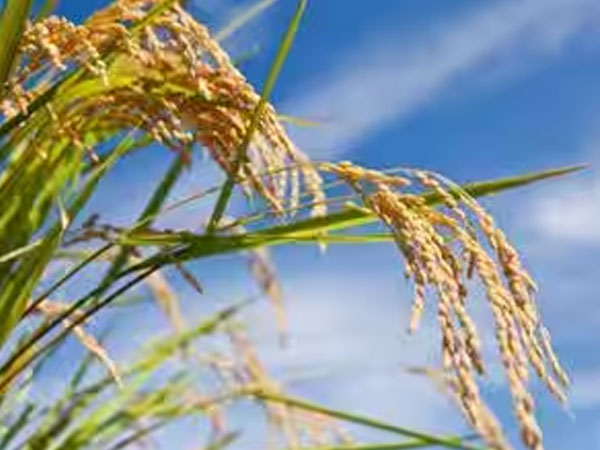
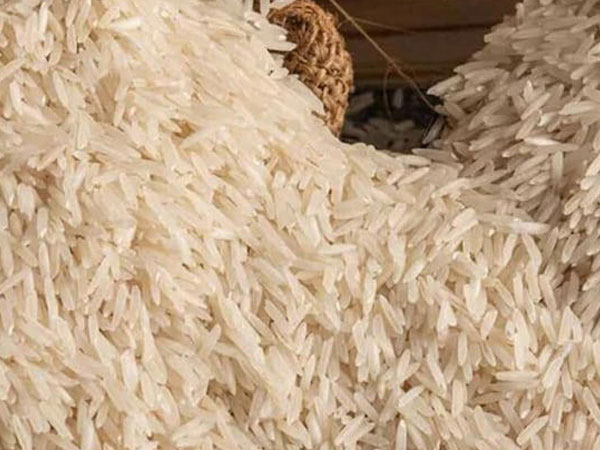
 Global rice production came close to doubling between the 1960s and the 2010s – a remarkable achievement given that climate change was actively working against it the whole time.
A new study found that human decisions deserve much of the credit. Expanded irrigation, increased fertilizer use, and improved farming practices allowed farmers to grow more rice more efficiently.
Without those interventions, the picture would look considerably worse.
The research was led by Atul Jain, a professor of climate, meteorology and atmospheric sciences at the University of Illinois Urbana-Champaign, alongside former graduate student Tzu-Shun Lin.
The study combined field observations with process-based modeling to examine what actually drove changes in global rice production over the past half-century.
This method helped separate out the contributions of climate, rising CO2, and agricultural management decisions.
What drives rice production?
Rice is not one crop among many. It is the staple food for roughly half the global population, and the stakes around its production are correspondingly high.
“Rice sits at the intersection of food security, economic development, and environmental change,” Jain said.
“Today, most of the world’s rice grows in Asia, with China, India and countries across South and Southeast Asia accounting for the largest share of global production.”
What makes this study different from much of the previous research is its scope. Earlier work tended to isolate individual variables, looking at how CO2 affects yields, or how temperature shifts change growing conditions.
This study took a more integrated approach. The researchers examined how environmental change and agricultural management decisions interacted across regions and over time.
The picture that emerged is more complicated than either optimists or pessimists about food security tend to acknowledge.
Climate wasn’t the only factor
Climate change reduced global rice production by an estimated 7 percent between 2006 and 2015. Warming temperatures, heat stress during critical growth periods, and water shortages all took a toll.
In India, the losses were the largest of any country, and Indonesia and China followed. These are among the world’s most important rice-growing regions, which makes the finding highly important.
But climate change didn’t tell the whole story. Rising atmospheric CO2 – the same driver behind global warming – also boosted production by enhancing photosynthesis and improving the efficiency with which plants use water.
The two forces pulled in opposite directions, and in some regions they roughly canceled each other out. The decisive factor, in the end, was management.
“The decisions made by farmers, industry, and policymakers have been instrumental in sustaining rice production and improving food security for billions of people,” Jain said.
“Our study shows that the increase in rice production was driven primarily by management decisions – in the form of expanded irrigation, increased nutrient inputs and adoption of farming practices.”
How rice farmers drove growth
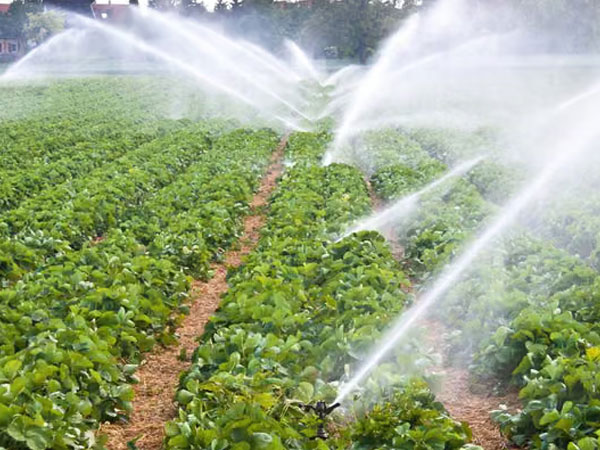
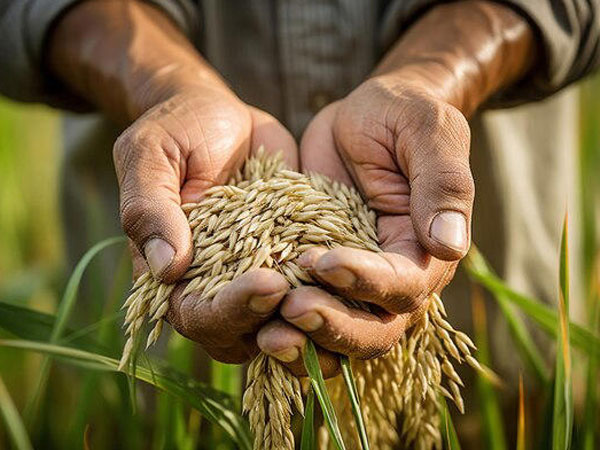
The specific practices that drove production gains include expanded irrigation systems, increased use of nitrogen fertilizer and manure, adoption of multiple growing seasons, and shifts in planting methods.
None of these are passive responses to environmental conditions. They are choices made by farmers, supported by policy, and enabled by infrastructure investment.
Thus, the near-doubling of production wasn’t simply something that happened to the agricultural system. People built it, deliberately, over decades.
And the corollary is that maintaining production going forward will similarly depend on deliberate choices, not just on whether the climate cooperates.
Climate pressure is catching up
The study doesn’t offer reassurance that the current trajectory will hold. Climate pressures are intensifying, and the management gains of the past half-century can’t simply be replicated indefinitely.
At some point, the buffering capacity of irrigation expansion and fertilizer inputs runs into physical and environmental limits.
“Food security and environmental sustainability must be addressed together,” Jain said.
“This is critical, as our study shows that climate change is already affecting rice production in some of the world’s most important rice-growing regions.”
“India experienced the largest climate-related rice production losses, followed by Indonesia and China, highlighting the importance of developing management strategies that can sustain rice production while adapting to increasing climate pressures.”
Searching for sustainable solutions
The research team’s next step is to use the same framework to model future scenarios that could identify pathways that meet growing demand while reducing the environmental footprint of production.
That includes examining how strategies aimed at boosting yields affect greenhouse gas emissions and water resources.
The past 60 years showed that human ingenuity can outrun climate damage, at least for a while.
The question now is whether it can keep doing so, and at what cost to the systems, water supplies, and soils that rice production depends on.
The study is published in the journal Scientific Reports.




© Copyright 2025 The SSResource Media.
All rights reserved.