

Key Takeaways
- BAAC, in partnership with GIZ, launched climate-smart subsidies and low-interest loans totaling over USD 164 million.
- The program targets around 40,000 rice farmers across 21 provinces between 2023 and 2028.
- Financial mechanisms include direct incentives and preferential loans to support climate-smart rice farming.
- The initiative aims to reduce greenhouse gas emissions while improving farmer resilience and incomes.
- The program is part of the Thai Rice GCF Project, supported by international and national partners.
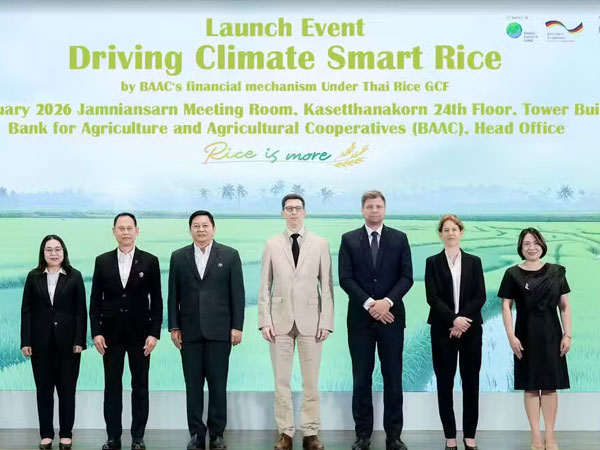 BAAC Introduces Climate-Smart Financial Mechanisms for Rice Farmers
The Bank for Agriculture and Agricultural Cooperatives (BAAC), in collaboration with Deutsche Gesellschaft für Internationale Zusammenarbeit (GIZ), has launched climate-smart subsidy and low-interest loan schemes under the Thai Rice: Strengthening Climate-Smart Rice Farming (Thai Rice GCF) Project.
The combined budget exceeds THB 5.3 billion, equivalent to approximately USD 164 million, and is designed to support Thai rice farmers in transitioning toward low-emission, climate-resilient farming practices.
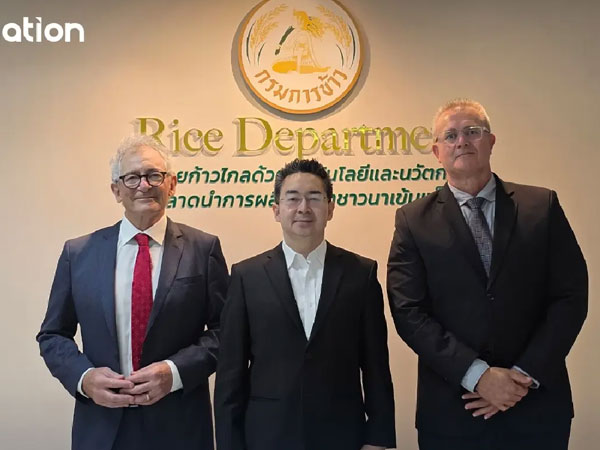
The initiative was officially announced by Mr. Paisan Hongtong, Senior Executive Vice President of BAAC, during an event co-organised with GIZ in Bangkok.
BAAC Addresses Climate Risks in Thailand’s Rice Sector
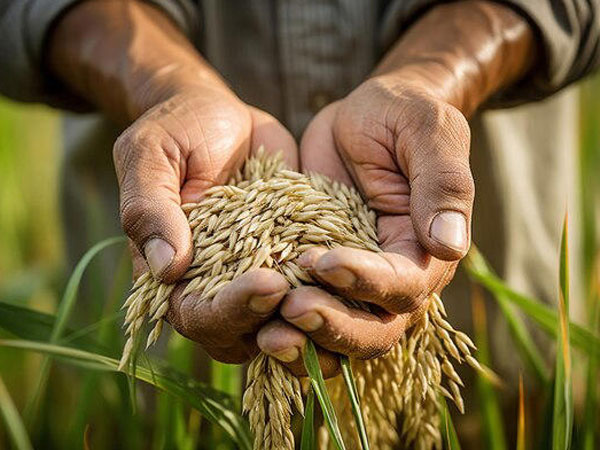
Thailand’s conventional rice farming relies heavily on continuous flooding, which generates methane emissions—a significant greenhouse gas. BAAC highlighted that Thailand is among the 16 countries most vulnerable to climate change impacts over the next three decades, with risks including declining rice yields, income instability, and threats to food security.
Mr. Paisan Hongtong emphasized the urgency of transforming rice production systems, noting that climate-smart rice farming can simultaneously increase productivity, enhance farmer livelihoods, and reduce environmental impacts.
BAAC’s Climate-Smart Incentive and Loan Programs
To support this transition, BAAC introduced two core financial mechanisms known as Climate-Smart Packages.
The Climate-Smart Incentive (CSI) program allocates approximately THB 300 million (around USD 9.3 million) to support farmers piloting climate-smart rice farming practices. Farmers can choose from three subsidy levels:
- Package S: THB 500 per rai (≈ USD 15.50)
- Package M: THB 1,000 per rai (≈ USD 31.00)
- Package L: THB 1,600 per rai (≈ USD 49.60)
Each household may receive incentives for up to 10 rai.
In parallel, BAAC launched the Climate-Smart Loan (CSL) scheme with a total credit line of THB 5 billion, equivalent to approximately USD 155 million. The CSL offers preferential interest rates to farmers who complete approved training programs on climate-smart technologies and financial planning, enabling access to working capital and investment financing aligned with Thailand’s Bio-Circular-Green (BCG) economic model.
Integrated Finance to Support Farmer Transition
Timo Menniken, Country Director of GIZ Thailand, said: “Through the Climate-Smart Incentive (CSI), we reward farmers for their stewardship, while the Climate-Smart Loan (CSL) bridges the gap for the necessary upfront investments in technology. This integrated approach de-risks the transition and builds farmer confidence.”
The five-year project targets farmers across 21 provinces, including Chiang Mai, Ubon Ratchathani, Suphan Buri, Ayutthaya, and Nakhon Sawan. Farmers can apply through local agricultural offices and BAAC branches after completing required training programs.
The initiative represents one of Thailand’s largest climate-focused agricultural finance efforts, positioning BAAC as a central financial driver of climate-smart rice production.







© Copyright 2025 The SSResource Media.
All rights reserved.