

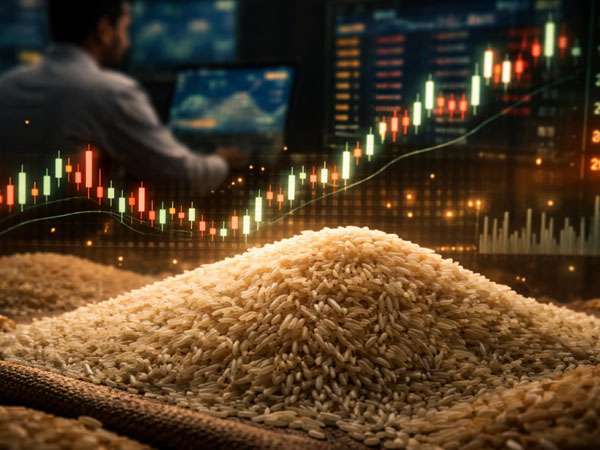
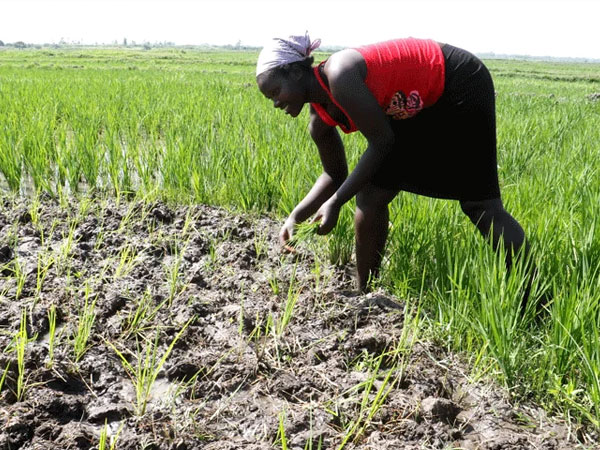
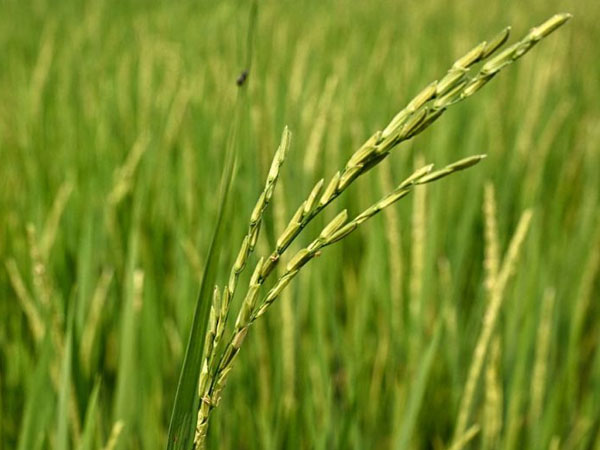
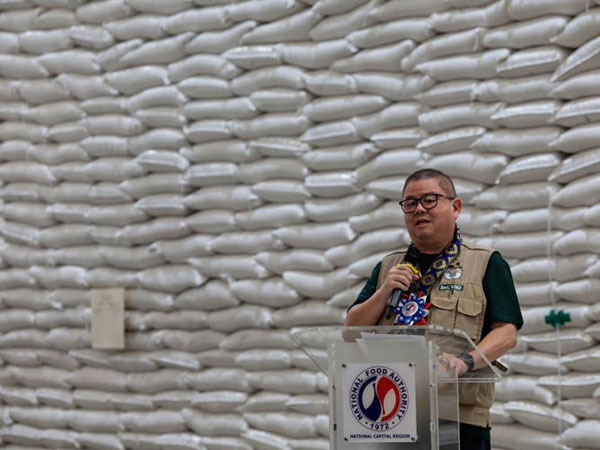
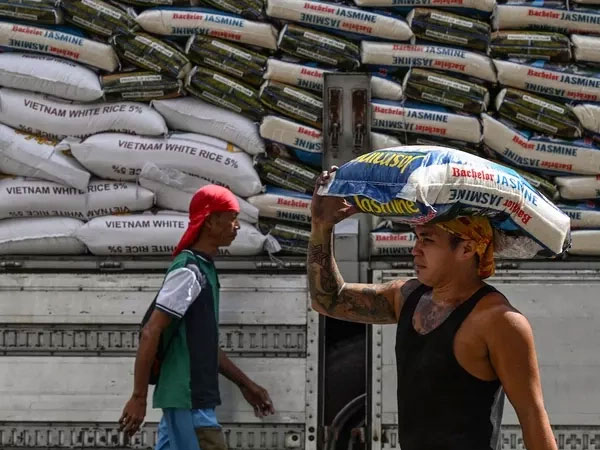
 For most of the past decade, rice was the commodity that did not cause trouble. Production rose almost every year, stocks rose with it, and apart from India’s export restrictions of 2022 and 2023, buyers in Manila, Dhaka and Kuala Lumpur could count on Bangkok, Ho Chi Minh City and Kolkata to supply them at manageable prices. That pattern is now ending. In May, the US Department of Agriculture forecast that global rice production in 2026 to 2027 would fall for the first time in 11 years. Its October Rice Outlook confirmed the trend and made it larger. World output is now projected at 533.1 million tonnes, milled basis, down 12.6 million tonnes from 2025 to 2026 and a three-year low. Consumption is forecast to reach a record 538.8 million tonnes and global trade a record 61.4 million tonnes. For the first time in years, the world will eat more rice than it grows, and ending stocks are forecast to fall by 5.7 million tonnes to 198.5 million. The Food and Agriculture Organisation (FAO) reaches the same conclusion with somewhat different numbers. Its October brief puts 2026 to 2027 production at 552.5 million tonnes, 2.4 per cent below the previous year’s record, with utilisation at 559.1 million tonnes. It notes that stocks, while falling, could still be the second highest on record. That is the central tension of this season. The world is not short of rice. It is short of rice in the right places, held by governments willing to sell it. Why the harvest is shrinking Two shocks are hitting the same rice belts at once. The first is fertiliser. The closure of the Strait of Hormuz from late February pushed urea above US$850 a tonne in April, as covered in the previous CROSSWINDS instalment, just as farmers across South and Southeast Asia were deciding how much to apply for the main season. Thailand’s Kasikorn Research projected that in-season rice output from May to July would fall 21 per cent. The FAO’s chief economist warned in April that decisions made during the 2026 planting window would set the 2027 harvest and could not be undone. The second is weather. India’s monsoon ended September with a 15 per cent rainfall deficit, and 19 of its 36 meteorological subdivisions, covering about half the country’s area, recorded deficient rain. Market commentators expect India’s output to fall this year for the first time in a decade, after weak rain during grain filling and floods in some growing areas. The government’s first advance estimate of kharif production, usually published by the end of September, had still not appeared by mid-October. In Thailand, flooding in the central and northern provinces in early October threatened the late second-crop harvest. The Philippine agriculture department has been planning around a strong El Niño. The USDA identifies India, Myanmar and the United States as the largest sources of the global decline. Prices have been rising steadily rather than spiking. Thailand’s 5 per cent broken white rice, the main Asian benchmark, reached US$446 a tonne in mid-May, the highest since February 2025, according to the Thai Rice Exporters Association. By the week ending 9 October, it was quoted at US$465 to US$468. The FAO All Rice Price Index rose 1.4 per cent in September on weather concerns and tighter seasonal supply. India holds the buffer The most important number in Asian rice is not a production figure but an Indian stock figure. On 1 May, Indian government stocks stood at 68.8 million tonnes, against 59.5 million a year earlier, according to the USDA’s New Delhi post. Government procurement for 2025 to 2026 was running at 54.15 million tonnes by early June, well above the 40 to 42 million tonnes needed each year for India’s public distribution system. In June, the USDA forecast record Indian exports of 25 million tonnes for 2026 to 2027. That surplus is the region’s buffer. It is also the reason this decline looks different from 2008 or 2023. India can afford to keep exporting even with a weaker monsoon. Its 5 per cent broken white rice was quoted at about US$384 a tonne on 9 October, up only US$23 from a year earlier and still the cheapest among the major exporters. A Platts assessment in May found Indian parboiled rice about US$100 a tonne cheaper than the comparable Thai grade. The risk is political. In October, the USDA cut its Indian export forecast by 1 million tonnes, citing slower shipments, lower expected output and higher prices since August. New Delhi restricted exports in 2022 and 2023 in response to domestic inflation and weather risk, and a poor kharif result combined with rising domestic prices could lead to similar caution. For importers, the question is not whether India has rice. It is whether India will keep selling it at current prices. That was the backdrop for the Bharat International Rice Conference, held at Bharat Mandapam in New Delhi from 23 to 25 October. The Indian Rice Exporters’ Federation billed it as a showcase for India’s position in world rice, with delegates expected from more than 120 countries. The previous edition produced trade commitments covering 8.63 million tonnes of rice, worth about US$3.02 billion. The mood in New Delhi was about promoting trade. The data from Washington and Rome point the other way. Both can be true for now, but only as long as Indian stocks stay large. Thailand, Vietnam and Pakistan: competing on a narrow margin The other exporters have less room. Thai exports fell 25 per cent year on year in January to April, according to USDA data cited by Platts, mainly because Iraq bought less, along with reduced Chinese and US buying. Olam Agri’s country head for Vietnam and Thailand described this as a timing issue rather than a loss of competitiveness. The FAO estimates Thai output fell 6.1 per cent, and the October floods add risk to the second crop. Vietnam has been squeezed from both directions. The FAO notes that it has been cutting production as energy and fertiliser costs eat into margins. Weak external demand has also offset tighter domestic supply. Its 5 per cent broken grade was quoted at US$420 to US$430 a tonne in early October, below Thai rice, and exports for the first nine months of 2026 were forecast to fall about 6.1 per cent to 6.4 million tonnes. Vietnam depends heavily on Philippine demand, which Olam Agri estimated at about 300,000 tonnes a month. Pakistan, the fourth major exporter, has seen its export forecast cut by 0.2 million tonnes to 4.8 million tonnes on a smaller crop. Taken together, the non-Indian exporters cannot cover a large Indian withdrawal. That is why India’s export policy matters more than any harvest number. The importers: who gets squeezed Vulnerability depends on three things: how much of a country’s consumption is imported, how concentrated its supply sources are, and how much fiscal room it has to protect consumers. The Philippines is the most exposed. The USDA puts 2026 to 2027 production at 12.1 million tonnes against record use of 17.8 million tonnes, leaving a gap of nearly a third. Imports had passed 3.3 million tonnes by early August. Agriculture Secretary Francisco Tiu Laurel Jr. has ruled out another import ban and said buffer stocks should cover December to April. The National Food Authority plans to buy 500,000 tonnes of domestic palay, supported by about ₱20 billion in procurement funds, more than double last year’s. In March, Manila considered capping imported rice prices at about ₱50 a kilogram. Its heavy reliance on Vietnamese supply is a concentration risk. Bangladesh imports less as a share of consumption. The USDA has cut its import forecast to 1.5 million tonnes against record use of 38.8 million tonnes. Its exposure comes from the other side of the ledger. The gas shortage that shut most of its urea plants in March, and urea stocks that fell below the safety level in April, put its next harvest at risk. Domestic prices have remained high. Bangladesh is the importer most likely to need emergency purchases at short notice. Malaysia is a structural importer with a smaller population and more fiscal room, but limited capacity to raise domestic output quickly. Indonesia’s agriculture ministry has said it expects Malaysia and the Philippines to increase their purchases this season. Indonesia has moved to the other side of the market. Agriculture Minister Andi Amran Sulaiman said in June that milled output for 2026 to 2027 is estimated at 38.6 million tonnes, up from 34 million in 2024 to 2025, and presented this as evidence that Indonesia is gaining while others lose ground. If the harvest holds up, Jakarta, a heavy buyer in recent years, will be largely absent from the import market, easing pressure on prices for everyone else. Table: Asian rice importer vulnerability ranking, 2026 to 2027 Rank Country Production vs use (USDA, million tonnes, milled) Main supply exposure Policy buffer AgroSpectrum Asia vulnerability rating 1 Philippines 12.1 vs 17.8 Vietnam-heavy imports, about 300,000 tonnes a month NFA procurement, no import ban, buffer stock to April High 2 Bangladesh Imports 1.5 vs use 38.8 Domestic crop at risk from fertiliser and gas shortages Emergency tenders, G2G deals High 3 Malaysia Structural importer Thai and Vietnamese supply Fiscal room for subsidies Medium 4 Indonesia Output estimated at 38.6 (ministry) Largely self-sufficient this season Domestic stocks Low Vulnerability ratings are AgroSpectrum Asia editorial assessments based on the cited data. Three scenarios for 2027 The market sits between a comfortable past and a tight future. AgroSpectrum Asia’s three editorial scenarios are built from the USDA and FAO balance sheets. Base case: managed tightening. India keeps exporting at roughly current levels and its kharif loss is modest. The Strait of Hormuz fertiliser corridor opens in time for most of the 2027 dry-season crops. Benchmark Thai prices drift up through the first half of 2027 but stay well below the 2008 or 2023 peaks. Stocks fall but remain historically high, and the main pain is margin pressure for exporters and fiscal pressure for importers. Tight case: India hesitates. A weak kharif and domestic food inflation lead New Delhi to impose minimum export prices or partial restrictions, as in 2023. Prices for Thai and Vietnamese rice rise as buyers in the Philippines, Bangladesh, Malaysia and West Africa compete for a smaller pool. Pakistan and Myanmar cannot fill the gap. Governments respond with subsidies and import tenders, and stock-to-use ratios outside China and India fall sharply. Crisis case: two shocks compound. Fertiliser disruption continues into the 2027 planting season, El Niño cuts a second harvest, and India restricts exports. Asia then faces both lower yields and less tradeable supply. In August, the International Chamber of Commerce estimated that continued Hormuz disruption could raise cereal prices by up to 81 per cent. That figure is a stress scenario, not a forecast, but it shows how much is at stake. Table: Global rice balance and stock-to-use (USDA October 2026, million tonnes, milled basis) Item 2025 to 2026 2026 to 2027 Change Production 545.7 533.1 Down 12.6 Consumption and residual 533.1 538.8 Up 5.7 Global trade 59.6 61.4 Up 1.8 Ending stocks 204.2 198.5 Down 5.7 Stock-to-use ratio (AgroSpectrum Asia calculation) 38.3% 36.8% Down 1.5 points A global stock-to-use ratio near 37 per cent still looks comfortable. The figure is misleading, because most of those stocks sit in China and India, held for domestic food security and released to world markets on political terms. The rice actually available for trade is much smaller, and that is where any squeeze will show up first. What to watch in 2027 India’s delayed kharif advance estimates and any sign of minimum export prices or export curbs in the first half of 2027. Whether the UN fertiliser corridor through Hormuz opens in time for dry-season planting in Thailand, Vietnam and Bangladesh. Philippine import volumes and NFA buffer levels as the December to April window closes. The pace of Thailand’s flood recovery and the size of the late second crop. Whether Indonesia’s record harvest holds up, keeping Jakarta out of the import market. The FAO All Rice Price Index, as an early sign of which scenario is unfolding.
Featured News
The first decline in eleven years: Asia’s rice market enters an unfamiliar season
06 November 2026


See more news
Top News
06 November 2026
06 November 2026
Related News
06 November 2026

Extended News
06 November 2026

06 November 2026
© Copyright 2025 The SSResource Media.
All rights reserved.