

 THE Philippine government should slap a 55-percent safeguard duty on all rice shipments to prevent the farmgate prices of palay from nosediving due to the influx of cheaper imports, according to farm groups.
During a Tariff Commission (TC) hearing on the investigation of definitive safeguard measures against rice imports last Monday, petitioners Federation of Free Farmers (FFF) and Magsasaka Party-list arrived at a 55-percent “parity duty” or the tariff that would make the wholesale price of imported rice match that of local rice.
They urged the TC to increase the current Most Favored Nation (MFN) tariff rate of 15 percent by 40 points and 20 points on top of the 35 percent Asean Trade in Good Agreement (Atiga) rate, resulting in 55-percent duty on either route.
This, as the petitioners took into account that most of the Philippines’s rice imports are supplied by Asean nations, particularly Vietnam and Thailand.
If only the MFN rate is raised to 55 percent, these Asean countries, they warned, would instead export rice under the Atiga, which provides for unlimited access to the Philippine market at 35-percent duty.
To prevent this, FFF and Magsasaka Party-list said the 55-percent safeguard duty should also be applied to Asean nations.
The resulting parity duty, however, hinges on the price of rice in the world market.
Their calculation assumed that imports cost $450 per metric ton (MT), using the investigation period’s average exchange rate of P57.11 per dollar.
If this soars to $500 per MT, the duty falls to 40 percent. But if international prices dropped to $400 per MT, the rate should be further increased to 73 percent.
Meanwhile, FFF national manager Raul Montemayor showed their simulations, indicating an annual surplus of rice shipments since importation of the staple grain was liberalized in 2019.
“Consistently, every year, we have been over-importing,” Montemayor said. “Yes, we need to import. But do not flood our country with excessive imports because at this level, there is no way for paddy prices to go but down. It will create a market glut.”
The TC launched the investigation to determine the merits of a definitive safeguard measure on imported rice after the Department of Agriculture (DA) found a causal link between increased imports and serious injury to the domestic industry.
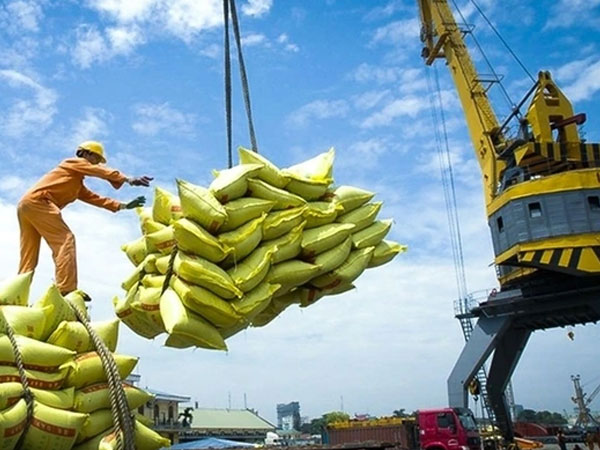
Latest data from the Bureau of Plant Industry (BPI) showed that rice arrivals stood at 4.37 million metric tons (MMT) as of October 22.
Of this volume, the Philippines purchased the majority of rice supplies from Vietnam at 2.8 MMT, followed by Thailand at 624,841 MT and Myanmar at 472,762 MT.
The DA earlier noted that rice imports could surge to more than 5 MMT in 2026 as El Niño strains domestic production.







© Copyright 2025 The SSResource Media.
All rights reserved.