
- The planned shipment of 100,000 tonnes of Thai rice to China, part of a larger government-to-government contract, has been delayed beyond its expected January delivery.
- The deal is stalled because it requires approval from the Thai Cabinet and a legal review by the Office of the Council of State.
- Progress must wait for a new government, as the current administration is a caretaker government, raising legal questions about its authority to finalize the contract.
- Negotiations are further complicated because the buyer is China's state-owned enterprise COFCO, which requires price talks based on market rates rather than a direct government agreement.
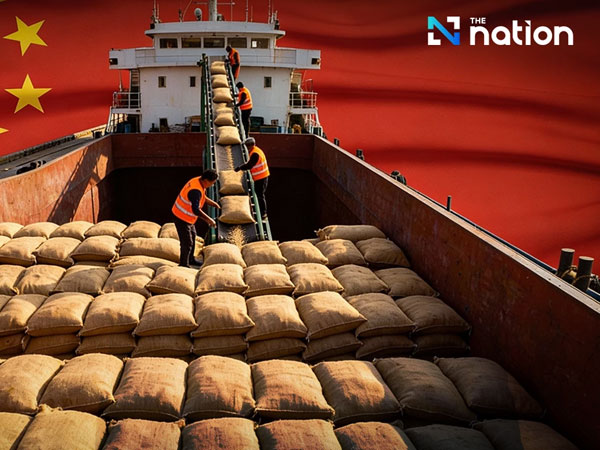 Thansettakij is tracking progress on Thailand’s planned sale of 100,000 tonnes of rice to China under the remaining government-to-government (G2G) contract, which still has 280,000 tonnes outstanding from a total of 1 million tonnes.
Most recently, China, through COFCO Corporation, a leading state-owned enterprise in agriculture and food, announced it would increase rice imports from Thailand by a further 220,000 tonnes, bringing the total to 500,000 tonnes, as a symbol of close friendship to mark the 50th anniversary of Thai–Chinese diplomatic relations.
In principle, the two sides agreed to open negotiations for the first lot of 100,000 tonnes, with delivery possible within January 2026.
Charoen Laothamatas, president of the Thai Rice Exporters Association, told Thansettakij that delivering the 100,000 tonnes from the remaining 280,000 tonnes under the 1-million-tonne G2G rice contract with the Chinese government via COFCO, previously expected to be shipped within January, would not be possible.
He said the matter would have to wait for a new government to proceed.
This is because, after a purchase price is proposed, Cabinet approval is still required, and the contract conditions must also be reviewed by the Office of the Council of State on legal grounds, particularly whether it can be done, as the current administration is a caretaker government.
“Selling to the Chinese government is not like selling to other governments. Once they commit to buy, the quantity and price can be agreed upon immediately. But the Chinese government has delegated COFCO to act as the buyer, so the contract has to be signed with COFCO, and price negotiations follow the market price. In other words, talks are not easy,” he said.
The price of Thai 5% white rice on January 19, 2026, was US$399 per tonne, compared with Vietnamese rice at US$360–364 per tonne, Indian rice at US$350–354 per tonne, and Pakistani rice at US$369–373 per tonne.
Thai rice is therefore about US$50–60 per tonne more expensive than its competitors on average, a gap driven by the sharp appreciation of the baht.
However, India currently has a large rice stockpile due to higher-than-usual output from the new season, up by another 15 million tonnes, while last year also exceeded expectations by 15 million tonnes.
It remains unclear when these stocks will be released, but if they are, it would put downward pressure on global rice prices.
Charoen also addressed the outlook for Thai rice exports to the US market, saying that if the courts order a suspension or cancellation of Donald Trump’s retaliatory tariffs, this would benefit exports of Thai jasmine rice to the United States, improving sales and price competitiveness, similar to the period before Thailand faced an additional 19% US import tariff.




© Copyright 2025 The SSResource Media.
All rights reserved.