

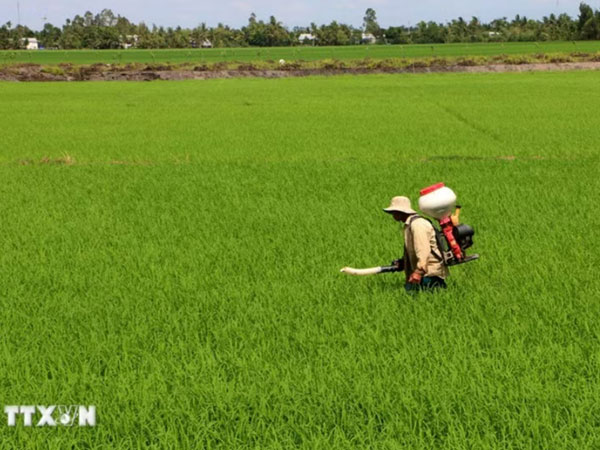
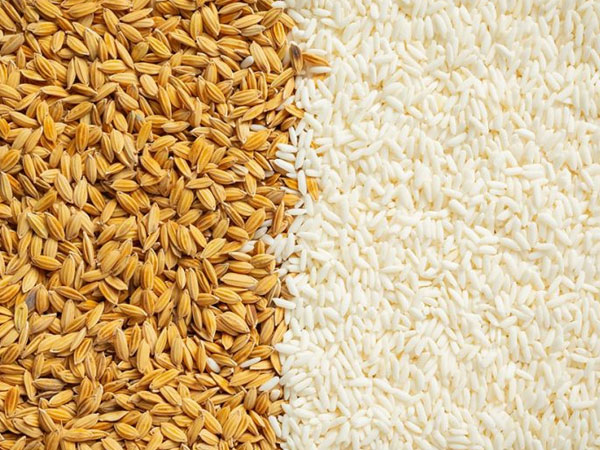
 The Philippines is no longer expected to achieve a record-high production of palay (unmilled rice) this year after the Department of Agriculture (DA) downgraded its projection on the back of recent weather disturbances.
The DA is now projecting the country to produce between 19.61 million and 19.89 million metric tons (MT) for the year, slightly lower than the most recent estimate of between 20.09 million and 20.39 million MT.
The agency initially projected a full-year target of 20.46 million MT of palay.
The new estimate is higher than the 19.09 million MT of palay reported last year, but lower than the all-time high of 20.06 million MT in 2023.
Agriculture Secretary Francisco Tiu Laurel said the updated projection is driven by lower projected output in the fourth quarter after a string of typhoons affected many rice-producing areas.
Historically, the second half of the year accounts for more than 55 percent of total production.
Data from the Philippine Statistics Authority (PSA) showed that production of palay from January to June reached a record 9.08 million MT, up six percent from 8.53 MT in the same period last year.
In the third quarter, palay output rose by 12.6 percent to 3.75 million MT. This means the country still needs to produce more than seven million MT of palay in the fourth quarter.
Tiu Laurel said domestic production is still robust after setbacks caused by adverse weather, enough to “significantly lower import requirements” in the first quarter of 2026.
He said his agency will soon release an adjusted import matrix once the suspension on rice imports is finally lifted early next month.
While no other details were disclosed, the DA said “the protection of farmgate prices and the prevention of predatory import practices [remain] central to its strategy.”
President Ferdinand “Bongbong” Marcos Jr. earlier ordered the suspension of rice imports in September in a bid to improve local farmgate prices.
Due to the influx of foreign rice, palay prices have dropped to as low as ₱6 per kilo in some areas, way below the production cost of ₱12 to ₱14 per kilo.
The two-month ban has since been extended until the end of the year.
Tiu Laurel previously said the resumption of imports in January will be for that month alone, as the suspension would be reimposed from February to April, in time for harvest.
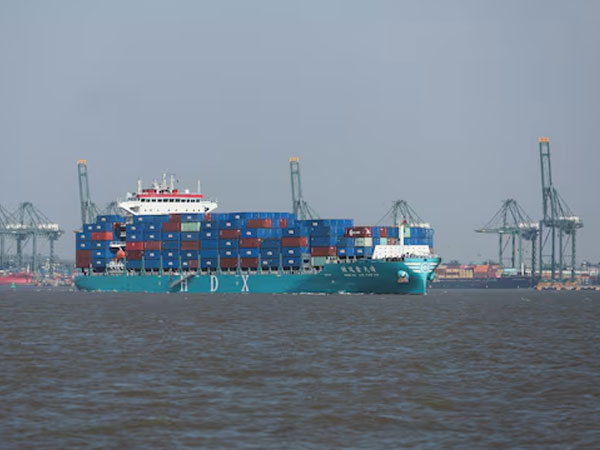
Based on data from the Bureau of Plant Industry (BPI), 3.33 million MT of rice shipments have entered the country as of Nov. 27.
Tiu Laurel said recent speculation that the country will resume large-volume purchases early next year are unfounded.
This, as some exporters already appear to be positioning for higher price quotes on this assumption.
“The government will not allow foreign suppliers to take advantage of the country’s food security mechanisms,” said Tiu Laurel.
He said the government is now urging private importers to diversify their sourcing and pursue partners that provide stable pricing and long-term cooperation.
“While we value the partnerships we have in our traditional suppliers, food security is important that the diversification of sources is vital,” he added.




© Copyright 2025 The SSResource Media.
All rights reserved.