

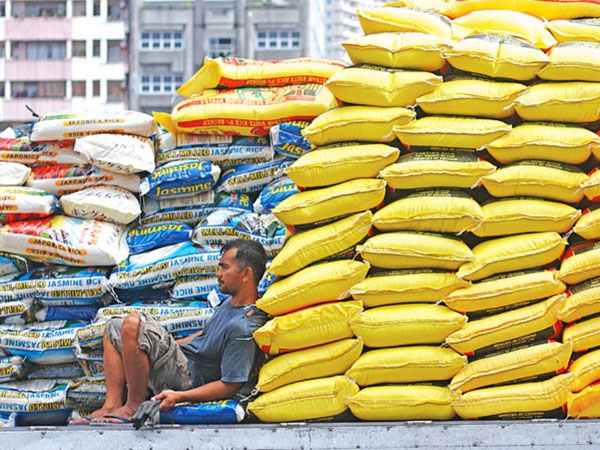
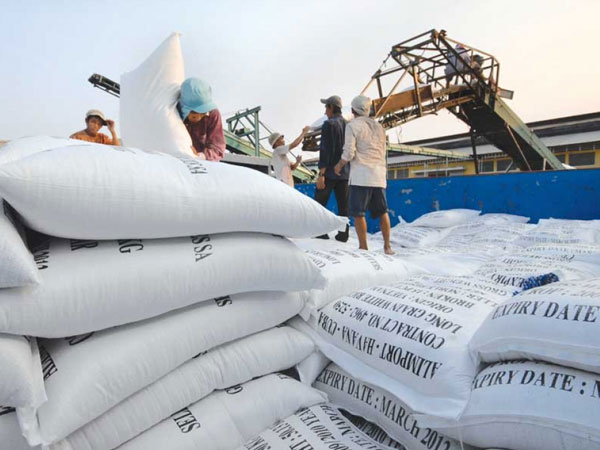
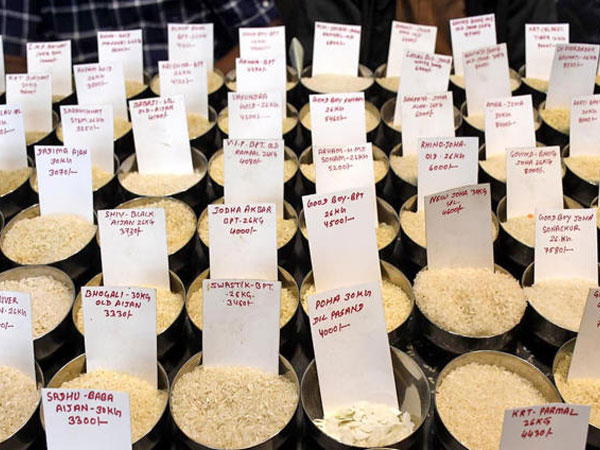
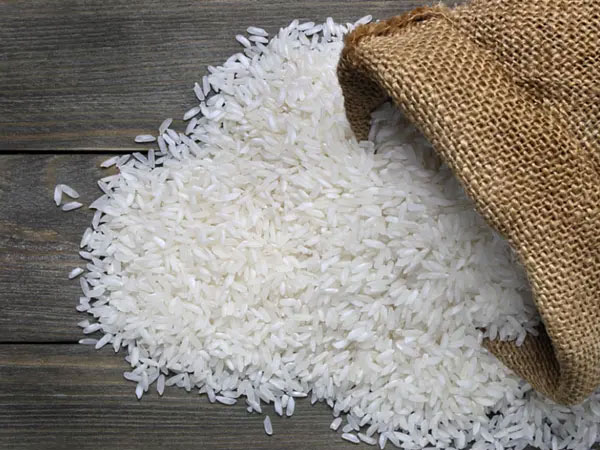
 THE Philippines will still import rice in large quantities this year due to the inability of domestic output to keep pace with rising demand for the food staple, an international report said.
The United States Department of Agriculture-Foreign Agriculture Service (USDA-FAS Manila) said the Philippine rice industry will continue to bank on imports despite the government’s broadened Rice Competitiveness Enhancement Fund (RCEF).
“FAS-Manila estimates rice imports to remain robust through the rest of Marketing Year [MY] 2025/26, as a rising population continues to drive demand,” the agency said.
“This increasing demand, combined with limited growth in domestic production despite the expanded RCEF, will result in a persistent and growing production-consumption gap, requiring the Philippines to rely on imports to meet domestic needs.”
The USDA-FAS Manila also warned that compounding factors, such as the peso’s depreciation and the slide in foreign rice quotes, could blunt government efforts to protect farmers while also shielding consumers from elevated retail prices.
“The new price-indexed tariff system is intended to stabilize retail prices and protect consumers; however, declining international prices for Vietnam 5 percent broken rice […] may depress farmgate prices and reduce incentives for local producers, further constraining domestic output.”
In 2025, the government issued Executive Order (EO) 105, stipulating that rice tariffs would be adjusted by 5 percentage points per 5 percent adjustment in international prices, subject to a minimum rate of 15 percent and a maximum rate of 35 percent.
Under the guidelines, Vietnamese 5-percent broken rice should reach the trigger price of $367 per metric ton (MT) to raise the tariffs to 20 percent. The trigger price for the 25-percent tariff is $349 per MT; 30-percent tariff, $331 per MT; and 35 percent, $315 per MT.
“At the same time, continued depreciation of the Philippine peso is expected to increase the cost of imports, affecting import prices for both rice and farm inputs [e.g., fertilizer], which could put additional upward pressure on retail prices,” the agency said.
“As a result, these interconnected factors lead [USDA-FAS Manila] to project that the Philippines will remain dependent on rice imports for the rest of MY 2025/26 to address supply gaps.”
Earlier, an official from the Department of Agriculture (DA) said the government will likely retain the 15-percent tariff on rice in the first quarter as current world market prices do not warrant a raise in import levy. (See: https://businessmirror.com.ph/2026/01/28/govt-to-maintain-tariff-on-rice-imports-until-end-march/)
Agriculture Assistant Secretary Arnel de Mesa said the tariff on the food staple is still at 15 percent as the average quotations for the benchmark Vietnamese 5 percent broken have not yet reached the required trigger price of $367 per MT to raise the tariff to 20 percent.
Latest government data showed that rice arrivals reached 317,410 MT in January, higher than the 279,940 MT posted in the same period last year.




© Copyright 2025 The SSResource Media.
All rights reserved.