

 Ghana is intensifying efforts to reduce reliance on imported goods by expanding local manufacturing capacity in key sectors such as rice, poultry and cement as part of a broader strategy to strengthen economic resilience and take advantage of the African Continental Free Trade Area (AfCFTA).
Speaking in an interview with The High Street Journal, Mr. Daniel Fahene Acquaye, Chief Executive Officer (CEO) of Agri Impact Group, said the renewed push marks one of Ghana’s most ambitious import substitution efforts in recent years, driven by rising foreign exchange pressures, increasing food import bills and the need to build competitive local industries for regional markets. The initiative comes as Ghana grapples with an annual food import bill exceeding two billion dollars.
Acquaye explained that Ghana’s import dependence, especially for food staples, has exposed the economy to external shocks, currency depreciation and volatile global supply chains. The government’s shift toward local production, he noted, is therefore both an economic necessity and an opportunity to anchor industrial transformation that could position Ghana as a regional manufacturing hub under AfCFTA protocols.
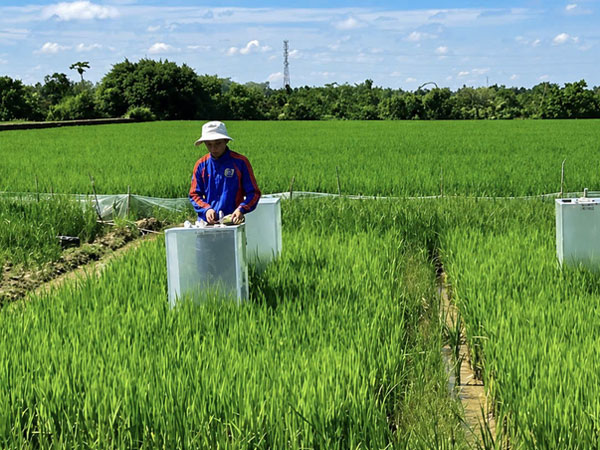
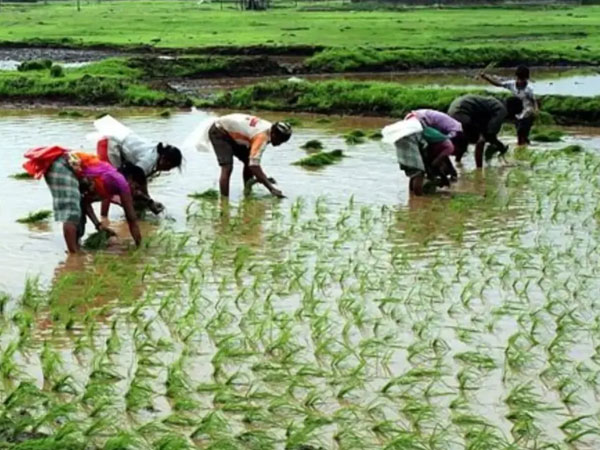
The Agri Impact Group CEO observed that rice remains one of Ghana’s most promising import substitution commodities, given growing domestic demand and favorable agro ecological conditions. With annual imports exceeding one billion dollars and consumption projected to reach 1.8 million metric tons in the 2025/26 marketing year, even marginal improvements in local production could save significant foreign exchange.
Recent data from the United States Department of Agriculture (USDA) shows that Ghana will import approximately one million metric tons of rice during 2025/26, accounting for more than half of total consumption despite an 18 percent increase in domestic milled rice production to 900,000 metric tons. This persistent import dependence occurs even as local production grows, highlighting structural challenges in the sector.
Acquaye noted, however, that Ghana’s rice value chain still struggles with mechanization gaps, post harvest losses, and inconsistent milling quality. These challenges prevent local rice from competing effectively with imported varieties from Vietnam, India, China and Thailand, which dominate approximately 70 percent of Ghana’s rice market.
“The potential is huge, but competitiveness will depend on scale, efficiency and the adoption of modern technologies,” he said. Under AfCFTA, Acquaye believes Ghana can become a net exporter of premium long grain rice if strategic investments target irrigation, large scale aggregation and standardized processing facilities.
The Institute for Fiscal Studies (IFS), a Ghanaian policy research organization, recently revealed that less than three percent of Ghana’s agricultural land is devoted to rice cultivation, despite the country possessing more than 5.9 million hectares of land suitable for rice farming. This underutilization explains why areas harvested remain small and production cannot meet domestic consumption needs.
On poultry, Acquaye said the sector faces the most severe competitiveness challenges, despite being a priority area for import substitution. With feed accounting for more than 70 percent of production costs, the price of maize and soybean continues to undermine the industry’s ability to compete with cheaper frozen imports that flood the market.
Data from Ghana’s poultry industry shows that the country imports roughly 340,000 tons annually out of total consumption of 400,000 tons, spending over 300 million dollars on foreign poultry products. The Greater Accra Poultry Farmers Association (GAPFA) and other industry groups report that feed costs, which can reach nearly 80 percent of production expenses, have surged in recent years, making local production uncompetitive.
“There is strong local demand and the capacity to expand, but we must address feed costs and biosecurity systems. Without that, Ghana cannot produce at a price point that allows survival under AfCFTA competition,” he said. European Union exports of frozen chicken to Ghana jumped 31.3 percent in early 2025 compared to the same period in 2024, further squeezing local producers.
Acquaye encouraged targeted incentives for feed processors, support for large scale maize cultivation, and the adoption of modern hatchery and processing technologies to rebuild the sector’s competitiveness. He noted that Ghana once boasted poultry self sufficiency in the 1980s when local farms employed over 120,000 people, but that workforce has collapsed to fewer than 15,000 jobs today.
The government recently announced in the 2026 Budget Statement that all schools must procure locally produced broiler chickens and eggs, a directive that the Ghana National Association of Poultry Farmers (GNAPF) has applauded as a major milestone for the struggling industry. However, industry stakeholders emphasize that broader interventions are needed beyond institutional procurement policies.
Of the three priority sectors, cement manufacturing currently shows the strongest competitive advantage, aided by multiple domestic plants and significant investments in clinker substitution. Acquaye said Ghana’s cement industry is already operating at a capacity that exceeds national demand, positioning it to supply neighboring markets under AfCFTA rules.
However, he cautioned that high electricity tariffs, port charges, and logistics costs continue to erode margins even in this relatively successful sector. “If we streamline the regulatory environment and support local clinker production, Ghana could emerge as one of West Africa’s leading cement suppliers,” he added.
Cement production benefits from abundant raw materials including limestone deposits in the Volta and Eastern regions, giving Ghana a natural advantage. The sector has attracted substantial foreign direct investment from companies like Ghacem, Diamond Cement, and others that have built modern production facilities with significant capacity.
Acquaye argued that Ghana’s AfCFTA competitiveness will hinge on products where the country has natural endowments and the ability to scale efficiently. Rice and cement, he said, offer the most realistic pathways for regional competitiveness in the medium term, while poultry will require deeper structural reforms to withstand competition from subsidized foreign producers.
“AfCFTA rewards countries that can produce at scale, meet standards, and deliver cost effectively. We must be strategic about where we channel investment,” he emphasized. The continental trade agreement, which came into force in 2021, aims to create a single market for goods and services across Africa’s 54 countries with a combined population exceeding 1.4 billion people.
Acquaye welcomed the government’s renewed commitment to import substitution but urged policymakers to treat the agenda as a long term industrialization pathway rather than a short term response to foreign exchange pressures. He stressed that success requires sustained policy support beyond election cycles and political transitions.
“We must strengthen value chains, build agro industrial zones, support processors, and create an environment where local manufacturing can thrive sustainably. If we get it right, Ghana can reduce imports, grow exports and create thousands of jobs,” Acquaye said.
The challenges facing Ghana’s import substitution efforts extend beyond individual sectors. Currency depreciation has made imported inputs like fertilizer and machinery more expensive, increasing production costs for local manufacturers. The cedi has weakened significantly against major currencies over the past decade, though recent stabilization efforts have brought some relief.
Access to affordable financing remains another major constraint. Local manufacturers often face high interest rates on working capital loans, making it difficult to compete with foreign producers who benefit from cheaper financing in their home markets. Banks generally consider agriculture and agro processing as high risk sectors, resulting in credit rationing.
Infrastructure deficits also hamper competitiveness. Unreliable electricity supply forces manufacturers to invest in expensive backup generators, while poor road networks increase transportation costs for raw materials and finished products. These factors collectively raise production costs above levels in more developed economies.
Acquaye added that Ghana’s industrial future will depend on how effectively the country leverages AfCFTA to build strong local industries capable of competing beyond its borders. He emphasized that regional integration offers unprecedented opportunities for Ghanaian manufacturers who can achieve economies of scale by targeting the broader West African market rather than just domestic consumption.
The Ministry of Trade, Agribusiness and Industry has been working on a National Agribusiness Policy designed to address many of the challenges facing Ghana’s agricultural and manufacturing sectors. The ministry, which saw its mandate expanded to include agribusiness under President John Dramani Mahama’s administration, recently held regional agribusiness dialogues to gather stakeholder input.
At the National Agribusiness Dialogue held earlier this year, President Mahama described agribusiness as a critical engine for Ghana’s industrial transformation and pledged his government’s commitment to bold reforms. The President announced plans to waive import duties on agro processing machinery and implement initiatives including the Feed the Industries Programme as part of efforts to boost local production.
Acquaye, who participated in the National Agribusiness Dialogue, has consistently advocated for the creation of a dedicated Agri Fund to finance critical agro processing infrastructure. He has also called attention to Ghana’s staggering two billion dollars in post harvest losses annually, describing it as a missed economic opportunity that proper storage and processing facilities could address.
For rice specifically, experts have proposed establishing a Rice Development Board (RDB) similar to the Ghana Cocoa Board (COCOBOD) to provide coordinated policy support, ensure quality standards, and facilitate market access for local producers. Such an institution could provide continuity beyond political cycles and harmonize stakeholder efforts across the value chain.
In the poultry sector, industry groups have called for import tariffs and direct support through financial incentives to help local farmers compete with subsidized foreign producers. They argue that trade liberalization policies implemented in the 1990s dismantled protections that previously safeguarded Ghanaian farmers, leading to the current situation where cheap frozen chicken parts dominate the market.
The cement industry, while relatively successful, could benefit from policy support to reduce energy costs and improve logistics infrastructure. Industry analysts note that Ghana’s cement producers have significant export potential if operational costs can be brought down to levels that allow competitive pricing in regional markets.
As Ghana implements its import substitution strategy, policymakers face the challenge of balancing protectionist measures with commitments to free trade under AfCFTA and World Trade Organization (WTO) rules. The strategy must carefully navigate these international obligations while providing meaningful support to local industries.
Success stories from other African countries offer potential lessons. Kenya has made significant progress in reducing food imports through coordinated value chain development and targeted support for smallholder farmers. South Africa and Morocco have leveraged strong industrial policies to build globally competitive manufacturing sectors in selected industries.
For Ghana, the key question is whether the current import substitution drive will translate into sustainable industrial transformation or prove to be another short lived initiative that fades when immediate foreign exchange pressures ease. The answer will depend largely on sustained political commitment, adequate funding, and effective implementation of supporting policies across multiple government agencies.







© Copyright 2025 The SSResource Media.
All rights reserved.