

 MANILA, Philippines — Inflation sizzled to its hottest level in more than three years in October, driven by higher transport fares, rising energy costs and more expensive rice.
The Philippine Statistics Authority reported on Thursday that the consumer price index rose 7.8 percent from a year earlier.
This marked the fastest pace since February 2023, when inflation reached 8.6 percent in the aftermath of Russia’s invasion of Ukraine.
The October reading also exceeded the 7.6 percent median estimate of 19 economists surveyed by the Inquirer last week, but remained within the Bangko Sentral ng Pilipinas’ (BSP) forecast range of 7.1 percent to 8.1 percent.
It marked the eighth consecutive month that inflation exceeded the BSP’s 3-percent target.
The steady acceleration could prompt the BSP to further raise its policy rate that guides bank rates for housing and car loans from the current 5.5 percent.
Various factors
The latest data indeed indicated that there are more factors causing price hikes.
Core inflation, which excludes volatile food and energy items to get a clearer reading of underlying price pressures, accelerated to 5.4 percent, its highest level since September 2023.
National Statistician Claire Dennis Mapa said price pressures from higher transport costs and more expensive food have already spilled over to other sectors such as restaurants.
In a statement, Secretary Arsenio Balisacan of the Department of Economy, Planning and Development said the government was stepping up efforts to strengthen agricultural production and logistics while providing targeted assistance to sectors affected by higher energy costs.
“By improving agricultural productivity and logistics and addressing constraints in food and energy supply, we can ease price pressures, protect purchasing power, and build greater resilience against external shocks,” Balisacan said.
Government statisticians said transport inflation accelerated to 20.1 percent in October, from 14.6 percent in September.
Gasoline prices surged 51.1 percent, while fare increases for jeepneys, buses and taxis announced in late September added to transport costs.
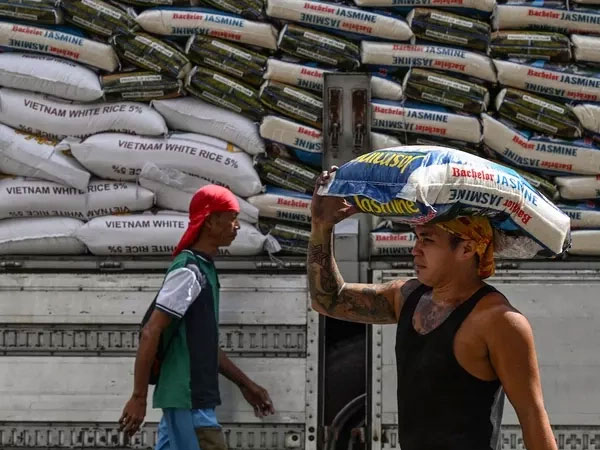
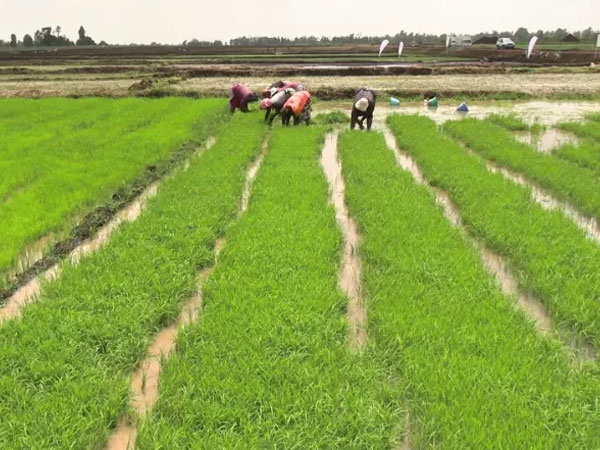
Rice inflation, meanwhile, climbed to 20.7 percent, its highest level since July 2024.
Overall food inflation, however, eased to 6.1 percent from 6.7 percent in September.
Deepali Bhargava, head of Asia-Pacific research at ING Bank, said the near-term inflation outlook remains challenging, as prices of food items such as rice that are typically more sensitive to El Niño-related disruptions remain elevated.
But softer energy costs could help offset part of the upside pressure from food inflation, she added.
Looking ahead, Bhargava said the central bank could temper the pace of its rate hikes if oil prices continue to ease, third-quarter economic growth proves weak and the peso sustains its recent gains.
Interest rates
However, she said they were still looking at a 25-basis point (bp) rate hike in December this year as the BSP seeks to contain the increase in the prices of basic commodities and services.
Last month, the BSP’s Monetary Board voted to raise the policy rate by 50 basis points to 5.5 percent, bringing the cumulative increases since April to 125 basis points.
Higher interest rates make borrowing more expensive, prompting households and businesses to curb spending and investment.
By cooling demand, the BSP aims to ease pressure on prices and prevent too much money from chasing too few goods.
But tighter monetary policy also threatens to weigh on an economy already struggling to gain momentum.
The Philippines grew by just 2.6 percent in the first half of the year, following a massive confidence shock tied to a major corruption scandal and war-driven surge in consumer prices.
The BSP expects inflation to average 6.1 percent this year, considerably above its 3-percent target.
It further raised its inflation forecast for 2027 to 6 percent from 5.4 percent, though it expects price growth to ease to 3.3 percent in 2028.
Containing spillover
Economists at China Banking Corp. said core inflation, which the BSP closely considers in its policy decision, is expected to stay above 5 percent until the first quarter of 2027.
“This keeps the door open for another 25-bp BSP rate hike in December to help contain the broader spillover from supply-side price pressures,” they said. “However, much will depend on the third-quarter GDP data, as further monetary tightening could further weigh on the already slowing economy.”
In a statement, the BSP said it would remain vigilant and guided by incoming data.









© Copyright 2025 The SSResource Media.
All rights reserved.