

 The country currently produces only about 23 to 25 per cent of its rice requirements, importing an estimated 1.3 million tons annually
Kenya has stepped up efforts to increase local rice production through expanded certified seed production in Mwea.
This is as the government seeks to reduce reliance on imports and achieve self-sufficiency by 2032.
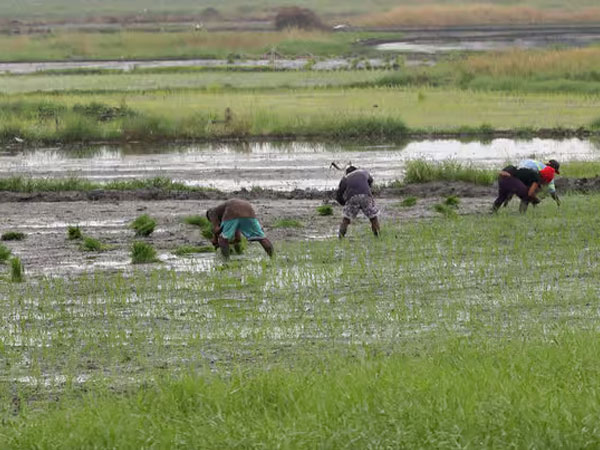
The Kenya Agricultural and Livestock Research Organisation (KALRO), in partnership with the Korean Partnership for Innovation of Agriculture (KOPIA), has embarked on a rice transplanting exercise at the K-Ricebelt seed production complex in Kirogo, Mwea, Kirinyaga county.
The initiative seeks to address the shortage of certified rice seeds, which has constrained farmers' ability to increase production despite growing demand for the staple food.
Speaking during transplanting, KALRO deputy director in charge of Crop Systems and Research Dr Benjamin Kibuva, said the project would significantly increase the availability of quality seeds. Production is expected to rise to 450 tonnes from about 152 tonnes.
“The initial 7.2-hectare production block marked a major milestone in the establishment of the seed production complex, which is expected to cover 65 hectares once fully developed,” he said.
Kibuva said Kenya currently produces only about 23 to 25 per cent of its rice requirements, importing most of its consumption. The country's annual rice consumption is estimated at more than 1.3 million tonnes.
He explained that increasing the availability of certified seeds was critical to expanding local production and reducing the country's dependence on imported rice.
The government is targeting rice self-sufficiency by 2032 through increased local production, expansion of irrigation infrastructure and the adoption of improved farming technologies.
Kibuva noted that the K-Ricebelt project would address one of the major challenges facing rice farmers by ensuring they have access to sufficient quantities of quality planting materials.
KALRO Mwea Centre director Ruth Musila said the organisation was developing the 65-hectare seed production farm at Kirogo. About 38 acres have already been covered, with rice transplanting underway on a further 18 acres.
She said the centre was focusing on improved, high-yielding varieties capable of producing between six and seven tonnes per hectare, with Komboka among the varieties being promoted.
Musila said KALRO produced about 150 tonnes of certified rice seeds in 2025 and was targeting 330 tonnes in 2026 as it expands production to meet farmers' needs.
She explained that certified seeds undergo quality controls to ensure high germination rates and freedom from pests and diseases, giving farmers a better chance of achieving higher yields.
“Farmers who plant certified seeds can achieve between 10 and 15 per cent higher yields compared to those using farm-saved seeds. We are encouraging them to embrace certified seeds so that they can increase their production,” she said.
Musila added that KALRO was working with the Kenya Plant Health Inspectorate Service (KEPHIS) to ensure farmers accessed quality-assured seeds that meet the required standards.
She said increased adoption of improved varieties would help bridge the gap between local rice production and national demand, bringing the country closer to its 2032 self-sufficiency target.
KOPIA country director Ji Gang Kim said the partnership, which began in 2024, aimed to address challenges in rice production through improved technologies, research and increased availability of certified seeds.
He noted that the initiative would also create employment opportunities while strengthening food production. He urged farmers to embrace modern farming technologies and improved varieties.
For farmers in Mwea, the expansion of certified seed production offers renewed hope of improving yields and household incomes.
Lucy Njeri, a rice farmer in the area, welcomed KALRO's intervention. She said access to water and affordable, quality seeds had helped farmers increase production after years of struggling with inadequate irrigation and limited availability of planting materials.
She noted that improved water supply had boosted crop production and enabled farming households to earn more income to meet family needs, including paying school fees.
Njeri said farmers had previously struggled to access quality seeds, but the availability of affordable planting materials through KALRO had eased the burden and improved their production.
The expansion of the Kirogo complex is expected to strengthen the supply of certified rice seeds, support farmers in increasing productivity and contribute to the Government's wider efforts to reduce food imports and improve national food security.




© Copyright 2025 The SSResource Media.
All rights reserved.