

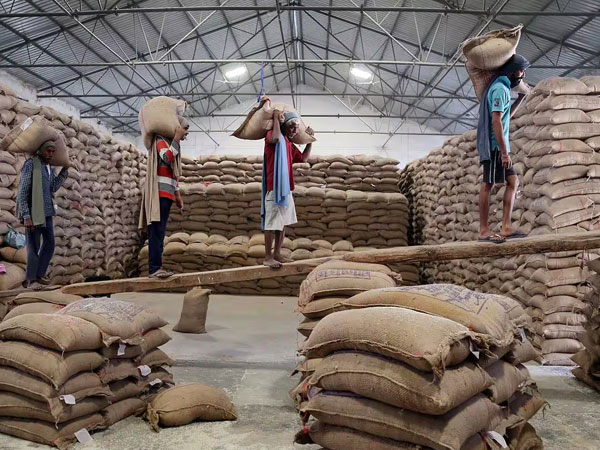
Imported rice arrivals in the first half surged to more than 2.7 million metric tons (MMT), due to the global oil crisis that jacked up input costs and concerns over the impact of a looming El Niño on local output.
Data from the Bureau of Plant Industry (BPI) showed that rice imports from January to June jumped by 20.1 percent to 2.75 MMT, from the 2.29 MMT posted in the same period last year.
Since liberalized importation began in 2019 following the Rice Tariffication Law (RTL), the latest first-half figure is the highest since the law took effect.
Agriculture Assistant Secretary Arnel de Mesa said the spike in rice shipments during the period was a “natural response” from the market given the challenges that the local rice sector had to hurdle.
He said the damage on the Upper Pampanga River Irrigation System (UPRIS) during the first quarter affected more than 30,000 hectares of rice lands.
As these areas recovered, De Mesa noted that compounding factors, such as the hike in fertilizer and pump prices due to the United States-Iran war and concerns over the impact of El Niño affected production.
“These challenges posted an issue (on local production), which is why it’s important that the market is responding to (consumers’) needs,” he told reporters on Wednesday. “It’s a natural response from the market and will help ensure stable retail rice prices.”
To prevent a plunge in farmgate prices amid the surge in imports, he said the DA will take a “proactive stance” as the wet harvest season nears, including the increase in the National Food Authority’s (NFA) buying price.
De Mesa also noted that a possible decline in rice shipments could prevent farmgate prices of palay from nosediving, citing an agreement with stakeholders to halt the importation of 5 percent broken rice starting this month.
Agriculture Secretary Francisco Tiu Laurel Jr. said recently that the Department of Agriculture (DA) had asked importers to stop bringing in 5-percent broken rice starting this month, as it poses stiff competition to local palay.
With the proposed RICE Act—yet another amendment to the Rice Tariffication Law (RTL)—currently pending in Congress, the DA chief is banking on stakeholder cooperation to carry out the initiative.
“We will talk with rice stakeholders as much as we can. If the new RICE Act comes out, I won’t allow the entry of 5-percent broken rice, but for now we’ll settle with talking them through it,” he said in a recent interview.
The DA chief said he met with stakeholders across the supply chain, including farmers, millers, traders, and importers, all of which have “agreed in principle” to the measure.
“The key here is cooperation. The importer needs to help our farmers and our processors. If not, they will just lobby against each other and end up hurting themselves.”






© Copyright 2025 The SSResource Media.
All rights reserved.