

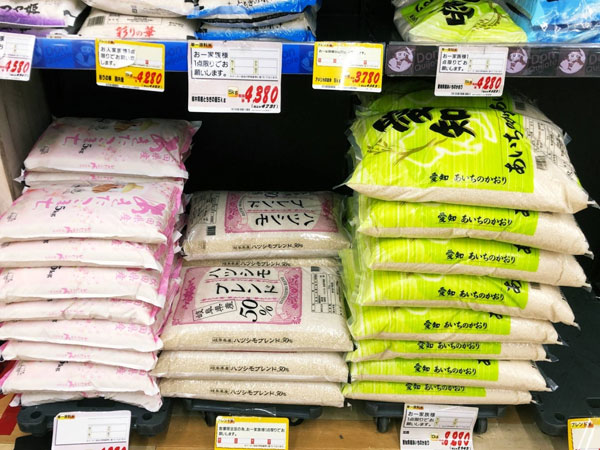
 Rice consumption in Japan fell to its lowest level in seven years in fiscal 2025, as soaring prices pushed more consumers toward cheaper staples such as bread and noodles.
Average monthly rice consumption declined 6.1% from the previous year to 4.435 kilograms per person, according to a consumer survey released by an industry-backed Japanese body that tracks supply-demand trends for the staple. The drop is equivalent to about 4.4 bowls of rice per person over the course of the year, based on a standard serving size of 65 grams of rice.
The nationwide survey, conducted online via a self-administered questionnaire, estimated at-home rice consumption based on household inventories, purchases and family size.
The data underscores the impact of sharply rising rice prices following last summer’s “Reiwa rice riots,” when the staple disappeared from supermarket shelves and prices surged nationwide. At one point, average prices for a 5-kilogram bag climbed up to around ¥4,000 ($25).
However, it appears that rice consumption may be on the rise again.
The organization also released preliminary data for April on Monday, which showed an average monthly consumption rate of 4,762 grams per person, a rise of 423 grams from March levels. Of that total, 66.5% was consumed at home, while ready-made meals such as bento accounted for 20.2% and dining out made up 13.3%.
Supermarkets remained the main purchase channel in April, accounting for 50.3% of purchases. They were followed by rice received free from family or acquaintances at 11.4%, online shopping at 11.2% and drugstores at 7.2%. Specialty rice shops accounted for just 2.8% of purchases.
Convenience stores were the most expensive places to buy rice, with prices averaging ¥1,045 per kilogram. Direct purchases from producers were the cheapest, at ¥532 per kilogram — nearly half in comparison. Supermarket prices averaged ¥735 per kilogram, while online retailers averaged ¥720 per kilogram.
Although rice prices have shown signs of easing and consumption appears to be on the rise, persistently high living costs continue to weigh on household spending across the country.










© Copyright 2025 The SSResource Media.
All rights reserved.