

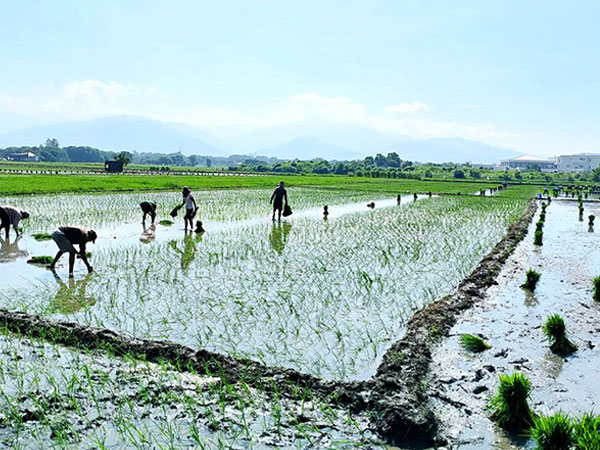
 The country’s rice imports could reach a new record high as spikes in fertilizer and fuel prices and El Niño could cut palay output this year, according to the Department of Agriculture (DA).
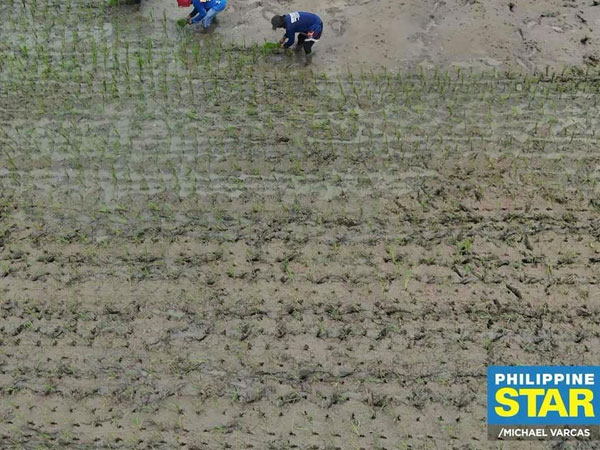
Agriculture Assistant Secretary Arnel de Mesa said palay production this year could fall to a range of 18.6 million metric tons (MMT) to 18.8 MMT if fertilizer and pump prices will continue their upward momentum, citing a revised outlook from the National Rice Program which initially projected an output of 20.28 MMT for this year prior to the price shocks.
The latest outlook is the lowest in 10 years, dashing hopes that Philippine rice output would again reach the 20-MMT mark.
De Mesa said rice importation “naturally responds” to market challenges, noting the all-time high rice arrivals of 4.81 MMT in 2024, driven by the severe El Niño that ravaged local plantations.
“The market—the importers and traders—will respond when they see that production is low, they will import more,” he told reporters last Tuesday. “Given the current pressures, it’s possible (for rice imports this year to reach 4.8 MMT rice imports) or more.”
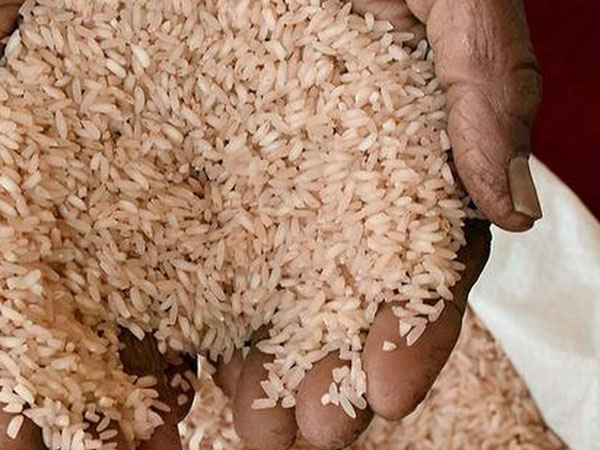
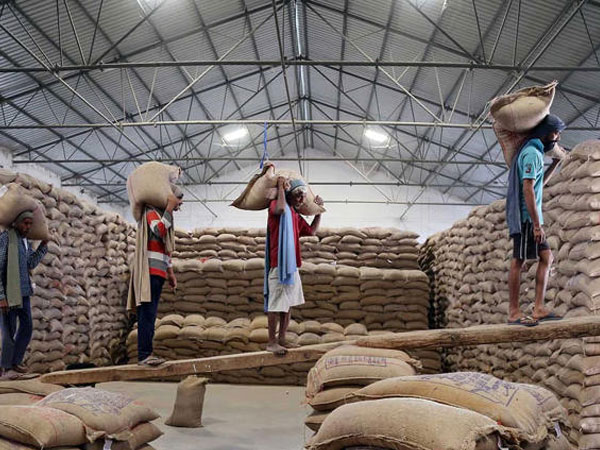
Rice arrivals reached 1.26 MMT as of April 9, surging by over a third from the 917,853 MMT in the same period last year, based on the latest government data.
De Mesa noted that fertilizer prices already average P2,500 per 50-kilo bag. In Ilocos Region, a key rice-producing area, the price of the input has shot up to a high of P2,900 per bag.
He said fertilizer application is critical, particularly during the wet planting season.
“If you reduce (fertilizer) a bit, the drop in rice field productivity will be exponential. That’s why it’s important for them to really get support when it comes to fertilizer.”
State weather bureau Pagasa on Wednesday issued an alert noting the 79 percent chance of El Niño emerging in June-July-August, adding that it will likely persist until early 2027.
BMI, a unit of Fitch Solutions, recently said the looming El Niño in the second half of 2026 threatens to exacerbate the Middle East war’s impact on the global agriculture sector.
A recent forecast of the National Oceanic and Atmospheric Administration (NOAA) for the El Niño-Southern Oscillation (ENSO) showed that El Niño could emerge with a 62-percent probability over June to August 2026 and persist until the end of the year.
It also assigns a 33-percent likelihood of a “strong” El Niño to develop in the fourth quarter of 2026.
The research firm warned that further risks would rise under an El Niño scenario in the second half of 2026, as elevated input costs brought by the war could coincide with drought-and flood-related output losses.
“The US-Iran war is heightening agricultural price risks by introducing a cost shock that could overlap with weather-related production stress if El Niño materializes.”








© Copyright 2025 The SSResource Media.
All rights reserved.