

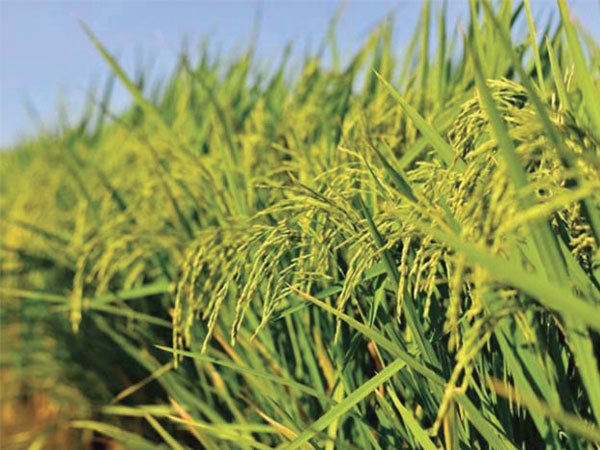
 The government has approved the commercial propagation of a rice variety with higher iron and zinc content in its bid to minimize deficiency-linked diseases among Filipinos.
The Bureau of Plant Industry (BPI) issued a biosafety permit for the commercial propagation of HIZ039 rice, which is owned and licensed by the Philippine Rice Research Institute (PhilRice).
PhilRice said the HIZ039 rice was developed to complement existing efforts to control iron and zinc deficiency, such as food fortification, supplementation, and dietary diversification.
The rice variety is expected to supply 30 to 50 percent of the estimated average requirement for iron and zinc for preschool-aged children and pregnant or lactating mothers.
In a document, BPI said the HIZ039 rice “has satisfactorily undergone biosafety assessment for commercial propagation.”
“The permit holder has satisfactorily complied with all requirements for the issuance of the biosafety permit for commercial propagation.”
The permit is subject to compliance with other relevant regulations of government agencies.
BPI, however, stipulated several conditions that the permit holder must comply with, including the regular submission of seed sales reports.
Should new information indicating that the variety would pose greater risks to human health and the environment compared to its conventional counterpart become available, the permit holder should immediately notify the BPI.
If new information becomes available, the agency stressed that “the permit holder shall, on its own, immediately take measures necessary to protect human health and the environment.”
PhilRice, an attached agency of the Department of Agriculture, said the HIZ039 rice functions the same as regular rice in the field and that its higher iron and zinc content will not affect how it grows, reproduces, or interacts with the environment.
“HIZ039 rice differs from regular rice only by the presence of three additional proteins-NAS2, FER, and APH4. These proteins are not similar to any known toxins or allergens, and tests confirm they are easily digested and not heat-stable, indicating no risk of toxicity or allergenicity,” it said.
“NAS2 and FER are naturally found in plants and are involved in storing and transporting iron and zinc, while APH4 has a long record of safe use in other genetically modified crops.”
It added that the Philippines is the intended country of the variety’s cultivation and the country of origin.
“The availability of HIZ039 rice varieties will provide communities with access to a more nutritious form of rice that will help alleviate the burden of preventable childhood anemia, poor brain development, stunting, and susceptibility to disease,” PhilRice said.



© Copyright 2025 The SSResource Media.
All rights reserved.