

 Rice output could be slashed by 700,000 tonnes as dams dry up, evoking memories of the Philippine drought of 1997-98
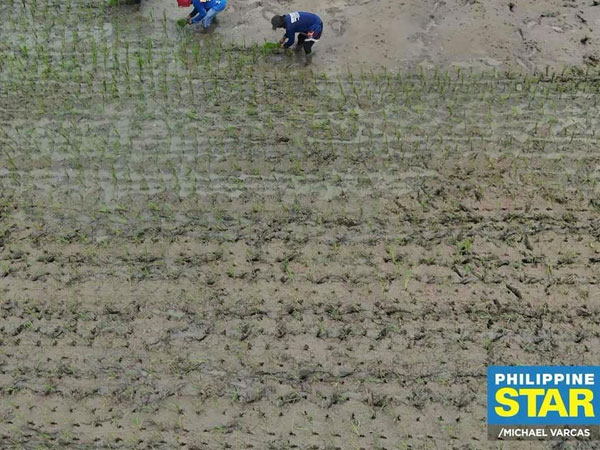
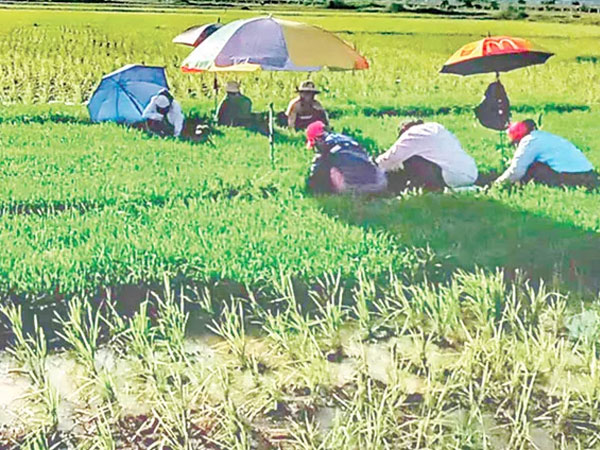
In the fields of central Luzon, farmers who planted their rice in June are watching the sky with worry.
Out over the Pacific, a familiar spectre is gathering strength – and with it, the threat of empty granaries and hungry households.
The Philippines has a plan for this year’s “super” El Nino, on paper at least. But to the Filipinos out actually working the paddies, that plan is barely perceptible.
“We don’t see anything visible, it’s all talk,” said Raul Montemayor, national manager of the Federation of Free Farmers, an NGO representing 250,000 of the country’s 10 million rural workers and agricultural labourers.
The warning signs have been building for months. Pagasa, the Philippine weather bureau, confirmed in a June 24 update that El Nino conditions were already present in the tropical Pacific, forecasting that they would strengthen by August through October, then intensify further later in the year.
Speaking at Pagasa’s 197th Climate Outlook Forum, held online that same day, Dr Ana Liza Solis, chief of the bureau’s climate monitoring and prediction section, put the odds of El Nino intensifying from October at 62 per cent.
In the near term, she said, the western side of Luzon and the Visayas could see “heavy rainfall events” through to September, offering a brief reprieve before conditions turn. “Dry condition and dry spells will likely start in November, while prolonged dry spells and droughts will be highly likely in early part of 2027,” Solis added.
A rise of more than 2 degrees Celsius (3.6 degrees Fahrenheit) in Pacific temperatures would qualify as “very strong or a super El Nino”, according to the bureau.
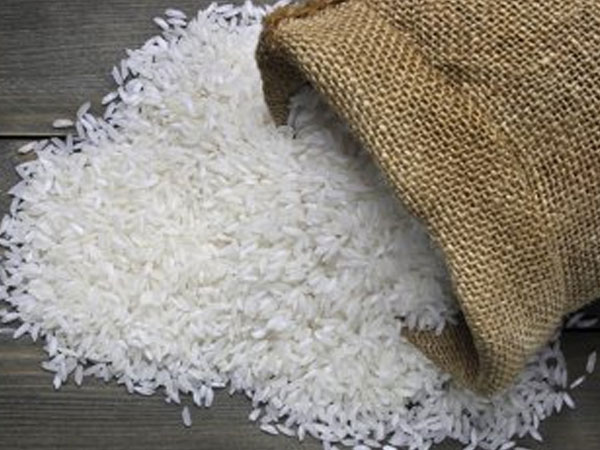
Such severe El Nino are relatively uncommon, but when one struck the Philippines previously, in 1997-98, it triggered a 22 per cent collapse in palay (raw, unhusked rice) production.
This time around, layered atop fertiliser and fuel price spikes amid the US-Israel war on Iran, Manila’s Department of Agriculture is bracing for losses that could exceed 30 per cent, according to agricultural economist Fermin Adriano, a former undersecretary in the department who has advised the UN Food and Agriculture Organization, the World Bank and the Asian Development Bank.
“It [El Nino] has been predicted by international meteorological organisations for months now, warning that the Asian tropical region will be hit hard by it,” Adriano told This Week in Asia.
Filipinos should brace themselves for “higher food prices if not actual supply shortages” in the coming months, he said – especially if major rice suppliers like Vietnam, Thailand and India choose to prioritise their own food security and halt exports.
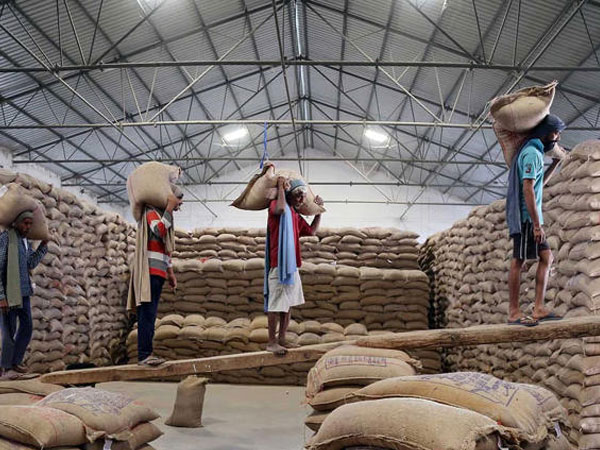
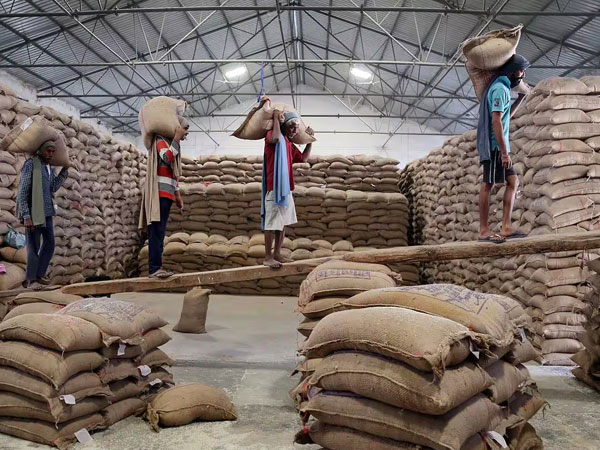
In May, the Philippine Department of Agriculture warned a severe El Nino could slash national rice output by up to 700,000 tonnes. Data from the Philippine Statistics Authority shows palay production in the first quarter of 2026 had already slipped 6.3 per cent year on year, to 4.4 million tonnes – the weakest start to a year since 2020.
Central Luzon, the nation’s main rice-growing area and a region where farmers rely on irrigation, produced 18.8 per cent of the country’s palay in the first quarter alone. Any serious disruption there ripples outwards fast – especially so given the Philippines’ heavy dependence on imported rice, leaving it exposed on two fronts at once, should drought at home coincide with export restrictions abroad.
Fertiliser shortages have only exacerbated the issue. Even before El Nino’s worst effects are forecast arrive, the Iran conflict and associated closure of the Strait of Hormuz have already disrupted roughly 108,000 tonnes of urea from Qatar and 33,000 tonnes from Saudi Arabia, according to official figures.
The government has launched a response, with President Ferdinand Marcos Jnr activating an El Nino “action plan” in May, which his spokeswoman said would tackle water, food and energy security, alongside public safety and health. Yet progress has been hard to discern, according to Adriano.
“There is PR or media releases showing various agencies preparing for El Nino, but I am not sure how far they’ve progressed in terms of actual programmes or projects that will mitigate its effects,” he said. “Wala akong narinig.” (I haven’t heard anything)
What farmers actually need, according to Montemayor, are water impoundment projects such as dams and reservoirs. “They always talk about convening a technical working group, et cetera et cetera,” he said. “[But] I don’t know what else is happening.”
Still time to prepare?
Pagasa’s forecasts suggest rainfall will hold until September and Central Luzon’s farmers, having planted in June, should be able to bring in a harvest around September or October, rains permitting.
But Montemayor sees the real reckoning arriving after that. “October will be when we will feel the intensity of El Nino [and see] less rain than normal,” he said.
“The season that I think will be most at risk is the following planting season, November, that’s when we might have a drought. If you have less than normal rainfall, that means farmers won’t be able to plant.”
Already, the country’s reservoirs are showing signs of strain. Water levels at Luzon’s two major dams of Pantabangan and Magat are low and Montemayor knows exactly how the government will ration what remains.
They will prioritise drinking water, then energy, and then, third, irrigation – if there is water left
Raul Montemayor, Federation of Free Farmers
“They will prioritise drinking water, then energy, and then, third, irrigation – if there is water left,” he said.
“It’s only July, and we’re talking about November, so there is time to prepare – fill up the dams, fix the irrigation systems, put up solar-powered irrigation. But I don’t see it,” Montemayor added. “What they’ll say is it’s not in the budget.”
Even the government’s stated priorities carry contradictions. Agriculture officials have reportedly pledged to focus on irrigation and water impounding, but Montemayor says there is a flaw in that strategy. “What if there’s no rain? The dams don’t get filled,” he said. Cloud seeding offered little comfort either. “If there are no clouds, you cannot seed them – it’s hit or miss.”
At the launch of a small reservoir project on Bohol Island last month, Marcos floated another idea: encouraging farmers to shift towards high-value, less water-intensive crops such as ube. It is a suggestion Montemayor treats with weary scepticism.
“Ube takes 11 months to grow,” he said. “Farmers will have a hard time waiting that long – and you have problems with seedlings, as well as technology and know-how on planting it.”
Drought-resistant rice seeds, often cited as a stopgap solution, fare little better when examined in detail. “I don’t think they have a lot of stock,” he added. “It takes a long time to produce them – two years.”
Even existing support has stalled: according to Montemayor, the government still has not finished distributing the cash aid it promised to cushion rice farmers against rising fuel costs.
With the Department of Agriculture reportedly bracing for historic rice production losses, Adriano worries about the fallout.
“If food supply shortages or skyrocketing food prices happen, then it will be a real emergency,” he warned. “It’s possible that public discontent might reach a boiling point.”
This Week in Asia has contacted the Philippine Department of Agriculture for comment.





© Copyright 2025 The SSResource Media.
All rights reserved.