

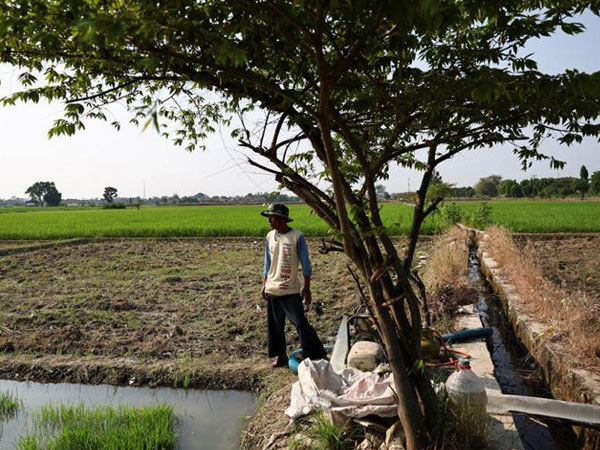
 CIREBON, Indonesia, June 9 (Reuters) - Under a hazy morning sky, Indonesian rice farmer Teguh Basuki is racing to get ahead of his usual planting schedule in West Java as he battles the threat of a lengthy dry spell this year, worsened by prospects of a severe El Nino.
"Farming is about adapting and finding solutions — hopefully it works out," the 51-year-old Teguh told Reuters as he worked in the paddies forming grids of green and gold.
As dry weather disrupts crop planting in Asia, Teguh is among thousands of farmers urged by the Indonesian government to change their usual routines to avert risks to food supplies in the world's most populous region.
The El Nino weather pattern that is shaping to be stronger than usual could inflict still more damage across the sprawling archipelago, where rice is a staple for millions, relying on stable weather to maintain production.
In regions like Cirebon, where Teguh works his fields, seasonal cycles have long guided planting and harvests. But those rhythms are becoming less predictable as extreme weather patterns have intensified, he said.
"We live from farming, so we have to adapt," he said, adding that he would not be deterred by the El Nino, widely expected to develop in the year's second half into one of the strongest on record.
The phenomenon usually brings hot, dry weather to Asia and excessive rains to the Americas, but recent global climate change has worsened the devastation it wreaks on crops.
Indonesia's dry season normally runs from May to August, but this year the weather agency predicts it will stretch longer than usual.
ACCELERATING PLANTATION
Agriculture Minister Amran Sulaiman has urged regional governors to ensure farmers optimise irrigation and speed rice planting in areas of risk where water is still available, using drought-resistant rice seeds.
A ministry presentation showed that the government urged farmers to immediately replant two weeks after harvest, down from the 25 days typically left to prepare the land for the next planting cycle.
"We ask the governors, mayors, regents, and the ranks, please help to optimise our irrigation networks, planting on rice paddy fields," ministry official Muhammad Agung Sunusi told a meeting on Monday.
There has been no rain for more than 10 days in many parts of the most populated island of Java and some other islands, weather agency data showed, and expectations for June range from medium to low levels.
As the planted area declines, Indonesia's statistics bureau estimates rice output to drop 0.35% in the period from January to July versus a year earlier.
Another Cirebon farmer Misti, 62, took a different route. He said he will not plant anything for the year's third harvest, or he could plant anything but rice, for example, mung beans even if the lentils are less profitable.
"The heat is too high, and farmers worry the (rice) crop won’t make it to harvest," added Misti, who goes by one name, like many Indonesians.
(Additional reporting by Bernadette Christina and Stanley Widianto; Editing by Gibran Peshimam and Clarence Fernandez)






© Copyright 2025 The SSResource Media.
All rights reserved.