

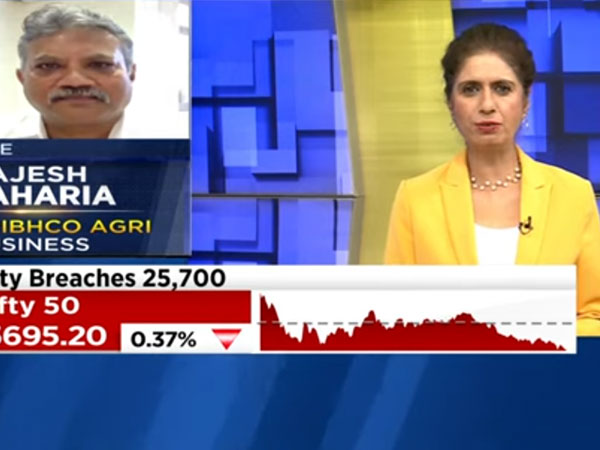
 Rajesh Paharia, Chief Manager–Business Development at Kribhco Agri Business, said Indian rice exporters were already facing delayed payments, currency weakness, banking constraints and rising logistics costs, and that the new tariff has compounded these challenges, increasing risks for those exposed to the Iranian market.
Indian rice exporters are under mounting pressure from global trade disruptions, with the sector’s growing risks prompting calls for policy support to protect an industry that accounts for nearly 20% of India’s agricultural exports, according to Rajesh Paharia, Chief Manager–Business Development at Kribhco Agri Business.
Paharia said conditions have worsened after a 25% tariff imposed by the United States on trade partners of Iran, sharply impacting one of India’s most important basmati rice markets. Iran is the second-largest export destination for Indian basmati rice, and the levy has added to existing pressures. “This 25% increase, tariff which has been levied, that also is going to be impacting the rice exports from India to Iran,” he said.
He explained that exporters were already grappling with multiple operational hurdles even before the tariff announcement, including payment delays stretching beyond 180 days, a sharp depreciation of the Iranian rial, restrictions on banking channels, and sharply higher shipping and insurance costs. The new levy, he said, has compounded these issues and raised risks for exporters with exposure to Iran.
In response, exporters have stepped up engagement with Indian authorities to seek clarity and protection. “A couple of days ago, only we have spoken to authorities like the Agricultural and Processed Food Products Export Development Authority (APEDA),” Paharia said, adding that the industry is awaiting guidance from the Ministry of Commerce, through APEDA, on risk mitigation, payment security and consignments already in transit.
On the domestic front, Paharia pointed to a contrasting trend in the rice market. Despite a bumper crop, which would typically push prices lower, domestic prices have been rising due to a shift towards nutritional and value-added products. “A lot of rice millers, the Basmati ones, have come out with glycemic, low-glycemic rice and a lot of added-value rice. So, the consumption in India has persistently been increasing,” he said.
This domestic strength stands in contrast to global conditions, where non-basmati rice prices are at an eight-year low due to oversupply. Looking ahead, Paharia said exporters are exploring new markets but face structural challenges, particularly as countries such as Nigeria move towards self-sufficiency, potentially shrinking import demand over the next decade.
While the US market remains relatively resilient due to strong preference for Indian rice among the expatriate community—a trend Paharia expects to persist despite higher tariffs—he said sustained policy backing will be critical for exporters to navigate rising trade complexities. "An Indian rice holds almost 20% of the agriculture exports. So, they have to have blessings on all the exporters, so we survive, and we cater to the whole of the world,” he said.





© Copyright 2025 The SSResource Media.
All rights reserved.