

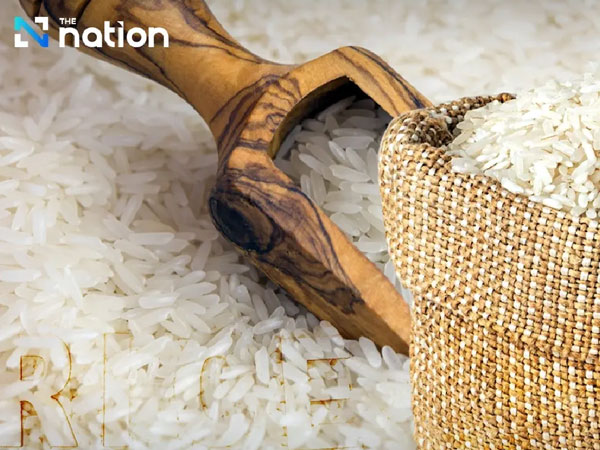
 Thailand is facing a high probability of El Niño-induced drought conditions starting in mid-2026, threatening its rice production with below-normal rainfall.
In response to the El Niño threat, major rice-importing countries like Malaysia and the Philippines are significantly increasing their purchases to build up national reserves and ensure food security.
The increased demand from importers stockpiling rice has caused global prices to rise, with key grades from Thailand and Vietnam climbing above US$400 per tonne.
The drought situation in 2026 is expected to be more severe than in previous years, with the Thai Meteorological Department forecasting a 61% probability that conditions will shift into El Niño during May-July 2026 and remain that way until the end of the year.
For Thailand, the expected impact during May-July 2026 is that total rainfall across the country will be below normal, while temperatures are likely to be slightly higher than normal.
The Hydro-Informatics Institute (Public Organisation) has also assessed that Thailand’s temperatures are likely to be slightly above normal, while rainfall will be below normal. It expects rainfall in 2026 to be close to 2012 levels, when total rainfall stood at 1,479 millimetres and one storm entered Thailand. That level is below the 30-year average of 1,500 millimetres. In 2025, when La Niña conditions prevailed, rainfall stood at 1,816 millimetres.
Rainfall is also forecast to be above normal in some areas of the North, Central region, East and the west coast of the South. Below-normal rainfall is expected across most of the Northeast, in the eastern provinces of Chanthaburi and Trat, and in the South.
Seri Supratit, director of the Climate Change and Disaster Centre at Rangsit University, said the world is clearly shifting into an El Niño phenomenon from the middle of this year, with a probability of more than 80%. The phenomenon is expected to peak towards the end of the year.
Although El Niño is generally associated with lower rainfall and hotter weather, this does not mean flooding will not occur, as weather variability remains high. Thailand is expected to experience above-normal temperatures throughout the year, while average annual rainfall is likely to be below normal, potentially affecting available water reserves in 2027.
“From the beginning of the year to mid-year, or between May and August 2026, many areas across the country may face water shortages, especially areas outside irrigation zones,” he said.
The Office of Agricultural Economics (OAE) has estimated Thailand’s 2025/26 rice output at 35.44 million tonnes of paddy, comprising 26.99 million tonnes of main-crop rice, down 0.32%, and 8.45 million tonnes of off-season rice, down 1.63%.
The main reasons are weather conditions, including dry spells, and water limitations in some areas, which have reduced some cultivation areas, even though the average yield of off-season rice has increased to 654 kilogrammes per rai.
The OAE also expects prices to decline because global rice supply exceeds demand, particularly after India resumed white-rice exports. At the same time, major importers such as the Philippines and Indonesia have sufficient rice reserves and have therefore slowed purchases.







© Copyright 2025 The SSResource Media.
All rights reserved.