

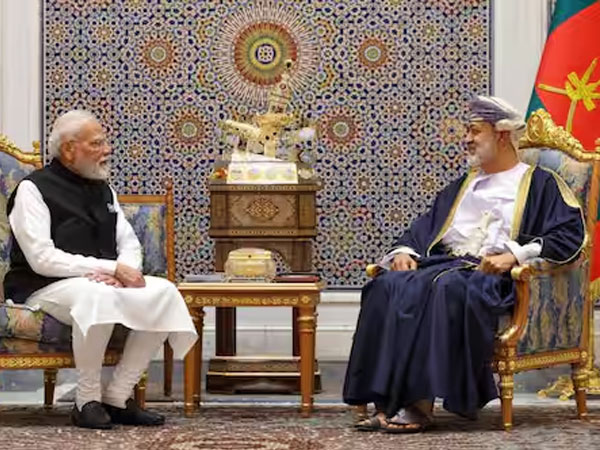
 During Prime Minister Narendra Modi’s just-concluded visit to Oman, the two countries inked a trade pact that signals a recalibration of New Delhi’s trade strategy as US tariffs squeeze Indian goods. It offers near-total duty-free access for Indian exports, expands services and mobility provisions, and strengthens India’s economic and strategic footprint in West Asia
India’s decision to sign a Comprehensive Economic Partnership Agreement (CEPA) with Oman marks a strategically timed shift in its external trade policy, as New Delhi confronts an increasingly restrictive global trading environment shaped by higher tariffs.
Signed on Thursday in Muscat during Prime Minister Narendra Modi’s visit, the agreement reflects India’s effort to secure stable export markets with West Asia while reducing vulnerability to punitive duties imposed by the United States under President Donald Trump.
The India-Oman pact is the second major free trade agreement finalised by New Delhi in the past six months, following the trade deal with the United Kingdom in May.
Why the India-Oman CEPA matters
US import tariffs on Indian goods at the moment stand at 50 per cent and talks with Washington are yet to yield a breakthrough.
United States is India's largest export destination. These tariffs include a retaliatory component tied to India’s continued purchases of discounted Russian crude oil, which Washington argues indirectly supports Moscow’s war effort in Ukraine.
The impact has been particularly pronounced in sectors such as textiles, auto components, metals and other labour-intensive industries, which rely heavily on price competitiveness.












© Copyright 2025 The SSResource Media.
All rights reserved.