

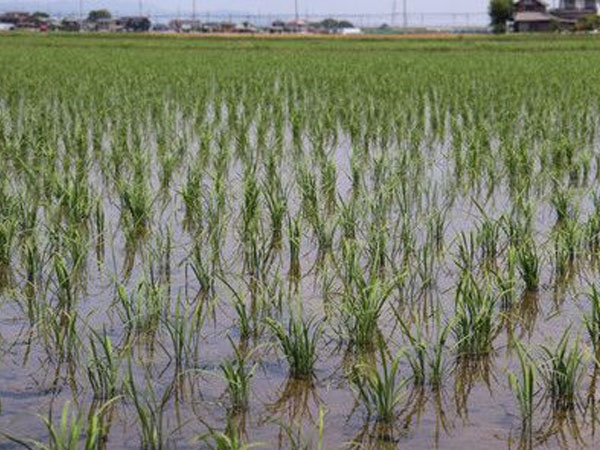
Rice planters and farmers in Negros Occidental were satisfied with the current farmgate price of palay, adding that the rice supply in the province remains stable despite the onslaught of Typhoon Tino.
Pedro Limpangog, president of the Federation of Irrigators’ Associations of Central Negros-Bago River Irrigation System (FIACN-BRIS), stated in an interview that the farmgate price of palay has risen from an earlier report of P12-13 per kilogram to currently ranging between P17 and P18 per kg.
The improved prices have provided farmers with a more profitable income from their crops.
“Each kilo of palay, which was previously valued at around P13 to P14, was just enough to cover our farmers’ capital. Now that the price is P17 to P18, our farmers can finally earn a profit, especially those farming large areas,” Limpangog explained.
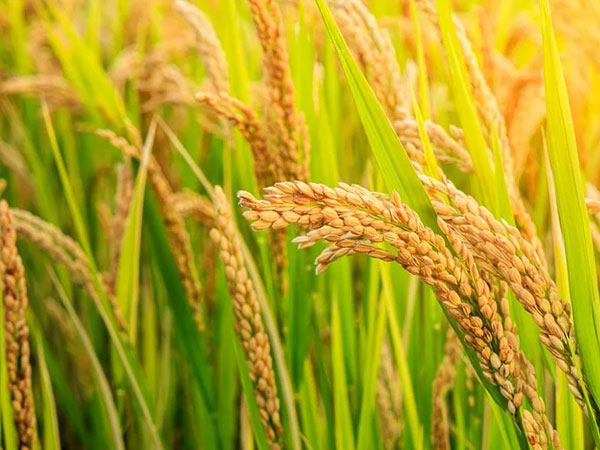
He added that despite Typhoon Tino’s impact, the quality of palay harvested in the province remains good, with harvest activities in several areas, particularly in the northern part of Negros, still ongoing.
Currently, rice prices in FIACN-BRIS-affiliated markets are around P1,900 per 50-kilo bag or P38 per kilogram, with some markets selling at P2,000 per 50-kilo bag.
RICE IMPORT BAN BENEFITS
Limpangog emphasized that the rice import ban in the Philippines had a positive effect on local rice production and farmers’ livelihoods.
Under Executive Order (EO) No. 93, signed by President Ferdinand Marcos Jr., the entry of imported rice into the country was suspended for 60 days starting in September 2025. This suspension was later extended until the end of the year through EO No. 102. Limpangog acknowledged that these measures have helped improve the profitability of local farmers.
“If we consider the situation, our local rice has been competing with imported rice. If the import suspension had not been implemented, our local farmers would be at a severe disadvantage,” he said.
The rice importation suspension aims to protect Filipino farmers from cheaper imports and to manage the surplus resulting from a strong local harvest. The policy has been well received by farmers in Negros, according to Limpangog.












© Copyright 2025 The SSResource Media.
All rights reserved.