

 The municipal government of Narra is strengthening its rice industry by organizing farmers into an integrated cluster designed to improve production, processing and market access while supporting food security in Palawan and the Mimaropa region
The initiative is being implemented under the Department of Agriculture’s Masagana Rice Industry Development Program (MRIDP), which brings together government programs and services to address the challenges faced by rice farmers.
Department of Agriculture Mimaropa Regional Executive Director Atty. Christopher Banas said the MRIDP uses a holistic approach to make government interventions more coordinated and responsive to farmers’ needs.
“The Masagana Rice Industry Development Program (MRIDP) ay isang holistic approach kung saan pinagsama-sama ang mga programa at serbisyo ng Department of Agriculture at iba pang ahensya ng pamahalaan upang mas epektibong mapataas ang produksyon at kita ng ating mga magsasaka ng palay,” Banas said.
The program is led by the Office of the Undersecretary for Rice Industry Development under Undersecretary Engr. Christopher V. Morales through the “3Cs” approach — Converge, Coordinate and Cooperate.
Under the approach, government agencies coordinate their interventions instead of providing fragmented or overlapping assistance, while rice clusters are used as a platform for delivering seeds, fertilizers, machinery and technical support.
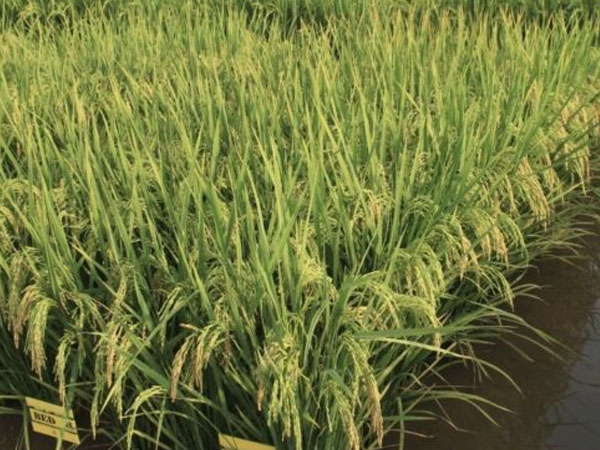
Banas said the DA Mimaropa allocated more than P62 million for inorganic fertilizers and P30 million for hybrid seeds in 2026 to help increase yields and reduce production costs.
The DA also turned over an agricultural drone to the Narra local government, which can be used for seeding, fertilizer application and crop monitoring.
“Malaki ang maitutulong nito sa mas mabilis at mas episyenteng pagsasagawa ng seeding, fertilizer application, at crop monitoring,” Banas said.
The rice clustering initiative is also linked to the Farm and Fisheries Clustering and Consolidation (F2C2) program, which aims to make farmer groups more productive and competitive as agricultural enterprises.
Banas said the clusters are being connected with agencies such as the Agricultural Training Institute for capacity building, the Philippine Crop Insurance Corporation for crop insurance, the Cooperative Development Authority for cooperative development and the National Irrigation Administration for water management.
“Sa ilalim ng MRIDP, hindi lamang indibidwal na magsasaka ang binibigyang-lakas kundi ang buong komunidad sa pamamagitan ng sama-samang pagkilos, kooperatiba, at mga samahan ng mga magsasaka,” he said.
From farm to market
The Narra local government serves as the cluster integrator through its Municipal Agriculture Office, with support from the Municipal Economic Enterprise Development Office (MEEDO).
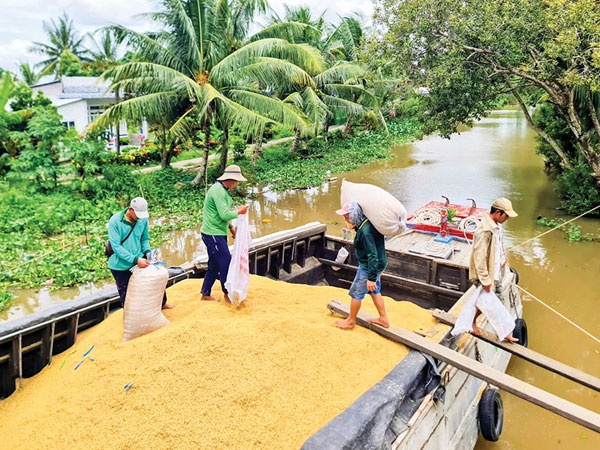
Through its local economic enterprise, the municipality provides capital to directly purchase palay from farmers, giving them another option aside from selling exclusively to private traders.
MEEDO Narra representative Albert Felizarte said the local government structured the initiative as an economic enterprise to make it financially sustainable.
“With the limited budget na meron ’yung LGU, ang naging resort is to make it a local economic enterprise, at ang pinaka-end goal is sustainability and self-sufficiency,” Felizarte said.
He said the project has its own account, with expenses drawn from its income, as the municipality works toward developing it into a full-fledged economic enterprise.
“The vision at ang pangarap ng LGU ay maging napakagag successfully nito, na sumasagot sa mga pangangailangan ng ating mga partner agencies at institutional buyers,” Felizarte said.
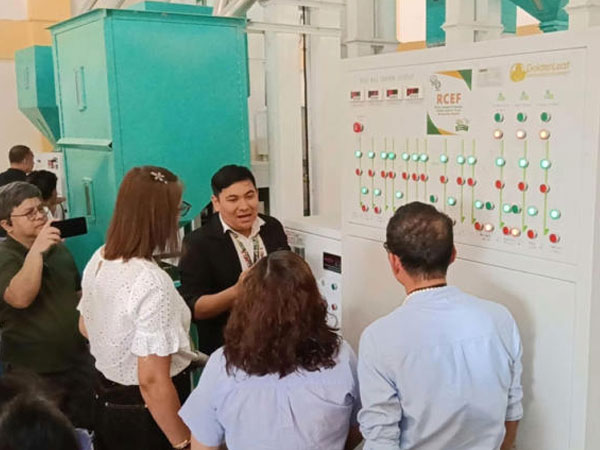
The cluster’s support extends beyond production through the Rice Processing System II (RPS II) provided by the Philippine Center for Postharvest Development and Mechanization (PhilMech).
The facility allows farmers and the local government to process rice through drying, milling and packaging, adding value to locally produced palay and creating opportunities to supply government institutions and other buyers.
Felizarte said the rice processing facility has also enabled Narra to supply other local governments, particularly during emergencies.
“Nung nagkaroon ng typhoon calamity sa northern part of Palawan, ang LGU Narra at ’yung rice processing complex natin ’yung nag-support sa mga pangangailangan nila sa bigas,” he said
“From then on, dire-diretso na ’yung mga orders natin mula sa ibang LGUs at saka mga institutional buyers. So we provide quality rice in a more competitive price,” Felizarte added.
For farmers, the processing facility has provided an alternative to selling their harvest to traders.
“Mas madali po ngayon na magbenta ng aming ani lalo na nung nagkaroon ng RPS,” said Vila Atiga of the Malinao Farmers. “Kumbaga may pagpipilian. Hindi na kontrolado ng mga traders; kumbaga may pagpipilian na kaming magsasaka kung saan namin isusulong ’yung palay namin.”
Romeo Sigua of the Malinao Farmers Association also cited the improved milling process.
“Ang pagpapagiling po diyan sa RPS sa makinarya natin, sa ating rice milling, ay napakaganda po ng recovery ng bigas,” Sigua said.
Farmers see clustering’s impact
For Atiga, the clustering system has also changed how farmers manage and market their harvest.
“Nagbago ’yung pagsasaka namin nung pumasok ’yung clustering,” she said.
She said bringing farmers together makes it easier to manage commodities and respond to buyers looking for specific varieties.
“Kapag may kailangan ’yung isang tao na ganito ang variety, pwede mo siyang i-alok doon at pwede mo siyang mahanap sa ibang mga kasamahan na ibubuo siya para ibenta at tataas-taas ng konti ang presyo,” Atiga said.
Banas said the Narra initiative demonstrates how local governments can play a central role in connecting farmers with government programs, buyers and markets.
He said the local government’s direct relationship with farmers allows it to better identify production needs and plan for post-harvest handling and marketing.
“Sa pamamagitan ng aktibong pakikipag-ugnayan sa mga mamimili, negosyo, at iba pang pamilihan, mas napapalawak ang oportunidad ng ating mga magsasaka na maibenta ang kanilang ani sa mas magandang presyo,” Banas said.
He added that a more direct flow of agricultural products from farms to markets can help reduce costs and increase farmers’ income.
For Narra, the integrated rice cluster is intended to build a system in which support does not stop at production but extends through processing, financing, technology and market access.
The initiative also positions the municipality as a link between farmers and government agencies, businesses and institutional buyers — an approach aimed at strengthening both the local rice industry and the broader food supply.
The experience of Narra shows how convergence among government agencies, local government and farmer organizations can turn fragmented assistance into a more integrated agricultural system, with farmers gaining greater access to inputs, technology, processing facilities and markets.





© Copyright 2025 The SSResource Media.
All rights reserved.