

 Can rice be grown without transplanting seedlings? Why are more farmers turning to Direct Seeded Rice (DSR)? What are its benefits and challenges? Here's everything you need to know. Also, go "Beyond the Nugget" to learn about India's rice production and the science behind Designer Rice.
With sustainable agriculture, water conservation, and climate-resilient farming practices becoming crucial in the backdrop of climate change, Direct Seeded Rice (DSR) has been seen as a key way to make rice cultivation more efficient and climate-resilient. Here’s your UPSC Current Affairs knowledge nugget for today on direct seeding of rice.
Knowledge Nugget: Direct seeded rice
Subject: Geography
Why in the news?
In an El Niño year, direct seeded rice is gaining traction among farmers. In this context, let’s know what direct seeding of rice is, how it works, and what its benefits and drawbacks are.
Key Takeaways:
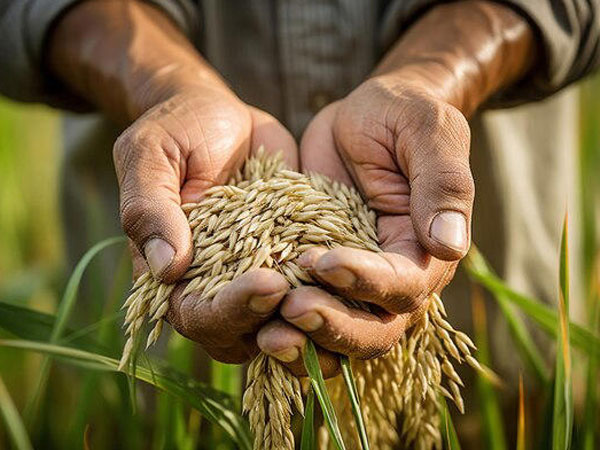
- Direct Seeding of Rice refers to the practice of sowing rice seeds directly onto the main field without using a nursery to transplant seedlings. It is also known as the ‘tar-wattar’technique.
- Direct seeding can be accomplished by sowing pre-germinated seed into wet soil (wet seeding via broadcast or drum seeder) or by planting dry seed (dry seeding by broadcast and seed-cum-fertilizer drill) on prepared ground.
How does DSR work?
- Traditionally, paddy farmers create nurseries where seeds are first planted. After 25–35 days, the immature plants are plucked and transplanted in the flooded main field. While this practice is labour and water expensive, it is known to increase yields and improve crop health.
- DSR, as the name suggests, requires no nursery preparation or transplantation. Paddy seeds are directly sown, roughly 20-30 days prior to when they would have been transplanted. The field is irrigated and laser leveled prior to the seeding process which is carried out using a seed drill or lucky seeder. Seed treatment is crucial, with seeds soaked in a fungicide solution for eight hours, then dried for half a day before sowing.
- The first round of irrigation is carried out 21 days after sowing, followed by 14-17 more rounds at 7-10 day intervals, depending on soil type and the quality of the monsoon. The final irrigation takes place 10 days before harvest. The traditional method requires 25-27 irrigations in total.
What are the benefits of DSR?
- Direct seeding of rice provides several benefits such as:
(i) It can reduce water use by 15% to 20% (the traditional puddling method requires 3,600 to 4,125 litres of water to grow a single kilo of rice).
(ii) DSR requires less labour.
(iii) It matures 7 to 10 days faster, giving farmers more time to manage paddy straw.
(v) DSR provides better soil physical conditions for following crops and less methane emission.
What are the challenges associated with DSR?
- Weeds are the biggest significant impediment to the success of DSR. Weeds are more problematic in DSR than in puddled transplanting because sprouting weeds compete with simultaneously emerging DSR seedlings.
- While direct planting can help to reduce methane emissions, aerobic soil conditions can also increase nitrous oxide emissions. Nitrous oxide generation increases with redox potential.
- Micronutrient deficiencies are a prominent cause of concern in DSR such lack of iron content of the soil can severely impact yields and lead to major financial losses for farmers.



© Copyright 2025 The SSResource Media.
All rights reserved.