

 International research co-led by UMass Amherst offers strong potential to address three major global challenges: a growing population, the effects of climate change, and the increasing economic and environmental pressures facing agriculture.
Rice cultivation, which supports more than 3.5 billion people worldwide, carries significant environmental, climate, and financial burdens. New research from scientists at the University of Massachusetts Amherst and China’s Jiangnan University may offer a path forward.
Their work shows that applying selenium at the nanoscale can reduce the amount of fertilizer required for rice production while maintaining yields, improving nutritional content, increasing soil microbial diversity, and lowering greenhouse gas emissions. In a study published in the Proceedings of the National Academy of Sciences, the team also provides the first real-world evidence that these nanoscale treatments function effectively outside controlled laboratory settings.
The fertilizer problem: limits of the Green Revolution
“The Green Revolution massively boosted agricultural output during the middle of the last century,” says Baoshan Xing, University Distinguished Professor of Environmental and Soil Chemistry, director of UMass’ Stockbridge School of Agriculture, and co-senior author of the new research. “But that revolution is running out of steam. We need to figure out a way to fix it and make it work.”
A major driver of the Green Revolution’s success was the development of synthetic fertilizers rich in nitrogen, which allowed farmers to dramatically increase crop yields. These fertilizers come with significant drawbacks, however. They are costly to produce, their manufacture releases large amounts of carbon dioxide, and much of the nitrogen applied to fields does not stay in the soil.
Crops typically absorb only about 40–60% of the nitrogen they receive, a measure known as nitrogen use efficiency (NUE). In rice, NUE can fall to 30%, meaning that 70% of the fertilizer ends up flowing into rivers, lakes, and oceans. This runoff contributes to eutrophication, dead zones, and a range of other environmental issues, while also wasting 70% of the money farmers spend on fertilizer.
Once nitrogen enters the soil, it interacts with a complex mix of chemical reactions and microbial activity. These processes generate higher levels of methane, ammonia, and nitrous oxide, all of which are powerful greenhouse gases. On top of that, producing nitrogen fertilizer itself is an energy-intensive process that adds further to global emissions.
“Everybody knows that we need to improve NUE,” says Xing—the question is how?
Nanoscale selenium as a field-tested solution
What Xing and his co-authors, including lead author Chuanxi Wang and another senior author, Zhenyu Wang, professors of environmental processes and pollution control at Jiangnan University discovered, is that nanoscale selenium, an element crucial for plant and human health, when applied to the foliage and stems of the rice, reduced the negative environmental impacts of nitrogen fertilization by 41% and increased the economic benefits by 38.2% per ton of rice, relative to conventional practices.
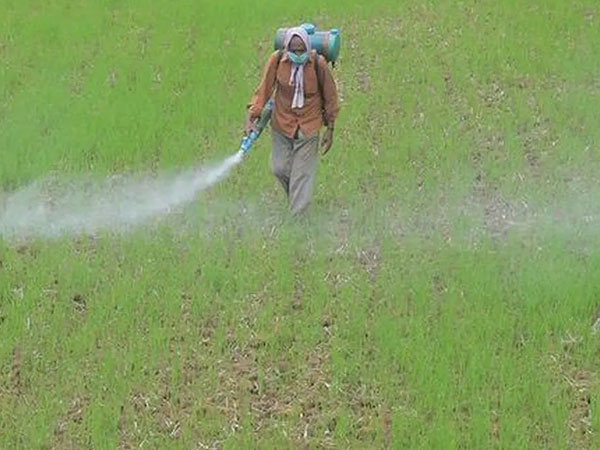
“We used an aerial drone to lightly spray rice growing in a paddy with the suspension of nanoscale selenium,” says Wang. “That direct contact means that the rice plant is far more efficient at absorbing the selenium than it would be if we applied it to the soil.”
How nano-selenium boosts plant growth and soil health
Selenium stimulates the plant’s photosynthesis, which increased by more than 40%. Increased photosynthesis means the plant absorbs more CO2, which it then turns into carbohydrates. Those carbohydrates flow down into the plant’s roots, which causes them to grow. Bigger, healthier roots release a host of organic compounds that cultivate beneficial microbes in the soil, and it’s these microbes that then work symbiotically with the rice roots to pull more nitrogen and ammonium out of the soil and into the plant, increasing its NUE from 30 to 48.3%, decreasing the amount of nitrous oxide and ammonia release to the atmosphere by 18.8–45.6%.
With more nutrients coming in, the rice itself produces a higher yield, with a more nutritious grain: levels of protein, certain critical amino acids, and selenium also jumped.
On top of all of this, Xing, Wang, and their colleagues found that their nano-selenium applications allowed farmers to reduce their nitrogen applications by 30%. Since rice cultivation accounts for 15–20% of the global nitrogen use, this new technique holds real promise for helping to meet the triple threat of growing population, climate change, and the rising economic and environmental costs of agriculture.
Reference: “Nanotechnology-driven coordination of shoot–root systems enhances rice nitrogen use efficiency” by Chuanxi Wang, Bingxu Cheng, Zhenggao Xiao, Yahui Ji, Jiangshan Zhang, Rongxin Zhou, Xian-Zheng Yuan, Melanie Kah, Zhenyu Wang and Baoshan Xing, 24 September 2025, Proceedings of the National Academy of Sciences.
DOI: 10.1073/pnas.2508456122
This research was supported by the National Natural Science Foundation of China (42421005, 42322705, and 42307352), the Funded by Basic Research Program of Jiangsu (BK20230044), the Fundamental Research Funds for the Central Universities (JUSRP622019), and United States Department of Agriculture Hatch Program (MAS 00616).








© Copyright 2025 The SSResource Media.
All rights reserved.