

 Chinese rice-prawn farms could help boost Malaysia’s farming production as it faces hurdles to meet its rice self-sufficiency goal
Malaysia is looking to China’s rice-prawn farms as a model to extract more from its shrinking paddy land as a slide in rice self-sufficiency has left it increasingly reliant on imports from its Southeast Asian neighbours.
The experiment is also part of an attempt to confront other issues such as ageing farmers and more erratic weather, which have dented Malaysia’s rice output.
Agriculture and Food Security Minister Mohamad Sabu said on Monday that Malaysia needed to raise its rice self-sufficiency ratio to at least 80 per cent, arguing that a level below 60 per cent was “not adequate” for national food security, state news agency Bernama reported.
“We want to increase productivity and strengthen the supply chain through expanding the use of technology … and encourage innovation and open up more opportunities for value creation throughout the industry chain,” he said.
The 80 per cent target is set under Malaysia’s National Agrofood Policy for 2030.
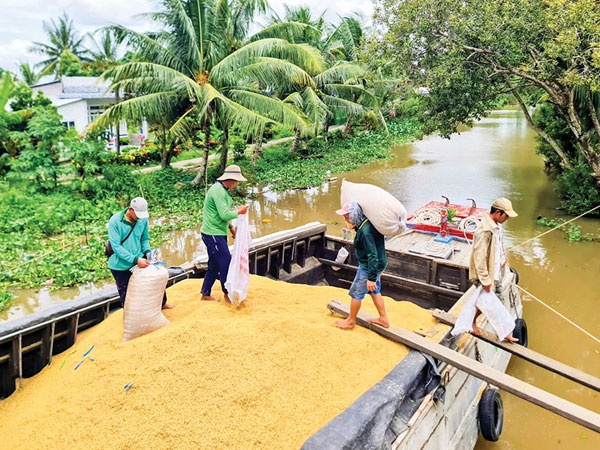
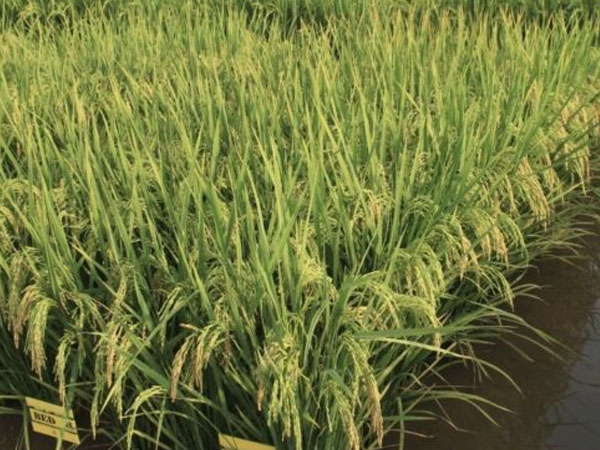
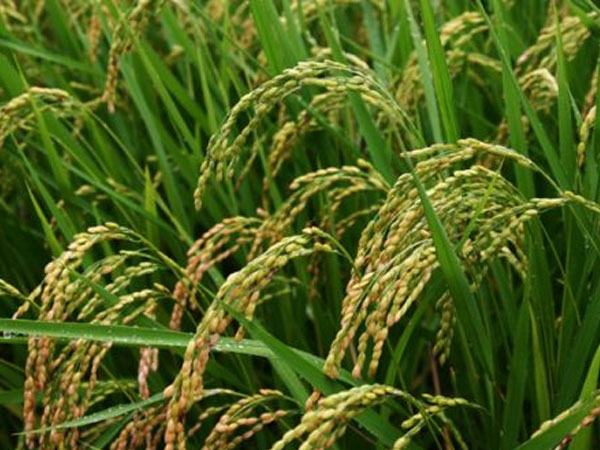
However, the country remains far off course. Its rice self-sufficiency ratio fell to 52.9 per cent in 2024 from 56.2 per cent a year earlier, as paddy production decreased by 5.3 per cent to 2.06 million tonnes over the period, according to official data. Malaysia’s planted paddy area also declined by 5.6 per cent to about 579,700 hectares in 2024.
Mohamad said in February that the ratio remained around 52 per cent, citing shrinking and underused paddy land as well as climate-related pressures.
The UN Food and Agriculture Organization (FAO) expects Malaysia’s paddy output to remain below average at 2.1 million tonnes this year after floods and dry weather reduced plantings and yields. Rice imports are forecast to reach 1.7 million tonnes this year, with an intensifying El Nino also threatening the 2027 crop through lower rainfall.
Malaysia bought 710,656 tonnes of rice in the first half of this year, according to figures cited by Thailand’s Department of Foreign Trade, with Thailand accounting for 327,995 tonnes and Vietnam another 232,416 tonnes.
The Philippines, another major Southeast Asian rice importer, is forecast to buy 3.9 million tonnes of rice in 2026.
In contrast, Vietnam and Thailand have been exporting more rice to the region and beyond. Thailand exported 7.7 million tonnes last year while FAO expects Vietnam to ship 7.9 million tonnes this year.
Khazanah Research Institute warned in May that food-security risks in Malaysia and Southeast Asia extended beyond short-term supply disruptions to deeper dependence on imported food and agricultural inputs, leaving supply chains exposed to geopolitical tensions, trade restrictions and climate shocks.
It called for “cooperative self-reliance” within the Association of Southeast Asian Nations, combining stronger domestic production with greater regional coordination.
Paul Teng Piang Siong, a visiting senior fellow at the Climate Change in Southeast Asia Programme at Singapore’s ISEAS – Yusof Ishak Institute, said a low self-sufficiency ratio did not necessarily translate into high vulnerability.
“More important is a country’s capability to acquire rice supplies at affordable prices,” he said, adding that reaching 80 per cent self-sufficiency would also carry opportunity costs for scarce resources such as land, labour and water.
“Unless a major catastrophe hits the largest rice surplus countries – India, Thailand, Vietnam and Pakistan – at the same time, there should be enough rice to go around,” Teng said.
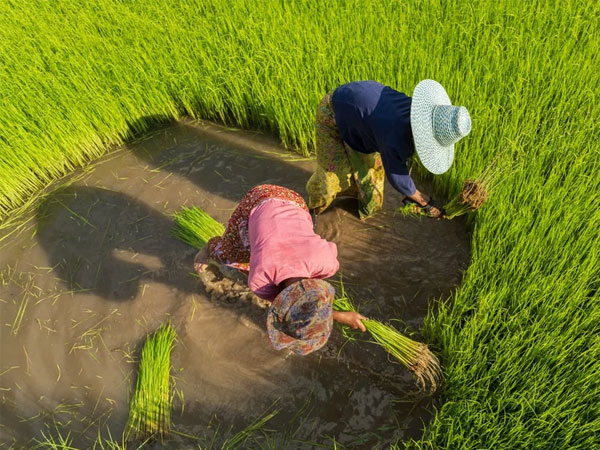
Mohamad’s interest in rice-prawn farming followed a visit last month to the city of Wuhu in China’s eastern Anhui province, where rice cultivation is combined with farming of giant freshwater prawns to generate two sources of income from the same plot.
“There are two yields, one from rice and one from prawns,” Mohamad said, according to Bernama, adding that Malaysia’s warmer climate could make year-round prawn farming viable.
Malaysia’s Agriculture and Food Security Ministry told This Week in Asia on Tuesday that the main lesson was how “the same agricultural land can be used more efficiently” and provide farmers with another source of income.
The ministry said it was considering a pilot project but had yet to decide on a site or timetable, with any system needing to be adapted to Malaysia’s irrigation, soil, climate and existing paddy practices.
China’s experience gives the idea some weight.
Wuhu’s agriculture bureau said in June 2024 that Fudu township had developed 26,000 mu, or about 1,730 hectares, of integrated rice-aquaculture farming, generating net returns of more than 2,000 yuan (US$297) per mu.
The area has also experimented with a “one rice, two prawn” cycle involving crayfish, rice and giant freshwater prawns.
A 2025 study in the journal Aquaculture found that rice-prawn systems could raise economic returns, although the gains depended on how densely prawns were stocked in the fields.
‘No copy-and-paste fix’
Muhamad Shakirin Mispan, a senior lecturer at Universiti Malaya’s Institute of Biological Sciences, said Malaysia’s more immediate problem was retaining enough productive paddy land and farmers amid the ageing workforce in the agricultural sector.
“Yield improvement alone, especially in limited and selected areas, is unlikely to be enough to increase the self-sufficiency ratio,” he said.
Minister Mohamad said in April that Malaysia had lost more than 20,000 hectares of paddy land to development or abandonment, with younger generations increasingly leaving farming for jobs in the cities.
Shakirin said rice-prawn farming was technically feasible but could not be grafted onto existing lands in Malaysia, with pesticide use and competing water requirements of rice and prawns among the major obstacles.
“The field must be managed as a rice-prawn production system, rather than simply adding prawns to conventional rice fields,” he said.
“We can’t directly copy-and-paste what China has done,” Shakirin added, noting that China’s approach had been built through years of research and infrastructure investment.
Rather than as a direct fix for Malaysia’s rice self-sufficiency gap, the Chinese model may help boost Malaysian farmers’ incomes and total output per hectare, and there should be local trials over several planting seasons before wider implementation, according to Shakirin.





© Copyright 2025 The SSResource Media.
All rights reserved.