

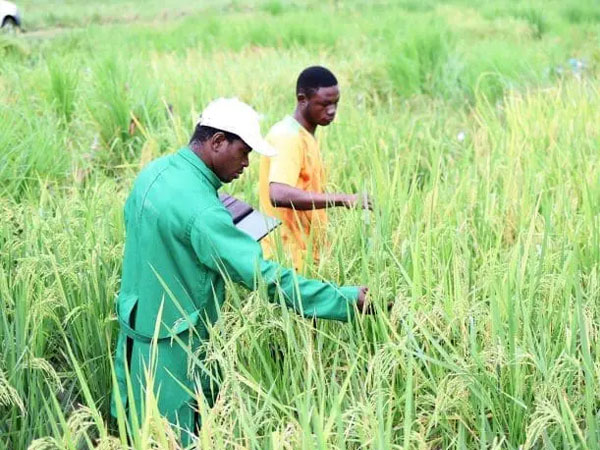
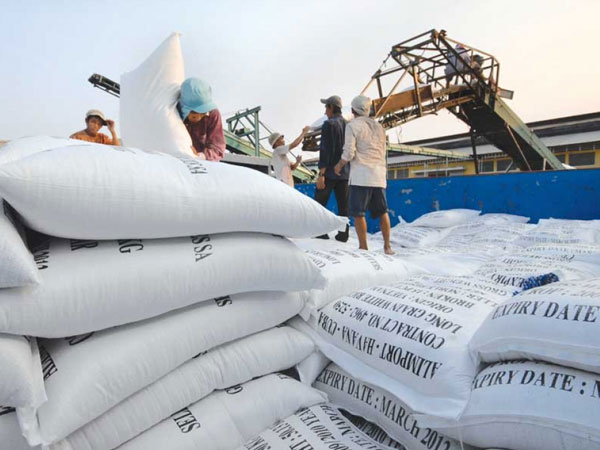
 While Ghana spent GH¢3.05 billion importing rice in 2024, the country’s leading supplier was quietly running one of the most consequential agricultural programmes in the world, one that is widening the production divide with every passing season.
Vietnam accounts for the dominant share of Ghana’s rice import bill, ahead of Thailand and India, yet the gap between what Ghana spends and what it produces at home continues to grow. That gap is now being illuminated not just by trade data, but by the scale and speed of what Ghana’s suppliers are building on their side of the supply chain.
Vietnam’s Programme Is Already Delivering
Vietnam launched a project for the sustainable development of one million hectares of high-quality, low-emission rice cultivation in the Mekong Delta by 2030, designed to restructure production around higher-quality output, mechanisation, climate adaptation, and greenhouse gas emissions reduction.
The results after just two years of implementation are measurable. By March 2026, the area under the programme had reached 354,839 hectares, equivalent to 197 percent of the initial target, with 1,129 cooperatives and more than 210 related businesses actively involved in the value chain.
In the 2024 to 2025 winter-spring crop cycle, pilot areas achieved yields of 6.8 to 7.5 tonnes per hectare, with profits rising by approximately 14 percent compared to cultivation outside the programme and greenhouse gas emissions falling by over 20 percent.
Vietnamese rice exports to Ghana soared by 53.5 percent in the first half of 2025, even as global prices fell, illustrating how Vietnam’s improved production efficiency is translating directly into stronger market penetration.
Ghana Is Producing Below Its Potential
Against this backdrop, Ghana’s domestic rice sector remains structurally constrained. Current domestic production stands at around 750,000 metric tonnes against consumption of approximately 1.5 million metric tonnes of milled rice, meaning Ghana is only about 51 percent self-sufficient.
The Institute for Fiscal Studies (IFS) has confirmed that only around 10 percent of Ghana’s rice farms are irrigated, leaving the vast majority of farmers dependent on erratic rainfall, while the country allocates barely 2.6 percent of its agricultural land to rice cultivation. By comparison, Vietnam allocates between 58.8 and 92 percent of its farmland to rice.
A prolonged drought in 2024 reduced cultivated rice areas in northern Ghana by over 16 percent and cut paddy harvests by 21 percent, forcing the country to import 950,000 metric tonnes in the 2024 to 2025 marketing year, a 20 percent increase from the preceding year.
A Structural Problem, Not Just a Weather Problem
The drought accelerated a trend that was already entrenched. Successive Ghanaian governments have implemented agricultural programmes from the Seven-Year Development Plan to the National Rice Development Strategy (NRDS) without addressing the fundamental constraints of low productivity, scarce irrigation, poor seed quality and limited mechanisation.
The IFS attributes persistent underperformance to four compounding factors: low fertiliser application, ineffective seed systems, limited mechanisation, and inadequate irrigation infrastructure, all worsened by restrictive land tenure arrangements.
Vietnam’s model offers a pointed contrast. Early results from Vietnam’s programme show cost reductions of between 8.2 and 24.2 percent, yield increases of 2.4 to 7 percent, and income gains of between 12 and 50 percent for participating farmers compared to conventional methods. These gains are being delivered through cooperative organisation, mechanised direct seeding, improved water management, and state-backed financing.
The Lesson Ghana Has Not Yet Applied
The IFS has proposed creating a Rice Development Board as a statutory institution to coordinate all rice-related policy, investment and implementation across political cycles. Without serious policy intervention to address irrigation, equipment, and processing bottlenecks, experts warn Ghana will remain dependent on other countries for its most consumed cereal, exposing households and the national budget to the volatility of international prices and currency fluctuations.
The broader issue is not simply that Vietnam grows more rice. It is that Vietnam decided to treat rice as a strategic national asset and built systems accordingly. Ghana has the land, the climate potential, and the domestic demand base. What the evidence increasingly suggests it lacks is the policy architecture to translate these advantages into sustained production


© Copyright 2025 The SSResource Media.
All rights reserved.