

 The ethanol blending programme is not a bad idea, in itself — it involves at least 20 per cent blending. However, mandating that ethanol producers source a fixed share of feedstock from FCI rice is counterproductive
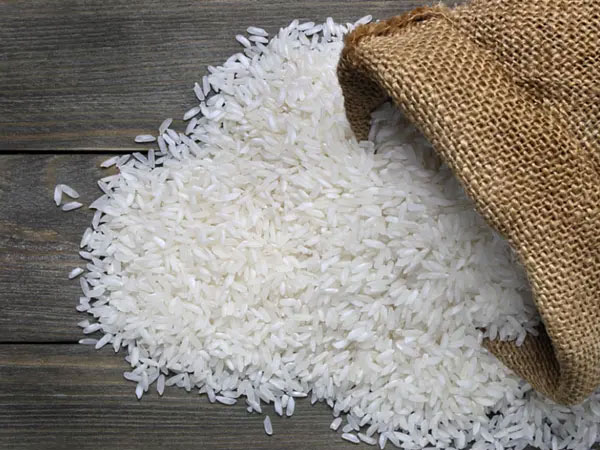
India produced 154 million metric tonnes (MMT) of rice in 2025-26, surpassing China to become the world’s largest producer. India is also the top rice exporter, with exports of 24.5 MMT in 2025. This accounts for roughly 40 per cent of the global rice trade (61.3 MMT), exceeding the total exported by the next four largest exporters — Vietnam, Thailand, Pakistan and Cambodia. India also gives free food (Rs 5kg/person/month) to about 800 million people under the National Food Security Act (NFSA), of which almost two-thirds is rice. Even after this, the Food Corporation of India (FCI) held rice stocks of almost five times the buffer norm as of April 1. In 2024-25 (FY25), the carrying cost of this extra buffer stock was Rs 10,712 crore. The government has decided to divert significant quantities of broken/damaged rice to ethanol production to reduce these stocks and cut down carrying costs. In FY26, almost 5 MMT of rice has been used to produce ethanol. The economic cost of rice to FCI in FY27 is likely to be Rs 44/kg, while it is being given to ethanol plants at roughly Rs 23/kg, renewing the food-vs-fuel debate and raising questions about who is subsidising whom.
How did India, a country that lived from “ship to mouth” in the mid-1960s, become the world’s largest rice producer, exporter, free distributor, and ethanol maker from the grain? The Green Revolution’s success is only one part of the story. The other, more recent and disturbing, is the story of subsidies, which are wreaking havoc not only on the fisc but also on the environment, through higher greenhouse gas (GHG) emissions, soil degradation, groundwater contamination and biodiversity loss. Let us delve deeper and explore how India can rationalise rice policies for a financially and environmentally sustainable future.
Three interlocking policies seem to be responsible for this situation. First, the open-ended procurement at the minimum support price (MSP). Although the MSP for paddy is Rs 2,369/quintal (2025-26), states often outbid each other. Chhattisgarh pays about 40 per cent above MSP, Telangana about 20 per cent, while others, such as Andhra Pradesh, Odisha, Punjab and Haryana, have their own variants of this competitive largesse either in the form of input subsidy or bonus on top of MSP. Second, free or near-free power across the rice belt. Since rice is a flood-irrigated crop that demands up to 25 irrigations per season, free power is effectively a licence to mine groundwater without consequence. Third, urea is sold at a price that bears no relation to its cost. The retail price of urea has been frozen at Rs 242 per 45-kg bag for years, with the government absorbing 85-90 per cent of the economic cost. India’s own landed import price for urea had spiked to $935-$959/tonne in May — thanks to a modicum of cooling in the Strait of Hormuz conflict, the price now has dropped to a little less than half this amount. Yet, this huge arbitrage drives chronic over-application of urea on paddy fields as well as diversion to other industries and across borders. According to an ICRIER study, the combined subsidies (power, fertiliser and canal water) for paddy cultivation in Punjab amounted to Rs 38,973/hectare in 2023-24. These distorted and politically motivated policies of bonuses over MSP, coupled with highly subsidised power and fertilisers, have resulted in FCI’s stocks overflowing. Rather than fixing the distorted incentive structure that has created such piles of rice, the government has chosen a second exit valve: Pour it into ethanol distilleries.
The ethanol blending programme is not a bad idea, in itself — it involves at least 20 per cent blending. However, mandating that ethanol producers source a fixed share of feedstock from FCI rice is counterproductive. This is like going back to Soviet-era controls. Bureaucracy and politicians love controls as they benefit from rent-seeking. Industry wants freedom to choose the most efficient feedstock — whether maize, sugarcane, or rice — which government policies don’t permit. So, the two strike a deal — rice, whose economic cost to FCI is Rs 44/kg, is sold to ethanol plants at Rs 23/kg on the justification that it is broken and damaged.



© Copyright 2025 The SSResource Media.
All rights reserved.