

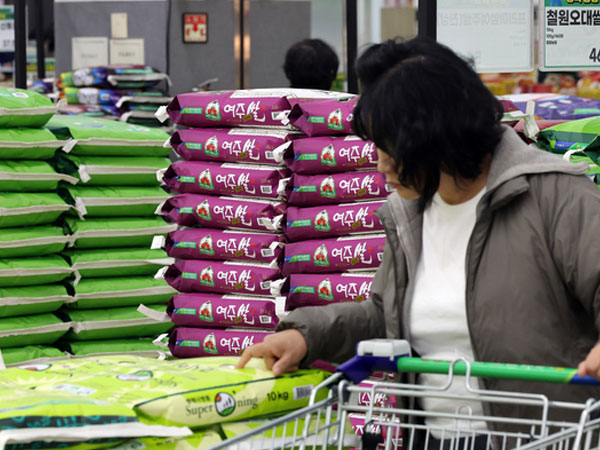
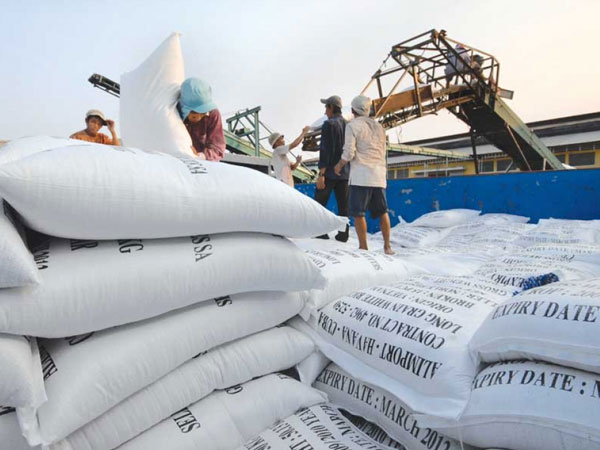
 Rice prices in South Korea have surged by around 20 percent in February, adding pressure to household budgets and dining-out costs. Although the government has moved to expand supply, prices have not stabilized easily, and inflationary anxiety continues, data showed.
According to the country’s public data portal on Thursday, rice prices rose 17.7 percent in February from a year earlier, about 9 times the overall inflation rate of 2 percent.
Retail prices have climbed even more sharply.
Data from the Korea Agro-Fisheries & Food Trade Corp. showed the average price of 10 kilograms of rice stood at 36,214 won ($24.32) as of Thursday, up 23.1 percent on-year and 25.8 percent above the seasonal average.
The price for 20 kilograms has also reached 62,951 won, up 13.7 percent from a year earlier and 16.5 percent above average, remaining above the 60,000 won threshold for 7 straight months.
Farm-gate prices have followed a similar trend, with 20 kilograms priced at 57,716 won, up 19.7 percent year-on-year.
In February, the government moved to release 150,000 tons of state-held rice in phases, but the impact has been limited so far.
“There is a lag before higher farm prices feed through to consumers,” said an official from the Ministry of Agriculture, Food and Rural Affairs.
Rising rice costs are spilling over into processed foods and restaurant prices. Rice cake prices rose 5.1 percent on year, compared with a 1.7 percent increase in flour-based bread. Prices of rice-based staple meals have also risen in the 3 percent range, with some restaurants raising a bowl of rice to as much as 2,000 won.
Much of the price gain has not reached farmers. Industry groups say most rice is sold before harvest, leaving recent increases concentrated in distribution margins.
Analysts and farm groups attribute the surge to policy missteps and poor supply-demand forecasts. The government removed 100,000 tons of rice from the market last year over oversupply concerns, but rising demand for processed foods and falling inventories later tightened supply.
The Korean Peasants League has called for scrapping delays in returning government rice stocks and urged Agriculture Minister Song Mi-ryung to step down.
Cuts to rice cultivation have also added pressure. The government reduced acreage to curb output and plans to cut another 90,000 hectares this year, despite rising demand.
Frequent policy shifts between market intervention and supply expansion have further undermined confidence, with earlier government assurances of post-harvest price stability yet to materialize, observers noted.




© Copyright 2025 The SSResource Media.
All rights reserved.