

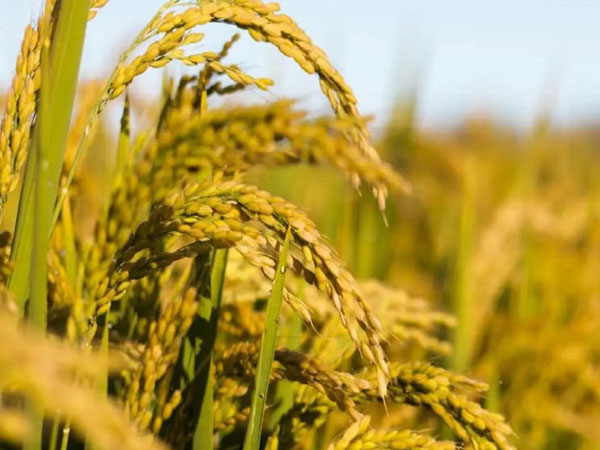
 El Niño-driven drought has affected 108,664 hectares of rice fields across seven provinces, prompting authorities to urge farmers to conserve water, store irrigation supplies and consider less water-intensive crops as dry conditions persist until mid-August
Seven provinces have been hit by drought caused by El Niño, impacting 108,664 hectares of rice fields. While officials say the damage to crops is minor, farmers are being urged to conserve water as the extreme weather is forecast to continue.
Soth Kimkolmony, spokesperson for the National Committee for Disaster Management (NCDM), told Kiripost that as of July 20, Banteay Meanchey, Battambang, Kampong Thom, Siem Reap, Ratanakiri, Kampong Cham and Pursat provinces have been hit by drought. However, he described the damage as "minor".
In Banteay Meanchey province, more than 7,032 hectares of rice fields containing growing crops have been affected in Preah Netr Preah, Thma Phok and Svay Chek districts, as well as Serei Saophoan city.
In Battambang province, 62,554 hectares of rice and other varieties of crops have been recorded as damaged. "However, the rice crops did not suffer significant damage, thanks to timely intervention,” he said.
In Kampong Thom province, 191 hectares of rice fields in Kampong Svay and Prasat Sambour districts, have been affected by extreme heat. However, Kimkolmony confirmed that the rice crops have been saved due to recent rain.
In Siem Reap, 19,503 hectares of paddies in Chi Kraeng, Soutr Nikom, Puok and Banteay Srey districts have also been affected by the heat.
Over in Ratanakiri province, 4,200 hectares of rice fields in Koun Mom and Ou Ya Dav districts have been impacted. However, timely rain was able to save the crops.
In Kampong Cham province, approximately 63 hectares of rice fields have been affected and 22 hectares of rice crops have been damaged in Ta Prok village, Chamkar Leu district.
In Pursat province, about 19,300 hectares of rice crops in the tillering and panicle initiation stages have been affected in Bakan and Kandieng districts.
“For Cambodia, the impact of El Niño results in limited rainfall during the wet season that fails to cover the entire country, while water reserves and systems carried over from the dry season are depleted. This leads to water shortages and drought, affecting agricultural crops,” Kimkolmony said.
He added that although there was heavy rainfall a few days ago, it did not occur nationwide. While some areas, such as Battambang’s Samlout district, experienced heavy rain that led to flash flooding, there was no impact on infrastructure or the local population.
“This rapid influx of rainwater has provided a beneficial source of irrigation, helping to water rice crops in Battambang province that had been severely affected by drought,” Kimkolmony told Kiripost.
“We still face water shortages in some areas, while in others, we have already carried out interventions. Meanwhile, the impact is being assessed in other locations.”
Rescue attempts are currently being made on rice crops in Kampong Thom and Battambang provinces by transporting water from distant sources for irrigation, which requires a significant investment of time. In other impacted provinces, intervention is underway.
Farmers urged to conserve water
On July 17, Kun Kim, NCDM First Vice President, inspected the water diversion structure in Battambang province’s Banan district and met with farmers facing water shortages in Kampong Prieng commune, Sangkae district, to coordinate water intervention efforts to save affected rice crops.
He urged provincial authorities and relevant departments to accelerate the delivery and distribution of water for the irrigation of wet-season rice fields facing water shortages.
Furthermore, farmers in upstream areas who have already received irrigation water are urged to refrain from competing for the water so that it can flow down to the downstream areas.
The El Niño phenomenon has weakened the southwest monsoon, resulting in rainfall levels in certain provinces falling significantly below the long-term average that is expected between July 20 and August 10, 2026.
In response, the Provincial Departments of Water Resources and Meteorology in affected provinces have issued a drought advisory. In addition it has ordered local authorities to prepare measures for effective water management and distribution to mitigate water shortages during this time.
It has also recommended that farmers reserve and store water for their crops in anticipation of prolonged drought until mid-August.
“Farmers should plan for water conservation, select crop varieties that require less water, or delay planting in areas where water sources are currently insufficient," the authority added, while urging the public to use water sparingly.
Emergency water diversions save 100,000+ hectares
Chhea Bunrith, Permanent Secretary of State at the Ministry of Water Resources and Meteorology, said El Niño has caused extreme heat and a lack of rainfall across Cambodia, with Battambang province heavily impacted by water shortages.
“Specialised officials have released all available water to its full capacity to supply and save farmers' rice crops,” he confirmed.
Approximately 30,000 hectares of rice crops in Battambang’s Ek Phnom district have been saved from drought after the Provincial Department of Water Resources and Meteorology channelled water from Sangkae River to affected areas, as recent rainfall occurred in Samlout district.
Meanwhile, more than 100,000 hectares of rice crops in Sankae, Banan, Koas Krala and Moung Ruessei districts, as well as Battambang city, have been rescued after water was distributed from a water diversion structure, the Battambang Provincial Governor reported on July 17.









© Copyright 2025 The SSResource Media.
All rights reserved.