

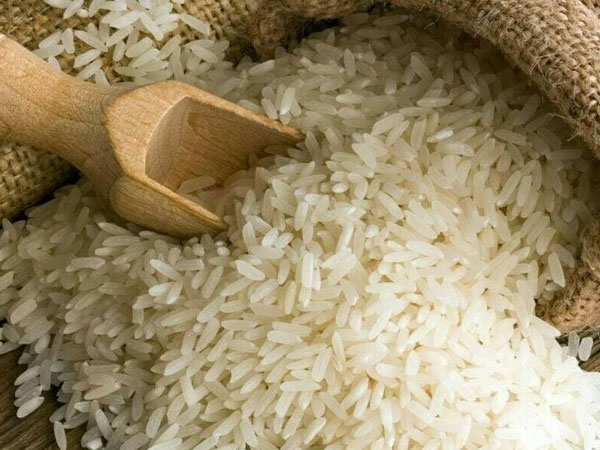
 India continues to hold a price advantage over competing rice-exporting nations even as international quotations climb amid concerns over production losses, adverse weather and geopolitical disruptions. With the global market facing uncertainty over supplies and demand, the Bharat International Rice Conference (BIRC) 2026 is set to examine whether rice prices will enter a fresh rally in 2027 or come under renewed downward pressure. India’s 5 per cent broken white rice is currently quoted at $385–390 per tonne, compared with $440–450 for Vietnam and around $480 for Thailand. Although Indian prices have risen to their highest level in more than a year, the country remains comparatively competitive against these major export origins. India’s 5 per cent broken parboiled rice was quoted at $384–389 per tonne, up from $378–384 the previous week. Firm domestic paddy prices, concerns about a smaller crop and shifts in global demand are contributing to the upward movement. The Food and Agriculture Organization’s All Rice Price Index rose 1.4 per cent in September 2026, following a 0.5 per cent increase in August, signalling firmer international market conditions. Global Rice Output Faces a Potential Decline The latest outlook from the US Department of Agriculture projects global rice production to fall from approximately 545.7 million tonnes in 2025–26 to 533.1 million tonnes in 2026–27, a decline of around 12.6 million tonnes. Despite the anticipated reduction in output, global rice trade is forecast to reach approximately 61.4 million tonnes in 2027. India is expected to retain its position as the world’s largest rice exporter. The USDA estimates India’s rice production at around 147 million tonnes, down from approximately 154 million tonnes previously. The Indian Rice Exporters’ Federation (IREF), however, believes the country’s substantial government-held rice stocks could help cushion temporary supply disruptions, sustain export commitments and protect domestic food security. The balance between production, inventories, export availability and international demand will be central to determining the direction of prices over the coming year. BIRC 2026 to Assess Three Possible Price Trajectories Scheduled for 23–25 October at Bharat Mandapam in New Delhi, BIRC 2026 will host a dedicated session on “Global Rice Demand and Supply Outlook 2027: Price Crash or New Bull Run?” The session, scheduled for 23 October from 12:30 p.m. to 1:30 p.m., will bring together experts from S&P Global, BigMint, EY and IREF to examine production, consumption, stock levels, import demand, weather-related risks and international price movements. Rather than presenting a single market forecast, the panel will explore three possible trajectories: a bull scenario in which prices rise, a base case in which markets remain relatively stable, and a bear scenario in which prices weaken. IREF will present its assessment of the likelihood of each scenario and introduce a 2027 Rice Market Watchlist, highlighting indicators that exporters, importers and traders should track as market conditions evolve. Live audience voting will also gauge how participants’ expectations change following the discussion. Export Competitiveness Depends on More Than Price Aman Singal, State President (Punjab) of IREF and Director of Ludhiana-based rice exporter Eastman International Pvt. Ltd., said India’s pricing advantage had helped sustain its position in international Basmati and non-Basmati rice markets, particularly across Africa and Asia. “India’s competitive prices have helped us maintain a strong position in international Basmati & non-Basmati rice markets, particularly in Africa and Asia. However, rising paddy costs, freight charges and uncertainty over crop availability are putting pressure on exporters’ margins. Lower export prices alone are not enough. We need efficient logistics, predictable policies and reliable supplies to preserve India’s competitiveness. The discussions at BIRC 2026 will be particularly relevant for exporters making buying and selling decisions for the coming year,” Singal said. His remarks underline a broader challenge for the export sector: maintaining a price advantage while managing higher procurement and transportation costs, as well as uncertainty over the availability of exportable supplies. BIRC 2026 will also host a session identifying the Top 10 Rice Markets to Watch in 2027, alongside discussions on shipping costs, export payments, trade policy, quality compliance, rice-milling profitability and value-added products. Bringing together participants from across the international rice trade, the conference aims to connect market projections with commercial decisions on pricing, sourcing, market diversification and export competitiveness.
Featured News
BIRC 2026 takes centre stage as rice prices hit one-year high
20 October 2026


See more news


Top News
20 October 2026
20 October 2026

© Copyright 2025 The SSResource Media.
All rights reserved.