

 The conversation on climate-smart agriculture in Southeast Asia is shifting from what needs to be done to how it will be paid for and scaled.
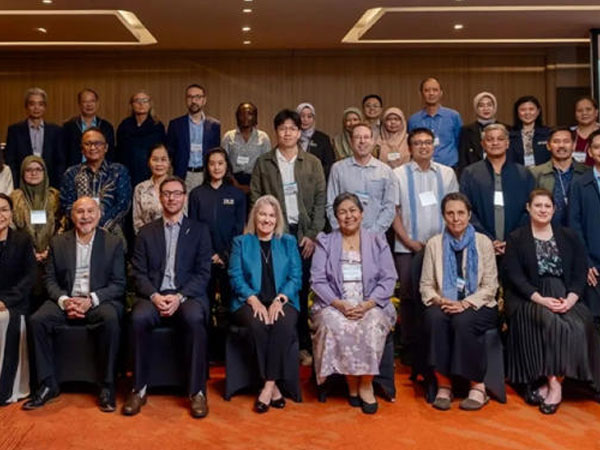
That shift was at the center of a two-day hybrid workshop in Jakarta on Oct. 1 to Oct. 2, where 45 researchers, policymakers and development partners gathered to move Asean’s agenda from priority-setting to investment-ready actions.
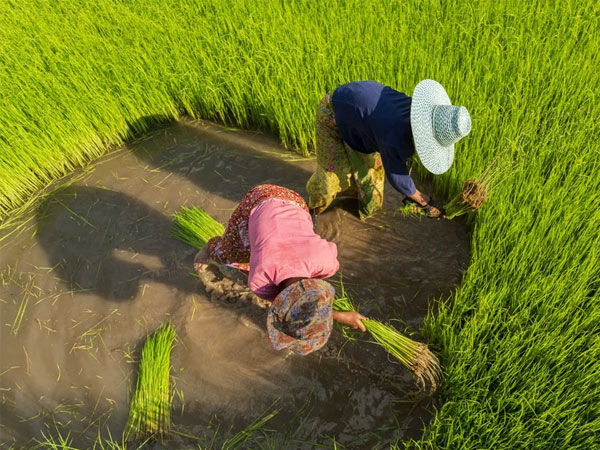
The focus was on two systems that sustain food security and rural incomes across the region — rice and livestock — and also account for a significant share of agricultural emissions.
The workshop, “From Priorities to Investment: Advancing Fundable Actions in Livestock and Rice Low-Emissions Systems in Southeast Asia,” was held at Holiday Inn & Suites Jakarta and via Zoom.
It was co-organized by New Zealand’s Ministry for Primary Industries, Ag Emissions Centre, CGIAR and the Southeast Asian Regional Center for Graduate Study and Research in Agriculture (Searca), based in this town.
The meeting sought to craft an implementation roadmap under the Asean Climate-Smart Agriculture Initiative, using rice and livestock as demonstration cases for how research-based solutions can move from pilot to scale.
New Zealand Ambassador to Asean Joanna Anderson and Searca Director Dr. Mercedita Sombilla opened the discussions with a common message: regional cooperation must translate science into finance and field application.
Anderson pointed to New Zealand’s longstanding engagement with Asean, which marked 50 years of diplomatic relations in 2025, as a foundation for continued work on agriculture and climate.
“Over the last five years, New Zealand invested NZD 10 million in the Asean Climate Smart Agriculture Initiative, supporting Asean members and the region to measure and identify low-emissions, high-productivity agriculture practices. We complemented this with a NZD 19 million contribution to the CGIAR Asian Mega Deltas initiative, including work to develop high-quality, low-emissions rice systems in the Mekong Delta,” she said.
She also announced an additional NZD 610,000 from the New Zealand government to extend the initiative until June 2027.
“Together, through this extension, we will advance the research, policies, investments, and practical solutions needed to increase agriculture productivity and achieve globally significant reductions in greenhouse gas emissions,” Anderson said.
For Searca, the challenge is ensuring that knowledge reaches farms and institutions that can use it. Sombilla emphasized partnerships, concrete investments and scalable models that improve farmer welfare while advancing food security and emissions reduction.
“We believe that knowledge creates value only when it improves lives. Research becomes meaningful when it informs decisions. Innovation becomes transformative when it reaches farm communities and institutions that can put it into practice,” she said.
“Together, we have an opportunity not only to discuss the future of climate-smart agriculture in Southeast Asia, but to help shape it. Let us turn priorities into investments, investments into action, and action into lasting impact for the farmers, the families, and communities we ultimately serve,” she added.
Technical sessions provided the building blocks for that transition. Presentations covered measurement, reporting and verification (MRV) systems for livestock and rice, the CGIAR Climate Action Science Program, the portfolio of the Global Methane Hub, investment planning by the FAO Regional Office for Asia and the Pacific, and farmer-led pathways for adoption.
In breakout groups, participants identified a set of regional priorities that cut across both commodities: integrating livestock and rice systems, life cycle assessment, harmonizing MRV frameworks, improving livestock feed, quantifying the emissions impact of animal health, circular use of rice straw, and designing incentive mechanisms for farmers.
Two cross-cutting insights emerged. First, rice and livestock should be addressed together rather than in isolation, given their linkages at farm level. Second, farmer-centered co-design is essential for scaling, and any mitigation approach must deliver productivity gains and economic returns to encourage wider uptake.
Bjoern Ole Sander of the International Rice Research Institute outlined challenges around livestock MRV and data collection, and proposed a joint scoping exercise to map existing pilots, assess interventions with scaling potential and define the evidence needed for broader adoption.
Sombilla said the partnerships built in Jakarta need to be sustained, with rice and livestock perspectives continuing to be bridged. She reaffirmed Searca’s commitment through its networks in 11 Southeast Asian countries, citing its Consortium for Agricultural Policy and Research Initiatives as a possible platform.
William Aikenhead of New Zealand’s Ministry for Primary Industries (MPI) described the workshop as an initial step toward a fundable regional plan, noting that MPI will continue consultations and implement research, training and extension work through June 2027, guided by the workshop outputs.
New Zealand is also weighing longer-term engagement with Asean on climate and agriculture for 2027-2030, with the Jakarta results informing future investment directions.






© Copyright 2025 The SSResource Media.
All rights reserved.