

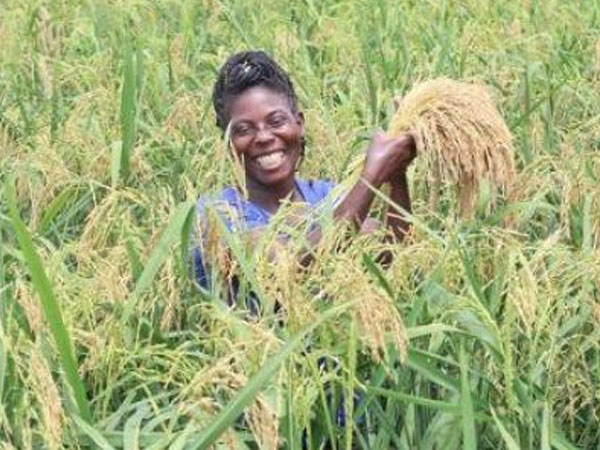
 Kathmandu. Continuous rainfall across most parts of the country over the past few days has created favorable conditions for Boro (Chaitra) rice cultivation. Farmers are hopeful as this rain during the main transplanting season is expected to boost production.
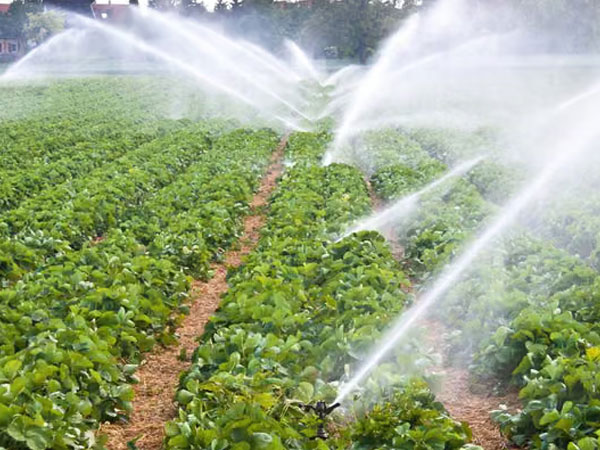
The pre-monsoon season is generally considered to be from mid-Falgun to mid-Jestha. According to Mahananda Joshi, Information Officer at the Ministry of Agriculture and Livestock Development, the rainfall during the pre-monsoon period appears very beneficial for Boro rice. "This time's rain has provided sufficient moisture during the transplanting time. There is no issue of seeds drying up, and there is no apparent water shortage in the fields," he said.
According to Joshi, this favorable weather condition is believed to have a positive impact on both production and productivity. He informed that Boro rice is cultivated on approximately 120,000 hectares of land in Nepal every year. Joshi stated that the annual production ranges from 400,000 to 500,000 metric tons. Ministry statistics show that Boro rice contributes about 5 percent to the total rice production.
Boro rice cultivation is mainly concentrated in the districts of the Terai and Inner Madhes regions. According to Joshi, it is cultivated in about 25 districts, including Jhapa, Morang, Sunsari, Saptari, Parsa, Bardiya, and Kailali. "Lately, its expansion is being seen even in the valleys of the mid-hill regions, which signals an expansion of the cultivation area," he said. "While positive signs are visible in terms of production, market management remains challenging for farmers. There are complaints about not receiving fair prices for Boro rice."
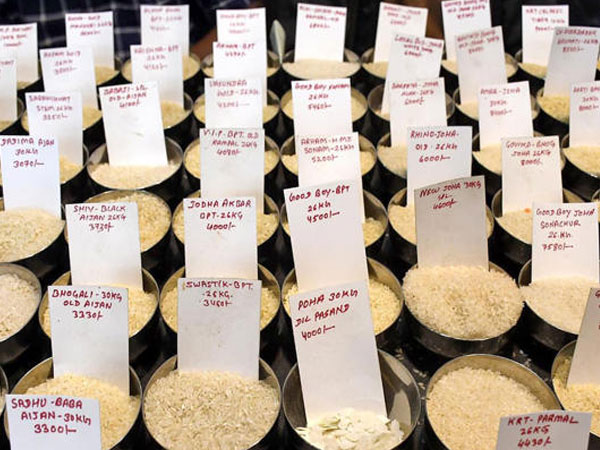
According to Joshi, the price of rice, which sold for up to NPR 3,500 per quintal last year, has dropped to around NPR 2,300 this year. The ministry states that this price decline makes it difficult for farmers to even cover their costs.
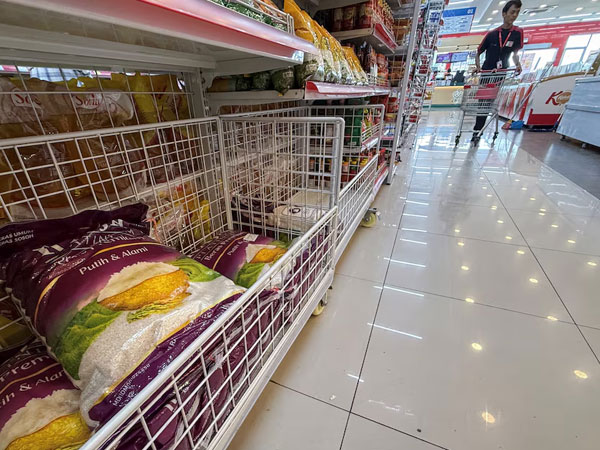
Joshi attributes the price drop primarily to the increase in the import of foreign rice. Imported rice has made it difficult for domestic production to compete in the market. This situation also poses a risk of discouraging farmers.
The ministry has stated that it is operating various programs to increase production and substitute imports. Improved seed varieties—such as 'Chaitra-5' and 'Harjinath Hybrid'—have been distributed to farmers at subsidized rates. These varieties yield high production, increasing their appeal among farmers.
Furthermore, under the National Agricultural Modernization Program, mechanization is being prioritized, and the technology for transplanting rice using machines is being expanded. This is expected to solve the labor shortage problem and help reduce production costs. Agricultural experts suggest that Boro rice cultivation can be further strengthened by expanding irrigation infrastructure, using modern agricultural technology, and ensuring effective marketing. Significant production increases are anticipated if sufficient irrigation facilities are developed, especially in the Terai region.
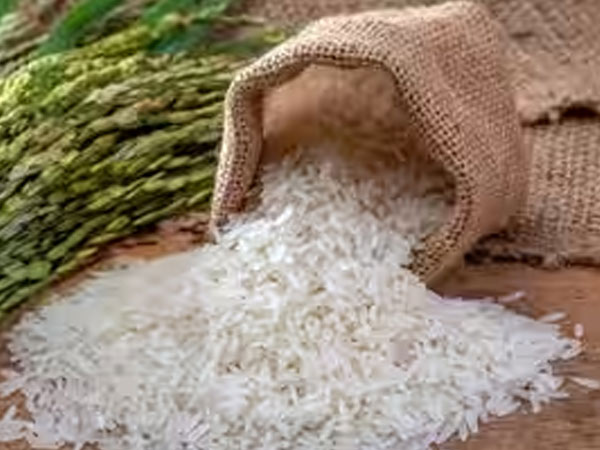
Boro rice also plays an important role in food diversification. Since products like beaten rice (chiura) and puffed rice (bhuja) can be produced from it, its commercial potential is even broader. Boro rice production is expected to reduce dependency on monsoon rice and contribute to food security.
Although the favorable weather this year shows positive signs for production, the situation remains challenging for farmers to reap expected benefits until the market price issue is resolved, according to Dr. Mathura Yadav, Coordinator of the National Rice Research Program. "Farmers will receive further encouragement only if the Boro rice promotion program is implemented effectively and the market is secured. Market demand is increasing," he said.
The government aims to develop irrigation infrastructure for Boro rice cultivation in the current fiscal year 2082/83. The government has allocated a budget of NPR 33 crore for this purpose.
Decline in Monsoon Paddy Production
Ministry statistics indicate that this year's paddy production decreased due to drought during the sowing time for monsoon rice. The decline in production was mainly due to droughts experienced in Koshi and Madhes Provinces.
According to Dr. Januka Pandit, Joint Secretary and Spokesperson at the Ministry of Agriculture and Livestock Development, the total area where paddy crops were harvested in the fiscal year 2081/82 was 1,420,636 hectares. The ministry estimates that this figure has decreased by 3.8 percent in the current fiscal year to 1,376,872 hectares.
Similarly, while production was 5,955,476 metric tons in FY 2081/82, ministry data shows a 4.20 percent decrease to 5,705,126 metric tons in the current fiscal year. Furthermore, productivity decreased by 1.16 percent from 4.19 metric tons per hectare last fiscal year to 4.14 metric tons per hectare in FY 2082/83.
Reasons for Production Decline
According to Ministry Spokesperson Pandit, the main reasons for the decrease in paddy crop area include migration seen in the hilly regions, the attraction of youth towards foreign countries, and the increase in the area dedicated to fruit and cash crops. In the Terai and urban areas, increased immigration and the use of land for industrial and other physical infrastructure construction have caused some reduction in the area under paddy cultivation.
"Moreover, in Madhes Province, the area sown with paddy decreased due to drought specifically during the sowing time, leading to an overall reduction in the area," she said. "Although improved seeds and sufficient fertilizer were available this fiscal year, productivity slightly decreased due to adverse weather. The overall paddy production has declined due to decreases in both area and productivity."
Possibility of Heavy Rain with Thunderstorms on Tuesday
The Department of Hydrology and Meteorology has stated that there is a possibility of moderate to heavy rain accompanied by thunderstorms, lightning, and wind gusts in various parts of the country on Tuesday. According to meteorologist Rojan Lamichhane, Nepal is currently under the partial influence of westerly winds, local winds, and a low-pressure system near the eastern region.
Lamichhane stated that on Monday, there will be general to complete cloud cover in the hilly and Himalayan regions, and partial cloud cover in the Terai region. There is a possibility of rain and snowfall with thunder and lightning in some places in the hilly and Himalayan regions of Koshi, Bagmati, and Gandaki Provinces, and in one or two places in Madhes Province and other provinces.
"Tonight, there will be cloud cover in the hilly and Himalayan regions of Lumbini, Karnali, and Sudurpaschim Provinces. There is a possibility of light rain and snowfall in some places in Koshi, Bagmati, Gandaki, Karnali, and Sudurpaschim Provinces," he said. "On Tuesday afternoon, there will be cloud cover in the hilly and Himalayan regions of most parts of the country, including Koshi and Madhes Provinces. There is a possibility of moderate rain with thunder, lightning, wind gusts, and hailstones in various parts of the country, including Koshi Province."
On Tuesday night, there will be general cloud cover in the Himalayan region, partial cloud cover in the hilly regions, and the weather will be mostly clear in the Terai region. Light rain and snowfall may occur in one or two places in the Himalayan regions of Koshi, Bagmati, Gandaki, and Karnali Provinces.
Furthermore, on Wednesday, there will be partial to general cloud cover across the country. The department stated that there is a possibility of moderate rain with thunder and snowfall in the hilly and Himalayan regions of Koshi, Bagmati, Gandaki, Karnali, and Sudurpaschim Provinces. The department has urged the general public to be cautious of thunder, lightning, wind gusts, and hailstones.








© Copyright 2025 The SSResource Media.
All rights reserved.