

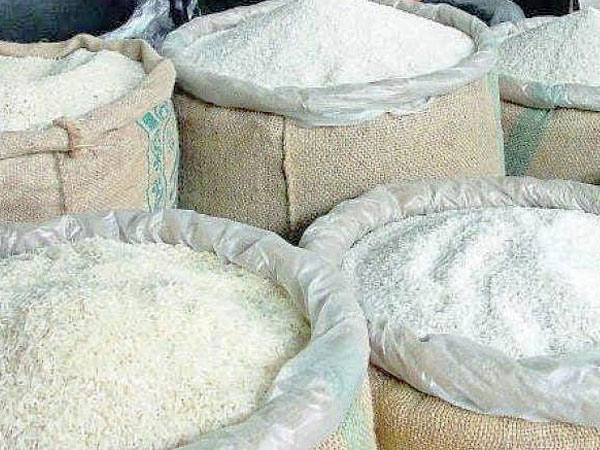
 India has firmly rejected allegations from US President Donald Trump that it is “dumping” rice in the American market, asserting that exports to the US largely comprise premium-grade basmati rice sold at significantly higher prices than ordinary non-basmati varieties, said a report by the Financial Express.
Trade Secretary Rajesh Agrawal said on December 15 that there is “no prima facie case of dumping” and clarified that no anti-dumping investigation has been initiated by the US authorities.
The rebuttal comes after Trump recently threatened additional tariffs on Indian rice while addressing American farmers at the White House, where he also announced a $12 billion aid package. Trump accused India, along with countries such as Thailand, of undercutting US farmers by exporting rice at artificially low prices.
Key Trade Data: Premium Focus Undermines Dumping Claim
India’s total rice exports in FY 2024–25 (ending March 2025) stood at about 20.2 million metric tonnes.
Exports to the US amounted to 335,554 tonnes, of which nearly 274,213 tonnes—or around 82%—were basmati rice, valued at roughly $337–392 million.
Basmati rice is a premium aromatic variety that typically trades at $880–900 per tonne for 2% broken quality, far higher than prices for non-basmati or bulk rice.
Officials stressed that US imports from India are dominated by aromatic, high-value varieties preferred by consumers, not low-cost mass-market rice, weakening the dumping allegation.
Amid Ongoing Bilateral Talks
The rice dispute has emerged at a sensitive time, as India and the US intensify trade negotiations. A US delegation led by Deputy Trade Representative Rick Switzer visited New Delhi last week.
Agrawal described the discussions as constructive, noting that both sides are “very close on the framework,” which could be finalised in the near term.
The backdrop includes existing 50% US tariffs—introduced in phases since August 2025 over India’s Russian oil imports—covering sectors such as textiles, chemicals, shrimp, and other goods. Despite this, Indian exports have shown notable resilience in recent months.
Implications: Limited Impact on India, Potential Backfire for US
Analysts point out that the US accounts for only about 3% of India’s total rice exports, limiting the potential downside for Indian exporters even if additional duties are imposed.
On the other hand, higher tariffs could push up prices for American consumers, particularly those dependent on imported premium rice. The US imports rice worth roughly $1.6 billion annually, largely from India and Thailand.
As the world’s largest rice exporter, with over 30% share of global exports, India continues to diversify markets while firmly defending its pricing practices. The episode highlights friction in India–US trade ties, but also leaves room for optimism as both sides work toward a broader trade framework agreement.







© Copyright 2025 The SSResource Media.
All rights reserved.